
KUALA LUMPUR – The Dewan Rakyat has passed the Windfall Profit Levy (Amendment) Bill 2020, but the government says it has no plans to impose a levy on companies that have recorded very high profits during the Covid-19 pandemic.
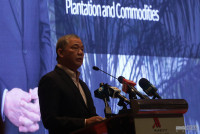
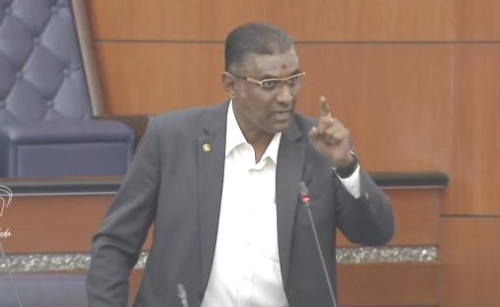
Deputy Finance Minister II Mohd Shahar Abdullah mentioned during his winding-up speech that the government does not plan to impose a windfall tax on companies with “extraordinary profits”, such as Top Glove, due to the “spillover effect”.
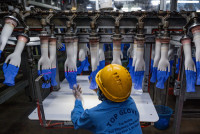
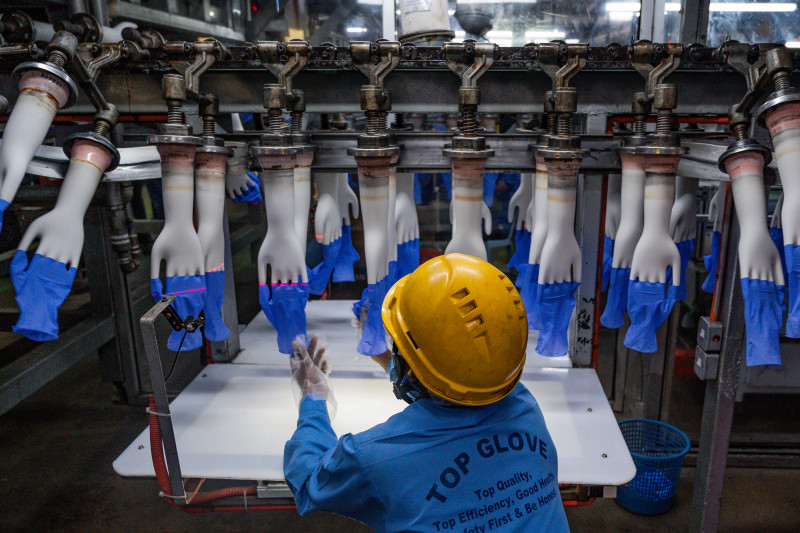
“Top Glove in 2021 opened up two new factories and increased their glove production lines from 724 to 812.
“They have used their profits to grow their business.”
According to a statement by Top Glove, the company hired 4,210 local workers in the financial year 2021.
Previously, several opposition MPs queried why the government chose to refrain from taxing companies such as rubber glove manufacturers that made large profits during the pandemic but continues to impose windfall levies on palm oil industries.
Shahar said the government collected RM 1.2 billion in levies from crude palm oil producers this year until August.
During the same period, the government allocated RM998 million for cooking oil subsidies this year.
“This is the balance we are trying to achieve when taking steps with regards to taxation. Any amendments we make are based on consultations with industry players.
“The principle is that if there’s no profit, there’s no taxation. However, if the revenue is high, so will be the taxes,” Shahar added.
During the debates, Datuk Ngeh Koo Ham (Beruas-PH) expressed the view that Malaysia should not have windfall taxes if the country intends to be a centre of commerce and industry.
He reminded the Dewan Rakyat that while businesses experience a high amount of profits during certain periods, they also experience high losses during certain times.
“Although businesses experience excessive profits, they experience excessive losses also.
“This economic decline happens every decade. We saw this in 1987, 1997, 2008 and 2019 until now.
“These economic crises caused businesses to lose their investments. Thus, if profits happen once in a while, businesses must be able to enjoy their gains and get their investments back,” Ngeh said.
Meanwhile, Lim Lip Eng (Kepong-PH) took the opportunity to mention that while the idea of windfall taxes is good, it must be studied closer, especially given Malaysia’s less than stable economy.
“There are companies recording profits during uncertain times but will these profits be consistent post-pandemic?
“This (windfall tax) could discourage investors. So the government must study this initiative further so that the levy can be targeted on certain industries,” Lim said.
The Windfall Profit Levy (Amendment) Bill 2020 will see changes to the Windfall Profit Levy Act 1998.
Section 13 will be deleted and a new provision included to grant powers to the finance minister to remit levies imposed on exorbitant profits and also the customs director-general to remit penalties to be paid.
Meanwhile, Section 14 will also be deleted to include a new provision allowing those who overpaid levies or penalties to demand a refund within a year from when the initial payment was made.
The new Section 14A will be included to grant the director-general powers to refund levies or penalties, in the event he is satisfied with the reasons and evidence presented by those making a claim. – The Vibes, October 12, 2021