
KUALA LUMPUR – Who would have thought that among the people most tragically hit by poverty and homelessness in Malaysia last year would be Europeans?
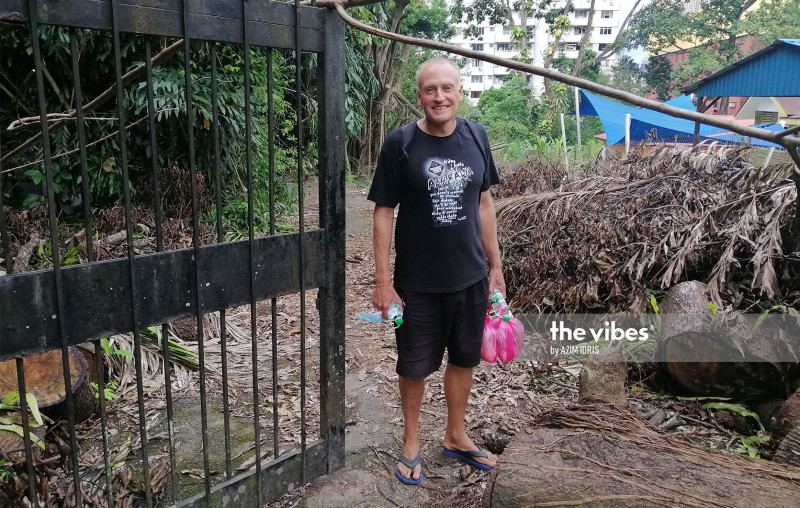
Despite coming from more affluent nations, a small number of Westerners have been sleeping rough on the capital city’s streets, and in abandoned homes and other shelters. In a special report on December 27, The Vibes revealed how several middle-aged Caucasian men were living in destitution during the height of the pandemic.
James Ashley Hollett, an Englishman living on charity, said that he had met a few other Europeans, mostly Russians, facing similar predicaments. Another man – a German – said when met along Jalan Tun Perak that he was sick, but was able to get medicine from nearby Tung Shin Hospital.
Despite his difficulties, he insisted that he did not need any assistance. “I am not angry, and I do not need help from anyone,” he said.
In a surreal way, this unusual picture of a European becoming a vagrant on our streets typifies the immense struggle and fortitude of many individuals in the face of untold difficulties during this period.
Their stories were some of the poignant accounts of human survival in the face of adversity during The Vibes’ first year of publication.
Among these was the fate of one grandmother caring for 13 children who faced eviction after she could not make the rental payments for her home in Kulim, Kedah. Their electricity and water supply had been disconnected.
“I am having sleepless nights as I fear the homeowner will force us to vacate the house,” said M. Selvamalar, who had lost her job as a runner for a law firm before her husband died of an illness.
Amid such a piteous state of affairs, one person took grit and determination to exemplary heights to surmount the hardships he was forced to confront.
Mohd Nor Abdullah, also known as Dekk’s Mat, is a person with disabilities who has lost both his hands. He had never begged or asked for aid from anyone.
But when he was forced to close his nasi lemak stall business due to the pandemic, he was effectively robbed of his livelihood, and he struggled to pay his rent and other bills.
He eventually resorted to hoisting a white flag on the window of his small apartment to ask for help. As a result, he was able to receive some assistance from neighbours and even caught the attention of former prime minister Datuk Seri Najib Razak, who extended some much-needed support.
While the raising of the white flag became a last resort of sorts to get assistance, it also highlighted the generosity and charitable nature of Malaysian society at large.
One jobless father of two, whose wife was pregnant again, was on the brink of losing all hope when he decided to put up a flag outside his wooden village house in Bukit Mertajam, Penang, in June. It grabbed the attention of neighbours, local mosque committee members and the office of local MP Steven Sim, who came to provide him with daily necessities.
However, not everyone who called for help had it easy. In July, several impoverished families who displayed white flags outside their village houses at the Transkrian Estate in Nibong Tebal, Penang, reportedly got a scolding instead of help from the local assemblyman’s office.
Some 40 families had raised the flags as they were unable to face the financial burden arising from the lockdown.
Being at peace with serious ailments
Moving beyond poverty, there were also battles against adversity related to other merciless strokes of fate. Chief among these were stories of dogged struggles against illnesses.
On World Cancer Day in February, Shazmin Shamsuddin, The Vibes’ culture and lifestyle editor, shared her emotional journey in surmounting the burden and becoming at peace with cancer.
.jpg)
Recalling being diagnosed with Stage 1 breast cancer in early 2019, she spoke about how she initially moved from denial (“this stuff happens to other people”), to morbidness (“would a death by cancer or chemo be more preferable”), to outright panic (“what will happen to the children if I die – I can’t die!”).
“For most cancer patients and survivors, we need our family and friends and a community of like-minded folk who understand,” she wrote. “I have always had that, but I wanted to not trouble or burden anyone.
“I was strong and self-sufficient. But I needn’t have been. My tribe was always there.”
Equally strong-willed and courageous is 17-year-old Mohammad Iqmal Redzeqie Andi Rusli who found out he had a serious heart problem, with a valve working incorrectly, when he was only 13.
The Sandakan lad would often be the only one in class not wearing sports attire during PJ time, not because he forgot to bring them, but because his doctor has advised him against doing physical activities. Despite his condition, Iqmal remains cheerful when interacting with others.
His mother quit her job as a factory worker to care for him, while his father returned from Johor where he was working as a bus driver.
After four postponements in the past couple years, Iqmal is going to have a major heart surgery at Queen Elizabeth Hospital, Kota Kinabalu, next month.
“We also do not know how much Iqmal’s surgery is going to cost yet,” said his mother, Normah Jattjo. “I wish nothing but for my son to be healthy and to be able to live a long life. That is all I want.”
Surviving unforgettable adventures and emergencies
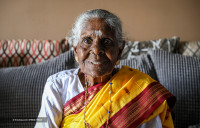
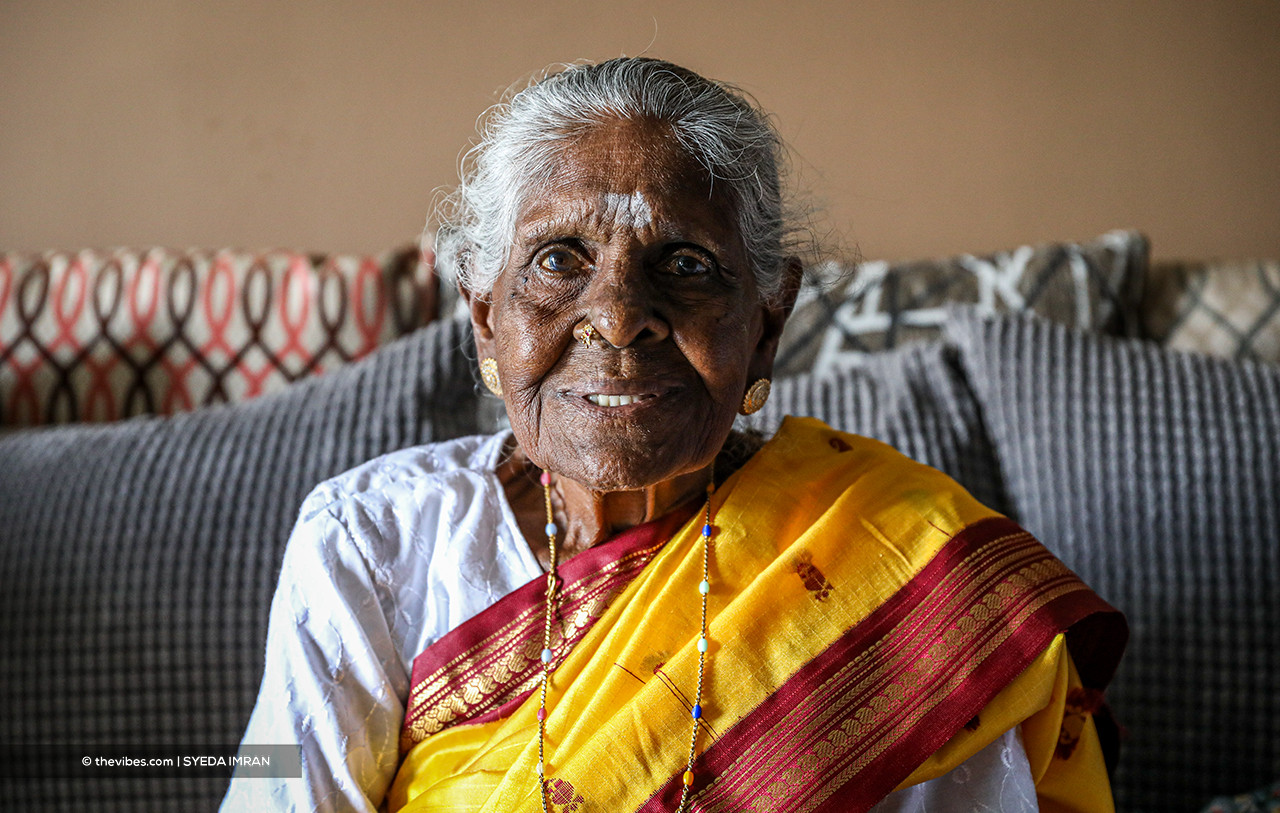
In May, 101-year-old grandmother Anjalai Ponnusamy serenaded The Vibes with her tales of warfare during World War 2. At the age of 21, the lass from Sentul had joined the Rani of Jhansi Regiment, or the Women’s Regiment of the Indian National Army.
Among her many life-changing experiences, she witnessed two of her comrades, Stella and Josephine, tragically dying after they were shot by guerillas while on military assignment on a train in Burma.
Anjalai recalled how she and others managed to find sarees for her colleagues’ remains. “We dug a reasonable hole in the ground and did the honours,” she recounted at her family home in Sentul, where she continues living today.
The cheery and amiable centenarian has saved her uniform cap from those years, which she still proudly poses with. Fittingly, Anjalai wore the cap together with a splendid smile when then Indian high commissioner Shri Mridul Kumar presented her with a silver plaque and the title “Veera Thaai” (Valiant Mother) in a ceremony here.
Unlike Anjalai, cabin crew staff Mei Yee had never willingly enlisted to be in the midst of danger and conflict. However, she was pushed by destiny to undergo a life-threatening experience 30 years ago that she would never forget.
On March 27, 1991, Yee was serving on Singapore Airlines flight SQ117 travelling from Kuala Lumpur to Singapore when the aircraft was hijacked. Four Pakistani men who had initially behaved like normal passengers took over the plane, armed with large sticks, cigarette lighters, and knives.
The ordeal of the 114 passengers and 11 crew members lasted throughout the night until Singapore Armed Forces commandos launched a pre-dawn mission to force the plane doors open with detonating charges and stun grenades. After shouting for the passengers to get down and identifying themselves as the rescue team, the commandos shot all four hijackers dead, leaving the hostages unharmed.
“I always think that life is fated – it's fated,” Yee reflected in an interview when recounting the incident.
“We don't have a choice in the first place, you know. So, whether I want it or do not want it, it was just part of the nature of my job – it could happen. I do not feel any different, and I do not think that I am very strong having lived through it.”
Two other women have similarly lived to tell intensely traumatic ordeals under tragic circumstances of nature that they emerged from due to their impulse to survive.
On the morning of December 26, 2004, Priscilla Patrick was in her stilt cabana on Sri Lanka’s southern coast when she saw a tsunami approaching from the Indian Ocean. The event – one of the deadliest natural disasters ever recorded – would claim more than 230,000 lives and displace millions in 14 different countries.
Miraculously, despite being tossed about in an underwater torrent and drifting away, she survived.
“Living through that moment (sight, smell, sound, etc), I get stronger and stronger,” she shared. “The tsunami was the worst thing in my life to happen, and I have set that as the bar. No challenge can be worse than it. When I think that way, nothing worse will happen.”
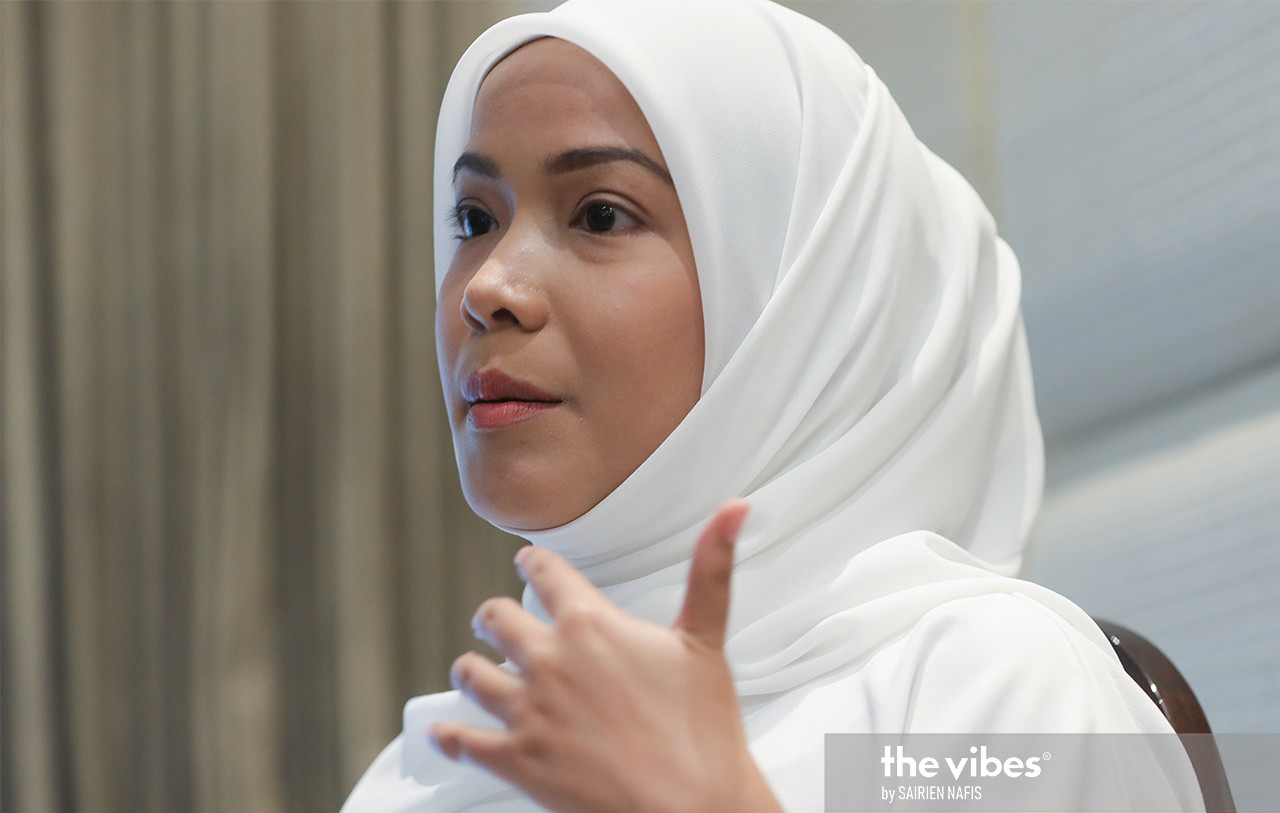
In a similar vein, business strategist Nurfatin Sulaiman lived to tell how she survived for three days when she got lost alone while on a trip with friends to the mysterious and evergreen Mossy Forest in Pahang in 2017.
Left by herself in the wilderness, she trailed a river on the mountain of Gunung Irau, hoping to find any sort of civilisation. It was a time when all her survival instincts were pushed into full gear. She had to pass through the difficult terrain without any equipment to smoothen her crossing.
At one point, she slipped and fell on her face when she tried to come down a slope. When the search-and-rescue team eventually found Nufatin, they told her that she was 900m off track from the point she fell – a total of 1km, including the height of her initial fall.
“The key message here is to advocate on how we can be well prepared by adequately equipping ourselves with the do’s and don’t’s,” she said in an interview.
She spoke about learning from mistakes so they are not repeated, noting that her experience only made her “more attentive and a better planner”. – The Vibes, October 13, 2021