
SANDAKAN – Sabah’s sole training centre for the blind is under immense financial strain due to the coronavirus crisis, with its graduates out of a job since the movement control order was imposed in March.
Eleven graduates of the Taman Cahaya Training Centre in Sg Manila here, who previously worked as masseurs to support their families, are now fully dependent on the facility for food and shelter, as are the 20 trainees living there.
Supervisor Ibrahim Abdul Hamid said they are discouraged from leaving the centre, citing the added health risks the blind face by being out and about amid the pandemic.
“We want them to stay at the centre as they would have to touch surfaces (to navigate) when they are outside, and at times, other people would need to hold them to help them.
“In this pandemic situation, it is very risky. We do not want them to get Covid-19.”
On Monday, a 61-year-old blind man died of the virus at Tuaran Hospital, ramping up the Taman Cahaya centre’s concern.
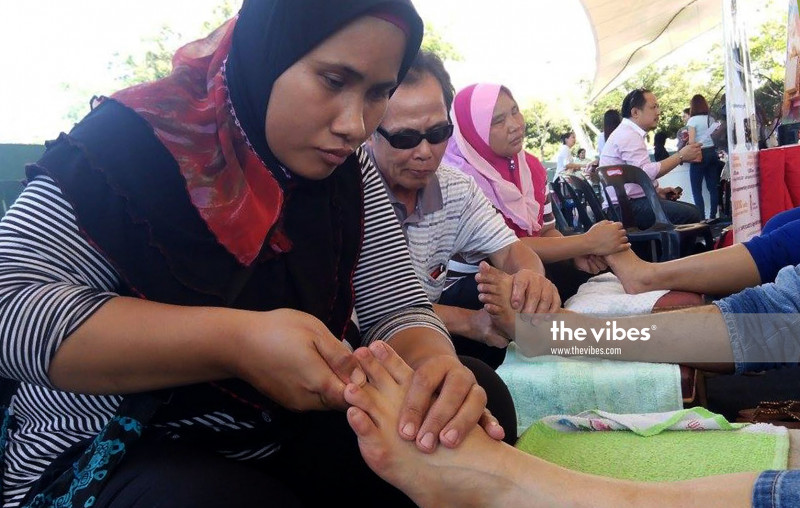
On the 11 graduates, Ibrahim said: “Their income was from working at spas, the massage station at the Kim Fung night market (at Mile 4) and the massage station at Pasar Tamu (set up in town on Sunday mornings).
“The movement curbs imposed since March have not allowed them to work.”
He said the centre, which is under the Sandakan branch of non-governmental organisation Sabah Society for the Blind (SSB), requires RM25,000 to run a month.
It gets a RM60,000 annual grant from the government, and has so far received RM50,000 in public funding.
SSB branch chairman Chong Yee Fah said the centre has sought donations from members of the public and corporations since it began operations in 1970.
Regular donors are also affected by the pandemic-hit economy, leading to the facility getting only 10% of the usual amount.
Before Covid-19, said Chong, people actively brought blind folk from all over Sabah to the Taman Cahaya centre, where they are taught to be self-sufficient.
“We provide various types of training, such as foot reflexology, body massage, agriculture, handicraft weaving, orientation and mobility, computer, music, ping-pong, football and chess.
“We want them to be confident, independent, and most importantly, able to earn a living for themselves. We train them for 12 months or more, until they are ready to leave the centre. During this period, we provide them with accommodation and food for free.
“After they have completed their training, they are issued a certificate, and we help them look for employment. For the visually impaired, the most lucrative and in-demand job is as a massuer.”
He said the centre has produced 1,210 graduates to date, with 80% working at spas statewide and the rest securing employment in the peninsula.
He urged individuals, groups and companies to donate to the centre at its website here.
Since March, the facility has been getting dry food items from local organisations and Good Samaritans. – The Vibes, November 1, 2020