


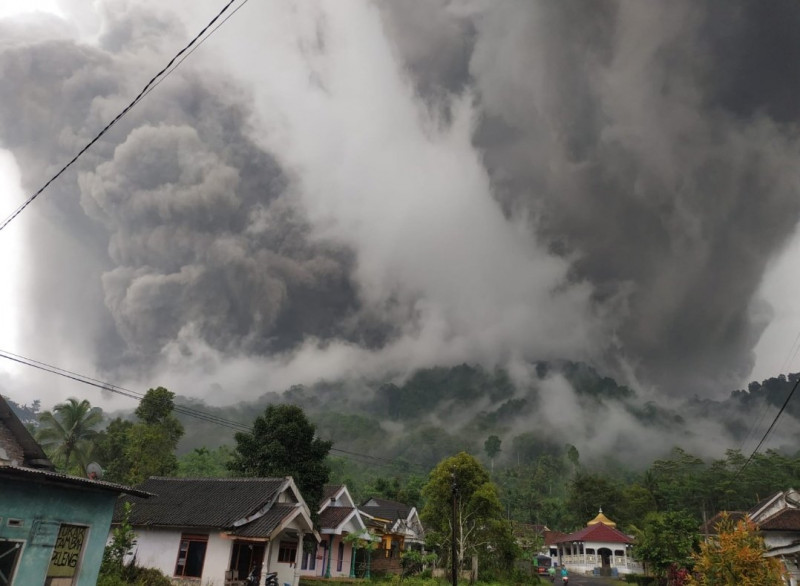

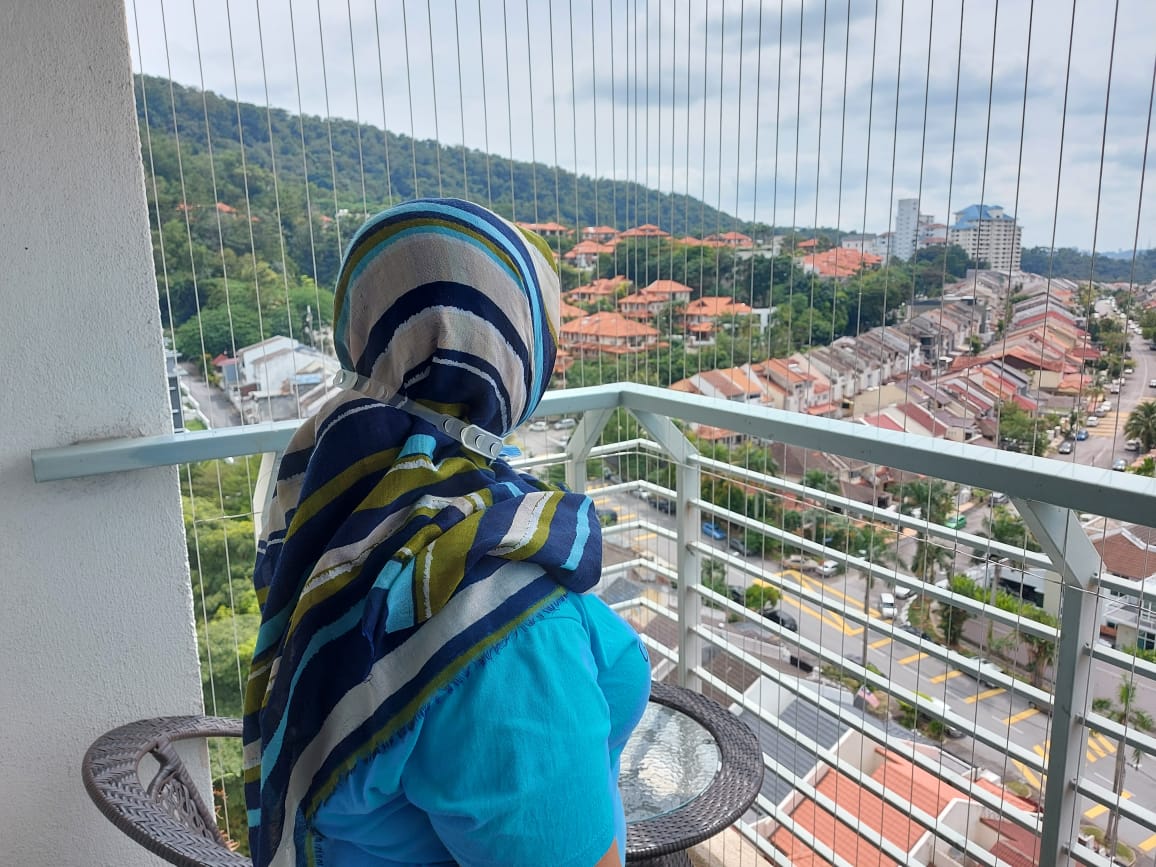
KUALA LUMPUR – Thirty-year-old Nur Masitah Pandri (not her real name) was at work cleaning an office when she received terrifying news from home yesterday – the nearby Mount Semeru, located an hour from her village, had erupted and her nine-year-old daughter was missing.
“My brother called me at around 3pm and told me that the volcano had erupted. Everything was in chaos and they had to evacuate my house to run to another village. The house and basically everyone and everything in our village were covered in mud and volcanic ash after the eruption.
“My daughter was out for her Quranic lessons and they couldn’t find her. I started crying and I was terrified for my daughter, my parents and my family. It became worse when my grandmother went missing too,” said the Indonesian office cleaner to The Vibes.
The migrant worker has been working in Malaysia’s capital with her husband since 2018. They left their country in order to provide for their two daughters – 13-year-old Anisah who is in a boarding school and their youngest girl Ifa, while helping out their indebted parents.
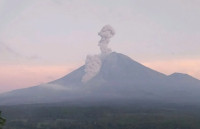
Hailing from Kg Lumajang in the Lumajang Regency in East Java, Nur Masitah’s home is but an hour’s motorcycle ride away from the active volcano that had caused untold destruction, a dozen deaths and more injuries in its surrounding area when it erupted yesterday.
For two hours, the worried parent desperately tried to reach her youngest child but her calls and messages went unanswered.
Her family was later reunited
Nur Masitah only found some relief at around 5pm, when her daughter Ifa finally managed to send a WhatsApp message, informing her mother that she was frightened but uninjured, even though she was covered from head to toe in muddy soot.
The moment she heard from her child, Nur Masitah broke down in tears – one of relief and another of sadness when Ifa sent her a picture of herself being covered in volcanic ash.
Later that night, she received more welcoming news. Her family members finally found each other after being scattered all over the place during the chaos.
A neighbour found Ifa running to escape the ash cloud and quickly told her to hop into his car. In panic, they all fled to Kg Sunduro, which is an hour away from my village, roughly two hours away from the volcano.
“Luckily my brother, his family and my parents also managed to flee there in safety. My grandmother had apparently fainted after screaming that it was the end of the world. The police had rescued her and brought her safely to the same kampung.
“All my family members were reunited last night at around 9pm. Another neighbour told my brother he saw my daughter in another household in that village. He quickly went looking for her and took her in,” said Nur Masitah.
A tradition of looking out for one another
Seeing that Indonesia is located in the volcanically active Ring of Fire, some of its rural folks have developed a culture known as pengongsian (sharing) – where they would take in and care for strangers from nearby villages who were hit by a natural disaster.
Under this tradition, strangers would open up their homes to other strangers and provide for them in terms of food, clothing and other extra necessities that they can afford to spare to ensure the community’s survival as a whole.
At this moment, Nur Masitah said she is unsure if President Joko Widodo’s administration will be providing refugee camps or official government shelters to those who have been affected by the tragedy.
When the volcano erupted, my family didn’t receive any instructions from the government. The villagers there just fled for safety. They left everything behind. Everything was covered in muddy soot.
“My family will have to start cleaning up everything once it is safe to go home. Alhamdullillah (Thank God) they are all safe,” she continued.
Still more challenges ahead
However, even though her relatives are physically safe at the moment, the hurdles have only just begun for the impoverished folks of Kg Lumajang.
Some of Nur Masitah’s family members were injured when the volcano blew up, even though they were miles away from the mountain.
One of her cousins, who was out sand mining and was hit by superheated water and steam, was taken to the hospital with burns all over his body.
Another neighbour was also hit by a blast of superheated water as he was crossing a bridge in his small four-wheel drive and was also taken to the hospital.
The water’s temperature was reportedly so high, that the bridge near her village was bent out of shape and had collapsed.
More worryingly is Nur Masitah’s one-year-old nephew – the son of her older brother – who is now suffering from breathing in toxic ash.
They don’t have any milk. The child is crying and crying. Right now, they’ve resorted to feeding the boy with sugared water. My brother is asking my help to send money – he needs to buy milk.
“He also told me that the boy is showing symptoms of the flu. There’s mucus. It must be because of the volcanic ash. I hear it’s very toxic.” – The Vibes, December 5, 2021











.jpeg)
