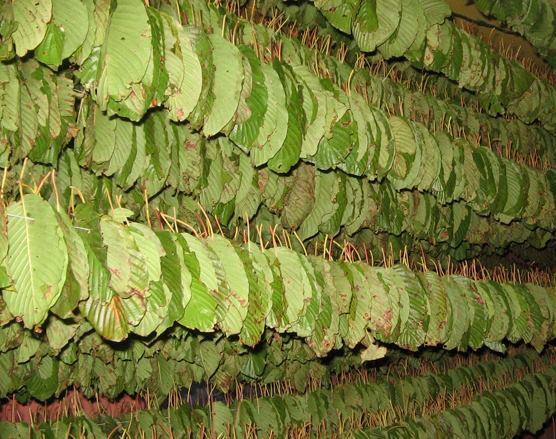

KUALA LUMPUR – Datuk Mohd Salim Sharif (Jempol-BN) has questioned whether the Health Ministry’s apparent unwillingness to look into the medicinal usage of hemp and ketum is due to the constraint of laws.
While debating Budget 2022 in the Dewan Rakyat today, Salim called on the ministry to disclose what efforts have been taken to research and develop the medical usage of both plants, and whether existing laws are hindering progress.
“Why is Malaysia taking so long to approve the usage of hemp and ketum for medical purposes when their benefits are apparent?
“We will be entering 2022 soon and yet, specific research on the medical usability of both plants remains suspended.
“If not for the restrictions of the laws, surely Malaysia would have followed countries such as Thailand, which has removed ketum from its list of narcotic substances,” he claimed.
Salim also said that both plants have a large market, even in more urban areas.
This is despite hemp being a listed substance under the Dangerous Drugs Act 1952 while ketum is categorised under the Poisons Act 1952.
“Authorities may have illegalised the use of products related to both plants, but there is an increasing number of people who use them for their medicinal value,” he said, noting that ketum has long been sought after due to its energising qualities and hemp is upheld for use in pain relief.
In his speech, Salim also addressed the matter of government doctors choosing to serve in private hospitals due to improved job prospects and higher salaries.
He pointed out that between 2016 and 2021, 948 specialist doctors resigned from their positions in government hospitals and transferred to the private sector.
“This figure is worrying as there are many public hospitals, especially in rural areas, that face a lack of specialist doctors,” he said, adding that a shortage of specialist doctors will cause many other problems affecting the quality of service received by patients.
“What is the ministry’s intervention plan to ensure that specialist doctors remain in the public system? What is the exact number of specialist doctors in Malaysia and are there enough for the whole nation?” he queried.
In his reply to the query, Deputy Health Minister I Datuk Noor Azmi Ghazali told the lower House that there is indeed a legal constraint when it comes to cannabis as it falls under the Dangerous Drugs Act and Poisons Act.
“Any cannabis products being used as medicines for humans and animals are also subjected to the Control of Drugs and Cosmetics Regulation 1994, which was created under the Dangerous Drugs Act.
“These acts and its laws grant provisions to control any activities involving cannabis and its production, including planting, import, export, ownership, storage, selling, and supply,” said Noor Azmi.
However, touching on ketum, the deputy minister revealed that the Health Ministry is in the midst of conducting pre-clinical studies covering the plant’s chemical components, safety, and efficacy.
So far, the studies have found that ketum is safe to be used in the short-term but the long-term impact is still being looked into.
“The efficacy study has found that ketum extracts have anti-malaria components that kill the malaria parasite. It also found that ketum has an impact on mutagenic properties, or prevents cells from mutating genetically – which is the cause of cancer.
“However, the issue that we are facing is on the supply side. We don’t have a steady supplier for ketum. We still need to conduct extensive pre-clinical and clinical studies first,” said Noor Azmi. – The Vibes, December 6, 2021


.jpg)