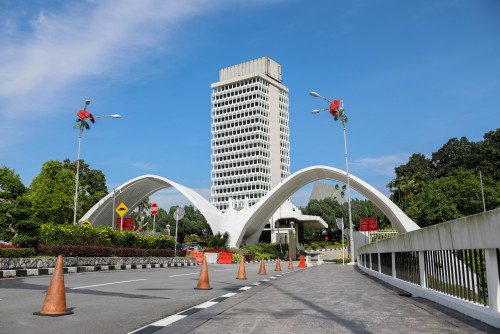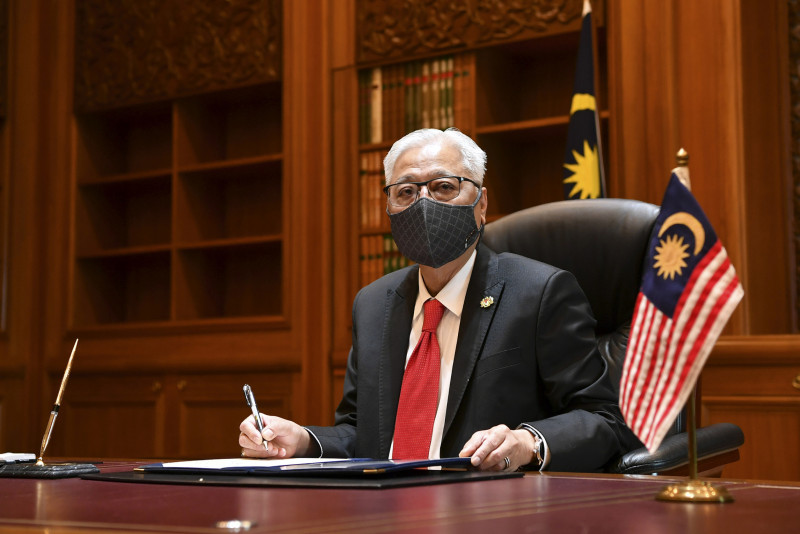

KUALA LUMPUR – When Datuk Seri Ismail Sabri Yaakob took hold of Perdana Putra 100 days ago, one could say that he came in during one of the worst periods in Malaysia’s history.
The country was facing a triple threat from Covid-19, an economic downturn caused by adverse effects of the global pandemic, and political turmoil and instability due to the unpopular administration of his predecessor Tan Sri Muhyiddin Yassin.
Historically, perhaps no other newly minted or incoming prime minister (PM) had to overcome the challenges faced by the Bera lawmaker.
And unlike all his predecessors, Ismail Sabri never had a honeymoon period. He was expected to be able to swim and succeed the moment he took office.
There was utterly no room for him to sink, or make any mistakes.
In light of these extraordinary circumstances, several academics have agreed that it would be very unfair to gauge his performance in merely 100 days – especially on how he is managing the Covid-19 pandemic.
Don’t compare cumulative Covid-19 fatality spikes
Recently, Johor Bersatu election director Badrul Hisham Shaharin – fondly known as Chegubard – noted that in the 18 months when Muhyiddin was PM till the day he stepped down, there were a total of 12,784 cumulative Covid-19 deaths (with a 23-per-day average).
He compared this figure to the 100 days of Ismail Sabri’s administration where cumulative deaths as of December 4 had hit 36,719 individuals, meaning that there were an additional 23,935 deaths in three months.
However, Singapore Institute of International Affairs senior fellow Oh Ei Sun argued that when it comes to the pandemic, it is rather unfair to strictly compare the number of Covid-19 deaths between the two administrations.
Muhyiddin ruled during the initial and ascendant phases of the pandemic, while Ismail Sabri took over at the height of the pandemic that only saw a descendant trajectory in recent days.
“In any case, the pandemic effort is largely relegated to (Health Minister) Khairy Jamaluddin, although Ismail Sabri as PM must still assume the overall vicarious responsibility for the success or failure of the effort.
“Besides, we have moved into a living-with-Covid-19 phase where moderately high numbers of Covid-19 cases are to be expected,” Oh said.
Universiti Utara Malaysia’s (UUM) Prof Mohd Azizuddin Mohd Sani echoed his fellow academic’s arguments, saying the early days of the Muhyiddin administration had seen minimal numbers to the extent that Malaysia was globally lauded – until the Sabah election led to a spike in cases nationwide.
He observed how Malaysians became relaxed after the Sabah election where cases first began peaking – which was during Muhyiddin’s administration.
During the campaigning period, crowds still congregated around political ceramah (talks), even though mega ceramah were not allowed.
It did not help that politicians from Peninsular Malaysia and party supporters kept traveling to and from Sabah without much fanfare – mandatory quarantines and swab tests for those returning to Peninsular Malaysia were only done after polling day.
When Muhyiddin himself made an appearance in Kota Kinabalu during the final leg of the election, hundreds of supporters turned up to hear him speak as party officials did their best to maintain social distancing and Covid-19 standard operating procedures.
“We were complacent after the Sabah election. That’s when we saw it peaking, during Muhyiddin’s time. In terms of infections, the rate is still high, but is now lower than three months ago before we achieved 90% vaccination. The trend is going down, but it takes time.
“This could be one of the consequences of opening our market – it also increased the infection rate amongst the public. But compared to the last two to three months, now it is much better,” he said.
Azizuddin believes the nation should give Ismail Sabri’s administration the opportunity to show its potential and what it can do.
It’s not a fair comparison between Ismail Sabri and Muhyiddin, at least for me – we should give the new administration a chance to show its potential.”
Universiti Kebangsaan Malaysia’s Prof Kartini Aboo Talib also reinforced her peers’ statements, giving a gentle reminder that during Ismail Sabri’s tenure, more variants were discovered – with two entering the country.
“We have to admit that new variants of Covid-19 evolved and the statistics of deaths increased, but relatively, those who recovered are high, too,” Kartini said.
For months, Sarawak was badly hit by the Delta variant, which has been spreading throughout certain parts of the state.
Meanwhile, the newly discovered Omicron variant has been detected in the country, with the first case found in Perak late last month.
Diplomatically, politically adroit in his manoeuvring
The pundits also made an observation on how Ismail Sabri is making the right political moves so far, as he manoeuvres through a gauntlet of rivals within his own cabinet and party members who are more than willing to take him down.
“Politically, Ismail Sabri should, for the time being, be credited with his adroit skills in performing an admittedly delicate balancing act.
“As his intra-party stature within Umno is less than impressive to say the least, he is openly co-opting the support of both Umno’s main rival Perikatan Nasional (PN), as well as the opposition Pakatan Harapan (PH) to cancel out the imminent political threat posed to him by the formidable Umno mainstream faction.
“But frankly speaking, it is anybody’s guess as to how long and far this fragile political juggling of balls could last,” said Oh.
He pointed out how mainstream Umno had “totally sidelined” the PM from claiming any credit in its landslide victory during the recently concluded Melaka election.

The polls had seen Umno raking in a two-thirds victory, practically annihilating all comers and taking home 21 of the 28 seats – leaving five with PH and only two for its erstwhile ally PN.
Oh said the Umno vice-president only made one appearance there, but had found the time to visit Sabah and Indonesia in the midst of campaigning.
“It may thus be fairly said that his hands are tied, as he is perceived to be in the figurative bed with political strange fellows that are erstwhile rivals of his own party,” said Oh.
Kartini, on the other hand, shared Oh’s earlier comments on how well Ismail Sabri is charting shark-infested waters, looking at his professional background and how he had engaged with the opposition early on in his premiership.
Unlike Muhyiddin, who only extended an olive branch to the opposition in desperation just before he was ousted, one of Ismail Sabri’s first steps after taking power was to offer a memorandum of understanding with PH.
His efforts were rewarded when opposition leader Datuk Seri Anwar Ibrahim and his PH allies agreed not to rock the boat up till July next year.
“He will do well because he is a lawyer by training, and he has displayed an excellent idea of ‘Aspirasi Keluarga Malaysia’ that calms the conflict on power struggles among political parties,” Kartini observed.
However, Azizuddin shared Oh’s final comments on the political pit traps faced by Ismail Sabri, warning that he must be careful and build up support if he wants to remain as the ninth PM after the general election.
He said even though Ismail Sabri listens to various political party leaders and appeases them to juggle political stability, he must also be able to command them as PM or he will share Muhyiddin’s fate.
In order to do this, the UUM academic recommended that Ismail Sabri must have overwhelming public support.
He has a lot of constraints to manoeuvre not just in politics, but to lead the federal government. He has to deal with all these party presidents and it’s not easy. He formed a government that is very divisive in mentality amongst its own leaders – Umno, PAS, and Bersatu.
“It’s a marriage of convenience to be part of the federal government. They’ve never worked together. If he wants to become PM after the general election – the best way is for him to perform.
“He must really perform and if his faction wins the polls, the public themselves will then demand that he remain as PM. He needs to show to the public that he is very good, so that cross-party supporters and the public will not accept any other candidate.
“Otherwise, people will say there are other candidates to replace him like Anwar, Datuk Seri Ahmad Zahid Hamidi or Datuk Seri Abdul Hadi Awang,” said Azizuddin. – The Vibes, December 9, 2021