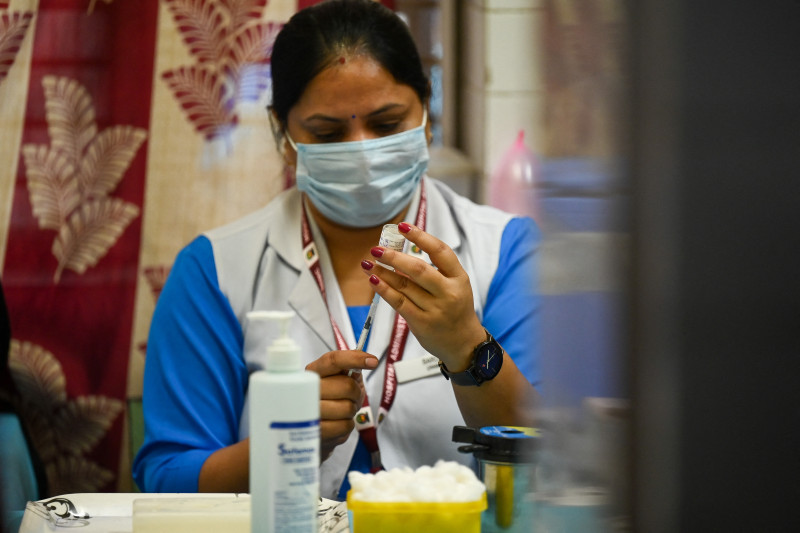

KUALA LUMPUR – With the Health Ministry’s recent conditional approval of India’s Bharat Biotech International Ltd Covaxin Covid-19 vaccine, most members of the public are concerned over the possible side effects that receivers will experience.
According to a medical expert, receivers can expect to undergo side effects similar to that of other previously approved vaccines, such as those from Pfizer-BioNTech and Sinovac.
Speaking to The Vibes, Universiti Putra Malaysia medical epidemiologist Assoc Prof Dr Malina Osman said Covaxin receivers will likely experience mild side effects that can easily be treated with regular painkillers such as paracetamol.
“Common side effects, which are usually mild, include slight pain or swelling at the injection site, along with the possible occurrence of a fever or headache.
Immediate side effects like difficulty in breathing or a severe allergic reaction might be observed, but such events are extremely rare.”
Covaxin manufacturing technology similar to Sinovac
She added that in terms of safety and efficacy, Covaxin is comparable to other available vaccines, has an efficacy of around 80%, and is effective against the Omicron variant currently infecting patients in Malaysia.
“The manufacturing technology of Covaxin is similar to the production of Sinovac. It uses a completely infective SARS-CoV-2 viral particle consisting of ribonucleic acid surrounded by a protein shell, but modified so that it cannot replicate or cause possible infection.”
In simple terms, the Covaxin vaccine is made from a modified or inactive form of the Covid-19 virus, which means that it contains killed coronaviruses, making it safe to be injected into the body.

According to an explainer on the vaccine, released by the World Health Organisation (WHO) on January 5, Covaxin further stimulates the body’s immune system without the risk of causing disease.
Once inactivated viruses get presented to the body’s immune system, they stimulate the production of antibodies and make the body ready to respond to an infection with live SARS-CoV-2.
“A large Phase 3 trial in individuals aged 18 years and above has shown that two doses administered at an interval of 4 weeks had an efficacy of 78% against Covid-19 of any severity and 93% against severe Covid-19 infections 14 days or more after the second dose.
In adults aged below 60 years, vaccine efficacy was 79%, and in those aged above 60 years it was 68%. Vaccine efficacy against asymptomatic SARS-CoV-2 infection was 64%. The median duration of follow up available at the time of review was 99 days,” it said.
Is Covaxin safe during pregnancy?
In another article published by the organisation on November 3 and updated on January 5, it was reported that there is currently insufficient data on Covaxin used in pregnant women to assess vaccine safety during pregnancy, although such studies are planned.
“While data on neonatal outcomes have not yet been collected, more than 120,000 pregnant women in India have received this vaccine, and only minor adverse events related to the vaccine were found,” it said.
WHO also recommended for Covaxin to be used on pregnant women if the benefits of vaccination outweigh the potential risks for them.
On February 10, the Health Ministry, through the Drug Control Authority, had given conditional approval for the administration of Covaxin to those aged 18 and above in Malaysia.
In a statement issued by Health Director-General Tan Sri Dr Noor Hisham Abdullah, he said Covaxin’s conditional approval still requires continuous monitoring of its quality, safety, and efficacy by the National Pharmaceutical Regulatory Agency.
Currently, Malaysia has been distributing Covid-19 vaccines from Pfizer-BioNTech, AstraZeneca, Sinovac and CanSino. – The Vibes, February 13, 2022