GEORGE TOWN – In the wake of environmentalists’ concerns that an incinerator purchase is a bad move for waste disposal, Penang has defended its proposal, saying that the relevant technology has improved considerably over the past decade.
Environment state exco Phee Boon Poh told The Vibes that seeing the technological improvements made to the system, it is worthwhile to consider investing in the equipment.
“It is not as polluting as it was in the 1990s. It has improved.
The dioxins used for the technology were also upgraded to ensure that there are no side-effects from the process of detoxifying the waste,” he said.
Phee added that there is now a four-level screening procedure to ensure that toxins could not seep out when the waste is crunched through the 180°C heating process.
Furthermore, the technology has also matured over the last decade, where it has become cleaner when treating waste with proper gasification.
Garbage dumped from outside Penang poses challenges to waste treatment
Despite being the national leader in recycling, the Sg Puyu assemblyman lamented that Penang continues to struggle with treating waste through conventional landfills and waste segregation.
It is because Penang is, by nature, good-hearted that people exploit our environmentally friendly policies to dispose of more waste in our territory.”
He cited two examples of neighbouring solid waste industrial collectors who dump their garbage in Penang, seeing that the disposal charges here are the cheapest in the northern region.
As a countermeasure, Penang’s local authorities were forced to install a global positioning system on all registered solid waste disposal trucks to ensure that they are dumping their rubbish in the properly designated areas.
Ships tossing their waste into open waters also a problem
Furthermore, the exco suspects that many commercial and leisure ships have been throwing their waste into the open water whenever they navigate to or from Penang Port.
The sea currents would then bring the waste into Penang’s shores and pollute the state.
Phee cited the recent finding of a large amount of waste at the man-made Pulau Gazumbo as an example.
In 2019, the state had mooted securing an incinerator, seemingly backpedalling on its first decision to “never have an incinerator” in Penang.
Local government state exco Jagdeep Singh Deo had proposed the idea, saying that it is more efficient when it comes to waste disposal.
Jagdeep explained that in the past, the gasification system “was still in the early stages”.
So we were against it then. But now, with advanced technology that makes it suitable for our climate, we have reviewed our stance to be open about it.”
Penang plans to discuss the proposal with nine companies.
Jagdeep reiterated that the state’s re-examination of the incinerator option is “consistent with the federal government’s push for each state to have its own incinerator” and “would provide a long-term solution for the state’s waste management.”
Zero waste approach powered by recycling a better alternative: SAM
But as Penang edges towards such a possibility, Sahabat Alam Malaysia (SAM), a co-signatory to the Global Alliance for Incinerator Alternatives, is adamant that the incinerator proposal should not be entertained.
SAM’s concept of fighting the growing waste problem, which coincides with concerns over the rapid climate change, is to have zero waste with a huge emphasis on a circular economy, which is powered by recycling, reusables, and new green tech.
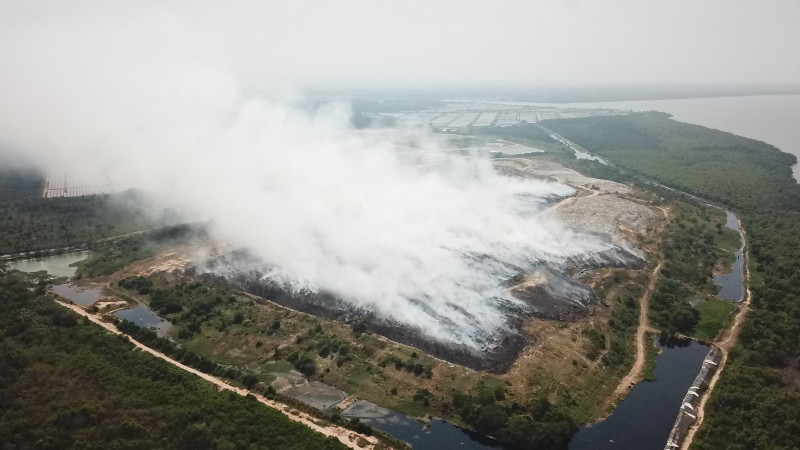
Their worries over Penang revisiting the idea and the possibility of implementing the new policy came fresh on the heels of a landfill fire that happened on February 26.
SAM senior researcher S. Mageswari also told The Vibes that fly ash, a very toxic by-product of incinerator technology, is characterised as hazardous waste and should undergo a stabilisation process before storing in hazardous waste sites. – The Vibes, March 2, 2022




.jpeg)









.jpeg)