
KOTA KINABALU – Although the state government is optimistic about this year’s economic recovery, local business owners are seeing red over the proposed RM1,500 minimum wage and the hiring freeze of migrant workers.
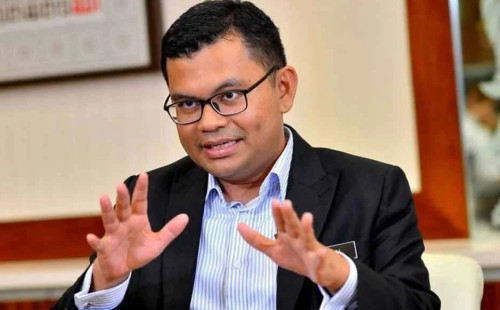
Small Medium Enterprise Association of Sabah president Foo Ngee Kee described the federal plan as “ill-conceived”, instead suggesting that better remuneration should be tied to the productivity of individual workers.
“Businesses should provide incentives to spur productivity of workers like bonuses or service points as used in the hotel industry.
“Employers will not be burdened by high wages that they cannot afford during low business periods.”
A large portion of Sabah’s workforce is in the informal sector, earning below the minimum wage. The state is also the poorest and has among the highest unemployment rates in the country.
In the third quarter of last year, the state logged an unemployment rate of 9% while the national average stood at 4.7%.
Sabah’s Science, Technology and Innovation Minister Datuk Yakub Khan had told the state assembly that Labour Department data showed that a total of 178,600 individuals were unemployed.
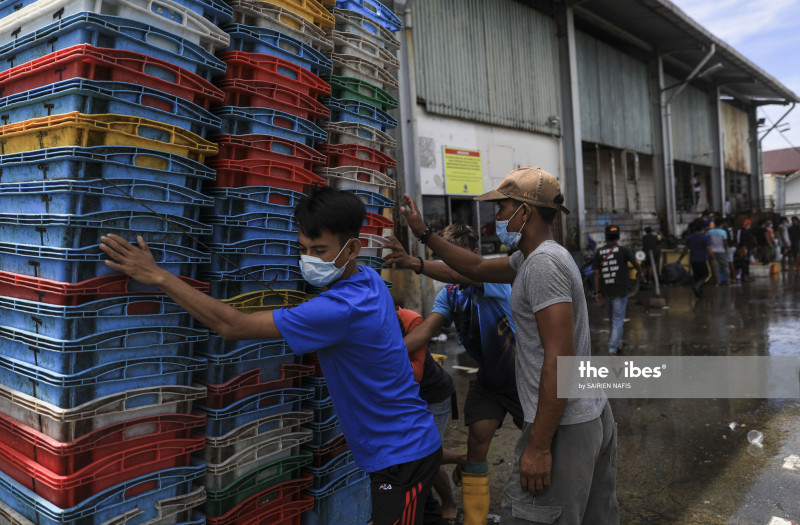
In addition, locals are mostly hired in the services and hospitality sector, while plantations and the construction industry rely heavily on migrant workers – where supply has been scarce due to the hiring freeze since the start of the pandemic.
Trade associations in Sabah continue to push the state government to intervene and address the shortage of migrant workers.

The Sabah Timber Industries Association, Timber Association, Sabah Furniture Association, SME Association of Sabah, Sabah Employers Association and the East Malaysia Planters’ Association have requested that the authorities provide amnesty to the estimated 1.2 million migrants already in the state.
Although Sabahans bear the misconception of being choosy, young jobseekers have said otherwise, adding that pickings are slim.
As a result, a large number of Sabahans have migrated to the peninsula and countries like Singapore to find work and better opportunities.
Universiti Malaysia Sabah economist Prof Datuk Kasim Md Mansur believed that a hike in the minimum wage could make 3D (dirty, dangerous and difficult) jobs more attractive for the locals and address the reliance on migrant workers.
Currently, he said 95% of the 1.9 million minimum wage earners in the country are migrants and the RM1,500 proposed new wage cap will only be beneficial to them, not locals.
Kasim said this defeats the purpose of the minimum wage policy that aims to narrow the wealth gap among Malaysians.
He added that the rising cost of living also makes it challenging for minimum wage earners to be paid fairly.
A study that he conducted found that while the state’s gross domestic product (GDP) is improving, the average income per capita is not.
“Such inconsistency could never truly reflect the true economic performance of the state. The average income per capita for each state is inconsistent in spite of the improved GDP.
We have found that states with a higher GDP did not come with an increase in the income per capita.
“This has resulted in the weakening consumer purchasing power although general productivity is already high.
He said this is why the minimum wage was created – to stop the exploitation of wage earners.
Kasim also expressed fear that employers may impose cost-cutting measures if the proposed new minimum wage is implemented, adding that this will further raise the unemployment rate in Sabah, subsequently the number of B40 individuals.
“But employers should not consider the pay hike to be burdensome as the government has also provided financial aid; for example, Putrajaya allocating RM18 billion for the wage subsidy programme to encourage employee retention. – The Vibes, March 7, 2022