




KOTA KINABALU – A foreign arbitrator’s decision to order Malaysia to pay RM62.5 billion has caused a bit of indignant wildfire in Sabah.
The judgment was based on the supposed violation of a deed of cession signed by Sulu Sultan Jamal Al-Alam who was the last sultan of Sulu, German businessman and diplomat Gustav Overbeck who was hailed as “Maharaja of Sabah”, and the British North Borneo Company’s Alfred Dent, in 1878.
As the arbitration met with criticism from Sabah, the never-ending claim by the modern heirs of the Sulu sultanate remains fixed only on the cession treaty.
However, the British firm did not sign such treaties with the Sulu alone.
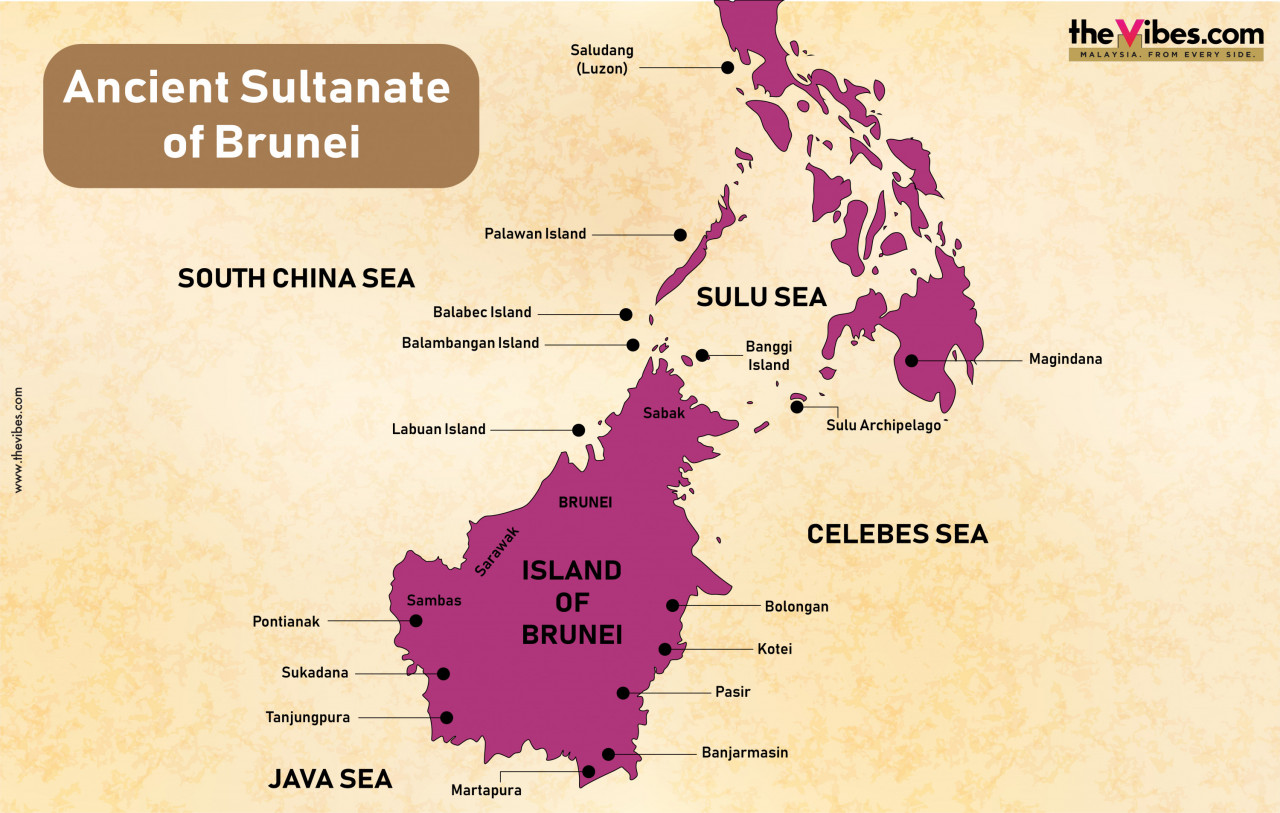
In 1877, a year before the deed of cession was signed, the British had signed four treaties with the Sultan of Brunei who exercised jurisdiction over the entire Sabah region.
The first treaty involved the west coast of Sabah while the other three involved the whole of Sabah.
The treaty with the Sulus was merely to stop the expansion of Spanish colonialists who were at that point of time trying to conquer the Sultan of Sulu.
Spain had thought that by conquering Sulu all the areas that were vassals of Sulu would be theirs.
Subsequently, the British North Borneo Company signed 27 treaties with the Brunei sultanate, and even more treaties with the Pengiran Tulin who ruled over North Borneo autonomously under Brunei’s dominance.
Brunei history researcher Shari Jeffri said North Borneo was never a vassal state of the Sulu Sultanate. Instead, Sulu was a vassal of the Brunei Sultanate.
The Sulu sultanate itself was already on the verge of collapse and had sought help from the Germans and British to fight against the expanding Spanish, he said.
Historian Bilcher Bala said Brunei’s power expanded over the entire northern part of Borneo up to the southern Philippine islands and Manila on the northern island of Luzon, from 1376 till the 16th century.
“Brunei began to weaken in the mid-16th century, with the loss of colonies in the Philippine islands due to the presence of the Spanish power in the Philippines in 1565.
“The Spanish once even invaded and conquered Brunei on April 16, 1578, But the Spanish power did not last long – only 72 days – and they immediately left Brunei,” said Bilcher. Despite this, Brunei’s power remained strong in the Sulu Islands.
The 1878 treaty came at the suggestion of William Clark Cowie, a merchant who already established close links with the Sultan of Sulu. Cowie himself signed another treaty after the Deed of Cession was inked, an arrangement to avert any disruption of the weapons business that he was in.
Cowie himself had gone to Hong Kong to raise funds to purchase the concession but failed. The treaty also came about with the encouragement and advice of William Hood Treacher, who later became the North Borneo’s governor.
Incidentally, the Austrian government rejected Overbeck’s offer to participate in the Sabah concession. ‘
However, Britain showed keen interest. Overbeck thus proceeded to sell all his rights in the concession to Alfred Dent, a British citizen, in 1879.
North Borneo obtained sovereignty with British protection
In 1881, Dent established the British North Borneo Provisional Association Company. This was for the purpose of qualifying the application for a Crown Charter, which would guarantee the rights of an administration established by British agents in the province of Sabah.
This charter was granted on November 1, 1881. It gave Dent the authority to set up a company with the mission of establishing a British government of North Borneo, which would be subject to the advice of the British Colonial Office in London.
In May 1882, the British North Borneo Company (BNBC) was formed. Thus marked the rule of BNBC in Sabah as a political territory or sovereign state based on the charter of 1881.
Meanwhile in 1885, seven years after the Deed of Cession was signed with the Sulus, the Madrid Protocol was signed to recognise the Spanish presence in the Philippines. A definite border that outlined the Spanish influence was also established.
On May 12, 1888, the British government made a protection agreement with Sabah, Brunei and Sarawak, which became a British protectorate.
This was to resolve the conflict between the BNBC government and the Brooke Dynasty government in Sarawak, which was interested in some provinces of Brunei.
In other words, the protection agreement had saved the territory of Brunei from the expansion of the Brooke Dynasty and BNBC colonies.
The 1888 treaty accorded recognition to the BNBC government under the name of the independent State of North Borneo with its own sovereignty and jurisdiction in internal administrative affairs. All affairs of foreign relations were, however, placed under the responsibility of the British government.
With the 1888 agreement, the status of Sabah was changed from being part of the territories of the Sultanate of Brunei and Sulu to an independent state with guarantee of protection by the British.
In fact, in the months after signing the 1878 treaty, the Sultan of Sulu had expressed his remorse for his actions, according to Bilcher. “The Sultan of Sulu had also written a letter to Overbeck to rescind the 1878 treaty, but unfortunately the letter was not entertained,” he said.
Roots of dispute in a Bruneian family war
Former Sabah chief minister Datuk Seri Yong Teck Lee pointed out that Sulu never reigned over Sabah and there is no record or event that Brunei had ever ceded or given any part of Borneo to the Sulu.
The Sulu claim took shape after the Brunei Civil War or Perang Chermin (1660-1673). The war stemmed from a bloody family war in the Brunei royal household.
The two warring champs – Sultan Hakkul Mubin and Sultan Muhyiddin – had sought the aid of the Sultan of Sulu to help them win the war. In return, the Sulus were promised land.
However, the Sultan of Sulu did not take part in the war. Instead, his forces went in only after each battle to loot for bounties.
In the final battle, the Sulu forces kidnapped Hakkul Mubin’s wife, Bu Angsa, and son, Datu Dakula. The son later returned to claim his father’s territories.
Hakkul Mubin had committed suicide in the final showdown against Muhyiddin in Pulau Chermin, a small island fronting Brunei.
Hakkul Mubin or Sultan Abdul Hakkul Mubin Ibni Sri Maharaja Pengiran Bendahara Muhamad Panjang is hailed as the ancient ruler of Sabah. He is the son of Raja Dungu@Pengiran Anak Tuah who is the daughter of Sultan Saiful Rizal (1553-1581), the reigning Brunei sultan at the time.
Sultan Saiful Rizal’s father was Pengiran Bendahara Muhamad Panjang Ibni Datu Hatta Ibni Raja Sulaiman II. He had bequeathed six territorial dependencies in Sabah – Marudu, Banggi, Mempakul, Lawas, Bukau and Membakut – as a wedding gift to Raja Dungu.
This made Hakkul Mubin, who inherited these, the owner of much of Sabah. But after the civil war, his dominance waned as these areas were seized by Sultan Muhyiddin who had emerged triumphant.
The politics of Brunei also changed. Brunei’s dominance over North Borneo was passed on to Brunei’s Sultan Salahuddin Karamat and later to Pangeran Temenggung Hashim.
Subsequently, the treaties were signed with the Company.
Independence confirmed by Macaskie decision of 1939
The BNBC government again entered into an agreement with the Sultan of Sulu in 1903 on the issue of the Sabah claim, as well as the position of several islands in the waters off the Sulu Sea not specified in the 1878 agreement.
The agreement signed in April 1903 in Sandakan clearly means “handing over” and not “leasing” the archipelago from Banggi Island to Sibuko Bay to the BNBC government.
The original payment amount of $5,000 a year was raised to $5,300 a year.
Bilcher noted that the 1903 agreement was able to confirm that the original word “padjak” in the 1878 agreement more clearly meant cession or surrender, rather than lease or rent.
After the death of the Sultan of Sulu in 1936, the sultan’s adopted daughter Dayang-Dayang Hadji Piandao Kiram brought the Sabah claim to the Borneo High Court.
On December 18, 1939, the court under Charles Macaskie, the chief justice of North Borneo, recognised the meaning of “surrender” according to the English version of the 1878 treaty.
Macaskie’s decision was also in line with the May 12, 1888 agreement, which confirmed Sabah’s status as the State of North Borneo, a political territory under the BNBC rule that was independent or had its own sovereignty and jurisdiction with guarantees of protection by the British government.
On July 15, 1946, after the Second World War, the BNBC government handed over Sabah to the British Colonial government and it officially came under the Colony of North Borneo.
There was no valid document from the Sultan of Brunei on the Sulu claim over Sabah. This is contrary to the Sulus alleging that the territory was handed to them in 1704 or earlier.
Furthermore, history shows that there was indeed a sultanate of Sulu in the past, but it no longer existed after 1946.
According to Bilcher, there are individuals who pretend to be the sultan of Sulu making claims over Sabah, making the historical narrative into somewhat of a joke and fairy tale of the 21st century. – The Vibes, March 13, 2022












.jpeg)
