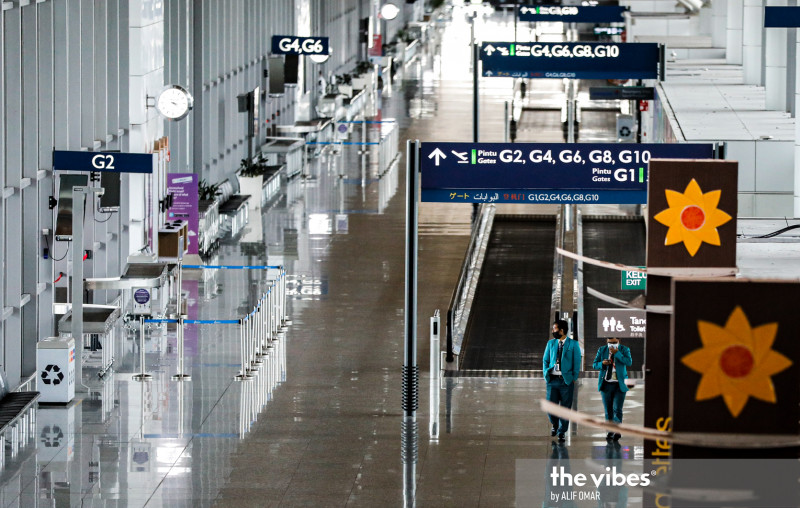

KUALA LUMPUR – While it is believed that the tourism industry will benefit from the reopening of our nation’s borders on Friday (April 1), key stakeholders are cautioning against high hopes for an immediate surge of tourists.
In early March, Prime Minister Datuk Seri Ismail Sabri Yaakob said Malaysia would begin the first phase of its transition towards the endemic phase from April 1. The reopening of international borders is set to be part of that transition.
Speaking to The Vibes, industry leaders welcomed the long-awaited move but also expressed reservations on the number of incoming tourists as they claim that factors affecting foreign nations must also be considered.
Malaysian Association of Tour and Travel Agents president Datuk Tan Kok Liang pointed out that while travel bookings are still slow, incoming tourists from certain key markets can be somewhat eliminated.
“Bookings depend on countries that have eased their own Covid-19 restrictions. For instance, we will not be seeing tourists from places such as China, Japan and Korea as several areas in these countries are still on lockdown.
“There is no way it will be a strong recovery so soon. Malaysia will only see forms of serious arrivals starting from May onwards; there won’t be many tourists arriving the moment our borders reopen on April 1,” he said.
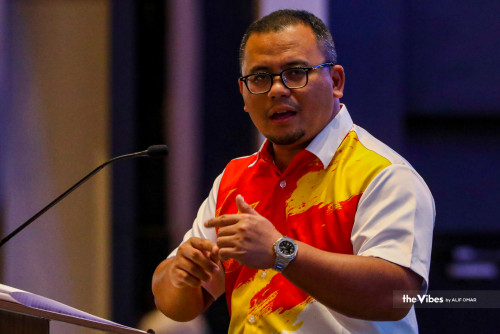
Meanwhile, Malaysian Association of Hotels chief executive officer Yap Lip Seng urged authorities to strengthen efforts in advertising offerings and the country’s attractions to put Malaysia back on the global tourism map.
“We are already losing out to neighbouring countries that have been aggressively marketing their reopening initiatives.
“Malaysia needs to do more to attract travellers who are interested in not only vacations for leisure but also business travels,” he said.
He also said that while the reopening is “essential and long overdue”, there are still problems on the ground that might impede hotel operations.
According to him, convincing workers to rejoin the hotel industry will be no easy feat after many businesses were forced to shut down due to the Covid-19 pandemic, causing countless individuals to lose their source of income.
“Manpower is still a major concern as it will take some time to regain the confidence of people to work in the industry; this may take another year or two.
“Wage subsidy from the government is still needed and the plan to increase minimum wage will create an additional burden to the industry,” he said, echoing budget hoteliers who had earlier objected to the decision.
Despite protests from certain business groups, Prime Minister Datuk Seri Ismail Sabri Yaakob had announced on March 19 that the minimum wage increase to RM1,500 will be implemented from May 1 onwards.
Yap also lamented the increasing cost of operations, particularly electricity, describing the increase in tariff as “trouble to the industry” as hotel owners attempt to rebuild their businesses.
“Hotels are caught in a difficult situation as we have to operate while bearing high electricity consumption costs,” he said.
On January 28, the Energy Commission had announced that the government will impose an electricity tariff surcharge of 3.7 sen kWh for non-domestic users for the period from February to June this year, while maintaining a two sen rebate for domestic users. – The Vibes, March 30, 2022