
KUALA LUMPUR – Despite making some headway in providing improvements on working conditions for migrant workers recently, Malaysia still has a long way to go in terms of eliminating forced labour, an expert has indicated.
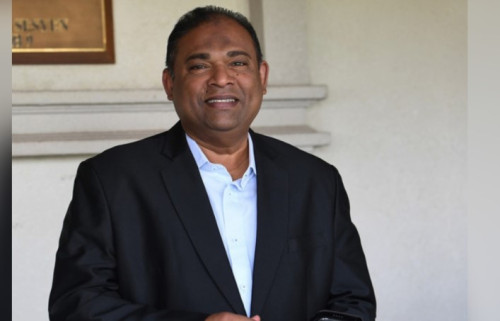
Malaysia HR Forum & Social Compliance Malaysia cofounder Arulkumar Singaraveloo said the country is currently at a preliminary stage of addressing forced labour, even though it has been more than a decade since the issue was brought into the limelight.
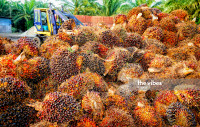
He said back in 2008 and 2009, electronics manufacturers operating in Malaysia caught international attention for matters such as debt bondage and the withholding of passports, but the past three years have seen the focus shift to glove makers and palm oil producers.
The issue of forced labour made international headlines more than a decade ago following suicide cases of workers in one of the world’s largest manufacturing plants in China.
However, he said the names of the companies currently under scrutiny and those who have recently had sanctions against them lifted were only the big players and not smaller outfits.
Arulkumar said there were between 70 and 80 Malaysia-based glove manufacturers, but only the top 10 were frequently mentioned. This is the same for the top two companies in the palm oil sector.
The focus now is to look beyond the big boys. We have got to look at the second-tier and third-tier companies, the supply chain, and so on,” he told The Vibes recently.
“We are at a very early part of the whole journey to be in full compliance with the ILO (International Labour Organisation) indicators.”
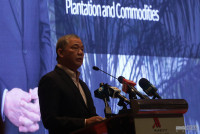
Arulkumar said this ahead of a series of one-day workshops to be conducted by the Malaysia HR Forum titled “Prevention & Elimination of Forced Labour in Malaysia”.
The workshops will be held in Penang, Kamunting, Kuala Lumpur and Johor Baru throughout the month of May.
The talks are aimed at helping Malaysian exporters in manufacturing and plantations industries with markets in the European Union, the United States and Canada have an in-depth understanding of the ILO’s 11 forced labour indicators and how to eliminate these practices and avoid sanctions.
Arulkumar said many mid-sized and small companies are unsure about the 11 ILO indicators or lacked in-depth understanding.
He said although there are local laws to protect workers, the ILOs guidelines on matters such as hostels are “far more superior”.
He said the companies must refer to both with regards to the living and working conditions of their workers.
“What companies need to do is they need to look at local legislation and local laws, but at the same time, look at what the international standards are trying to tell us.
(Many of) the mid- and small-sized companies are unsure of what these indicators are … such as what exactly is ‘abuse of vulnerability’? What factors can lead to abuse of vulnerability? I believe many of them are not informed,” he said.
“There are many sub-indicators and sub-factors that we need to look into. For example, where would hostel conditions fit in – that would be under abusive living and working conditions.”

Arulkumar’s remarks come less than a week after Italian confectionery giant Ferrero told its global suppliers to cease purchasing palm oil and palm kernel oil from Sime Darby Plantation (SDP).
This came after the United States alleged the Malaysian giant had used forced labour, issuing it with a Withhold Release Order (WRO) to detain SDP’s palm oil and palm oil products at US ports of entry in December 2020.
In January this year, Sime Darby said it was “close” to completing work in pursuit of lifting the United States Customs and Border Protection ban on its palm oil products.
Asked how SDP can resolve the issue, Arulkumar opined that the company must “go back to the fundamentals”, but this may take some time as it took glove makers Top Glove more than a year to have US sanctions lifted.
“Sime Darby, being in the palm oil industry, is spread out throughout Malaysia, so they would be working hard to overcome this,” he said.
Due to the size and extensiveness of their plantations, extra work needs to be done. They need to look into these allegations … resolve it, communicate it and move on with life.”
He also said the length of the ban on SDP is difficult to estimate, because he is not aware of its inner workings and the nature of the allegations.
“But they (SDP) have good and strong governance, so I believe they may be already working on it.
“They may be, for all you know, already on the verge of exiting the WRO, but I really wish them well and hopefully they can resolve this fast because Sime Darby is part of our national identity.” – The Vibes, April 24, 2022