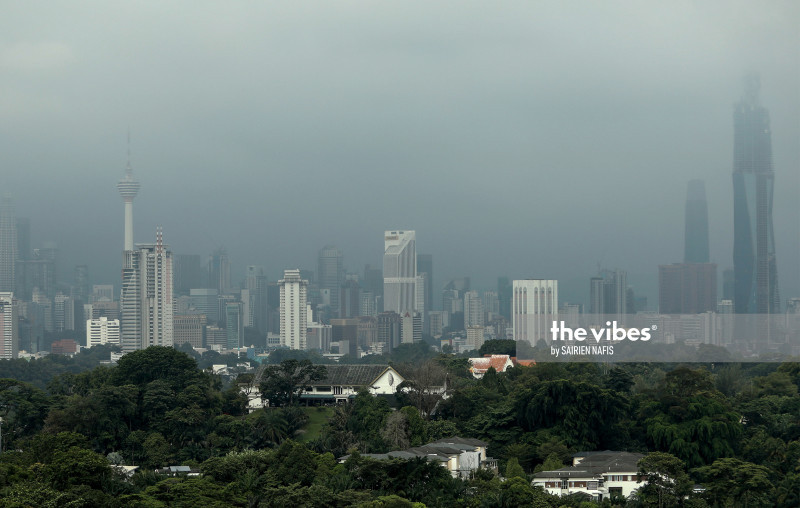

KUALA LUMPUR – Malaysia has been projected to attain advanced-economy status by 2030, said World Bank country manager Firas Raad.
He said the country has shown commendable economic growth over the past half-century or so, ranking seventh among nations globally since 1960.
Malaysia’s remarkable economic expansion has lifted millions out of poverty, improved living standards, modernised infrastructure, and enabled investments in health and education, he said.
He said the growth rate has slowed in recent years, typical of countries that are climbing up the income ladder.
“Malaysia has one of the highest growth rates around the world over the past 60 years. The seventh, in fact, among countries we have data for.
“And at the moment, although Malaysia has not crossed the threshold of becoming a country with an advanced economy, it’s still getting within striking distance of that milestone.
“According to our estimates, it is expected to do so in the next decade,” he told the Beyond Vision 2020: Growth with Equity in the New Decade webinar, co-organised by Sekhar Institute, The Vibes and Petra Group, on Thursday.
Raad said the challenge for Malaysia now is to sustain its high rate of economic growth and revitalise the economy in the coming years.
It would mean little for the country to surpass the numeric threshold of an advanced economy should it fail to ensure more effective systems and boost human capital in health, education and social protection, he said.
“There is also a need to enhance its institutions and policies to enable this transition to take place.
“Finally, how the country ensures this growing economic prosperity is shared appropriately among all people.”
To revitalise long-term economic growth over the next decade, he said, the World Bank has identified several key drivers that will assist Malaysia in achieving this goal.
These include public and private investment growth, productivity growth, human capital outcome in education and skills, and greater female participation in the labour force.
“Malaysia’s gender gap in labour force participation is around 25% currently, which is much higher than many countries in Southeast Asia, including Singapore, Thailand, Vietnam and Cambodia,” said Raad.
“Now, all these areas would be the ones, which in our (World Bank’s) view, to drive Malaysia’s longer-term economic growth.
“We have simulated how changes in these factors can actually affect Malaysia’s future growth rate.” – The Vibes, November 15, 2020
Follow The Vibes to read our series of in-depth articles based on discourses held during the Beyond Vision 2020: Growth with Equity in the New Decade webinar, from Thursday till Monday
Related stories:
‘Political necessity derailed Vision 2020’
To say Vision 2020 is terrible is ‘most unfortunate’, says economist
Pressing need to build Malay capacity and ‘backbone’
Abolish Jakim, Jasa for better Budget, activist urges govt
Poor diet during pandemic set to lower life expectancy further

















.jpeg)