
KUALA LUMPUR – After slapping withhold release orders (WRO) on eight Malaysian companies, US Customs and Border Protection (CBP) revealed that it does not have an investigative team in the country to probe breaches of the International Labour Organisation (ILO)’s 11 Indicators of Forced Labour.
During a roundtable session with local media this evening, CBP officials said the agency relies heavily on information and materials from “credible sources”.
“Within this country? No, we don’t have (officers),” said John Leonard, deputy executive assistant commissioner at CBP’s Trade Office.
“Obviously we have our US embassy here, but we don’t have CBP officers who reside within the country to do these (investigative) works.
“That’s not to say CBP would not, at some point, send teams to do verifications.”
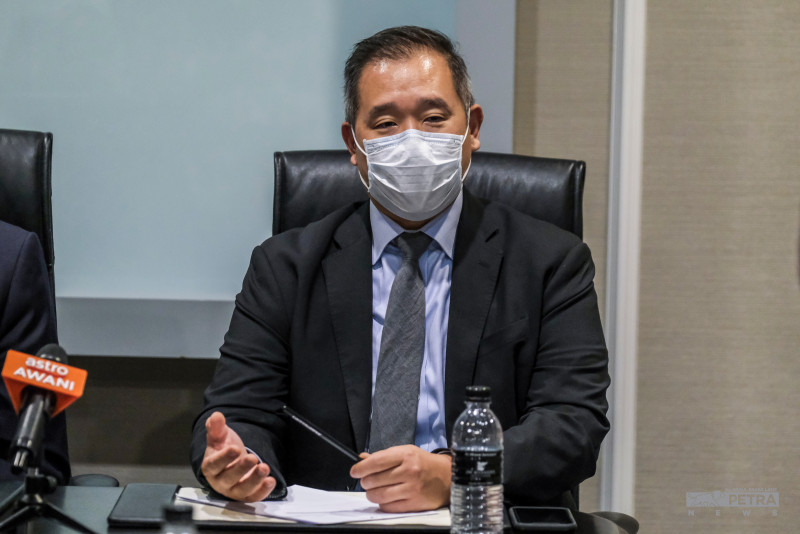
Also present was Eric Choy, acting executive director for trade remedy law enforcement at CBP’s Trade Office.
Leonard explained that the US law regarding the issue was written with “very low standards” on purpose, as the agency found that it really leads to “intangible results”.
Meanwhile, Choy said CBP would try to find materials and evidence to corroborate allegations of forced labour in the manufacturing of the goods brought into the US.
“Allegations can come from investigative media, investigative journalists, agency partners, other law enforcement sources, NGOs, civil societies,” Choy said.
“When we receive those allegations, a lot of times the information and materials would come along with them, as well as our own research and analysis to help us corroborate information and get us (to) the reasonable suspicion level.”
Choy further confirmed that all investigative works are solely done by CBP’s team, which is based in the US.
Before the agency issues an WRO, he said CBP would go through intense legal scrutiny by its legal team and inter-agency partners across the US federal government.
“So we are fairly certain that once we issue the WROs, we have enough evidence to move forward,” he said.
Commenting on measures taken to modify the status of a WRO, he said the agency relies on independent third-party auditors, which are commissioned by the companies subject to the order.
“Once the companies are committed to remediate forced labour indicators found, and as they go through the remediation process, we ask them to retain third-party auditors.
“The auditors will then validate the commitment that these companies made have been completed.
“And once we validate with auditors that the commitments have been completed, we can move forward to modify the WRO.”
Since 2019, eight Malaysian companies – mainly rubber and palm oil companies – have been put on a list of firms whose products are banned from entering the US due to “reasonable evidence” of forced labour practices.
Subsequently, the import ban on two Malaysian glove makers, WRP Asia Pacific Sdn Bhd and Top Glove Corporation Bhd was lifted in March 2020 and September 2021, respectively.
Checks by The Vibes on CBP’s website revealed that there are six active WROs and one Finding issued to local companies for breaching the ILO’s 11 Indicators of Forced Labour. – The Vibes, June 2, 2022