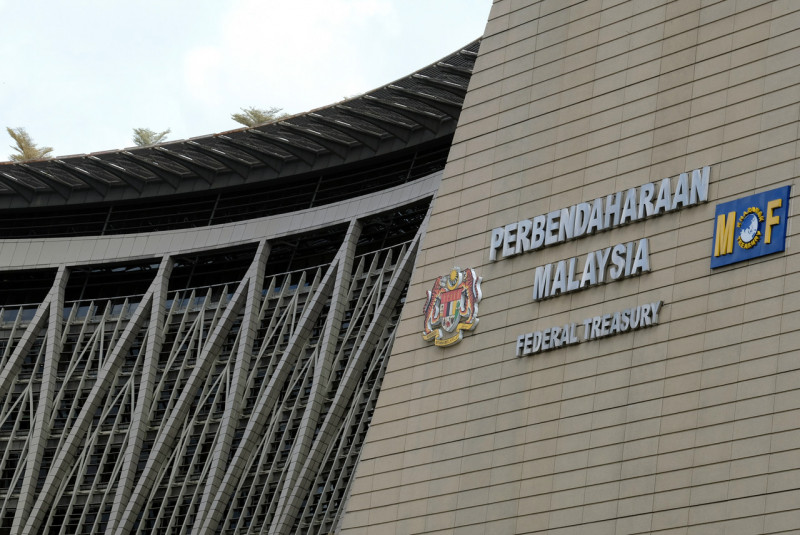
KUALA LUMPUR – Public sector debt increased to RM1.44 trillion or 84.2% of gross domestic product (GDP) as at the end of June 2022 with federal government debt remaining the largest component with its share increasing to 72.4% from 70.6% of the total, according to the Finance Ministry.
In 2021, it was RM1.38 trillion or 89.8% of GDP.
Public sector debt includes outstanding debt obligations of the federal government, state governments, non-financial public corporations (NFPCs) and sovereign-guaranteed debts of statutory bodies.
Statutory bodies-guaranteed debt declined to RM89.2 billion from RM91.3 billion in 2021, partly contributed by the principal repayment by Johor Corporation, Public Sector Home Financing Board and the National Higher Education Fund, the Finance Ministry said in the just-released 2023 Fiscal Outlook and Federal Government Revenue Estimates report.
The NFPCs’ debt also decreased to RM307.9 billion from RM316.75 billion last year, mainly attributed to the principal repayments of maturing offshore debts. Overall, the public sector debt remains manageable as the debt is significantly denominated in ringgit, thus limiting foreign exchange risk.
1MDB bond redemption contributes to substantial borrowings
Despite the withdrawal of the assistance packages due to the closure of the Covid-19 Fund, the borrowings are still substantial due to higher allocation for development expenditure, in line with the continuation of the programmes and projects in the Third Rolling Plan.
In addition, the substantial borrowings were also attributed to high principal repayments obligation, which includes the redemption of 1MDB’s maturing bond, it said.
By end-2023, the overall debt is projected to be around 65% of GDP, with statutory debt at 63%.
“Therefore, considering the Covid-19 debt-scarring effect and to ensure smooth implementation of 12th Malaysia Plan, the government may extend the statutory debt limit of 65% of GDP in the medium term after the expiry of Act 830 on December 31, 2022,” the ministry said.
The increased debt level will heighten the borrowing cost and refinancing risk, it said.
Therefore, the government is fully committed to gradually reducing the debt level while balancing the fiscal needs in ensuring growth momentum in the medium term and mitigating the impact of inflation.
The prudent fiscal and debt management will ensure the government’s fiscal position is sufficient to face future crises as well as improve debt affordability. – Bernama, October 7, 2022