
JOHOR BARU – The proposed Climate Change Act should spell out the allocations as well as the jurisdictions of the relevant authorities to ensure efficiency in tackling the global issue, stakeholders said.
In lauding Natural Resources, Environment and Climate Change Minister Nik Nazmi Nik Ahmad’s commitment to addressing climate change, seasoned conservationist and environmental journalist, Nadiah Rosli, said the government has shown its seriousness by allocating resources for the cause.
“One of the key topics of this act is that they want to add more personnel in their ranks to tackle this (climate change) issue.”
“It shows that the government is taking it seriously since they want to invest in more resources,” Nadiah said when contacted by The Vibes.
She added that the act should give clarity on the entity that would regulate and enforce the law once it has been implemented.
“The act needs to be tabled soon and it needs to be bipartisan as well. When you talk about climate change, it cuts across all sectors – the environment, physical and mental issues, the country’s livelihood, the agricultural sector as well as food security.
“So the government needs to translate this to the local authorities. How are we going to allocate the resources, and how do we make sure that this act can be enforced efficiently?”
“The question of who has the mandate to enforce it should be defined by the act. We need to know whether there will be an overlap between ministries in working towards the cause and the enforcing agencies also need to be defined in order for them to carry out their duties.”

Mitigation, adaptation must go hand-in-hand
While the plan to achieve net-zero greenhouse gas emissions by 2050 should be lauded, Nadiah said that Malaysia should also look to introduce an adaptation strategy to achieve this target, while also protecting the vulnerable groups that would be severely impacted by climate change.
She added that natural disasters, especially on the east coast have worsened over the years, with indigenous people and women being the most affected victims.
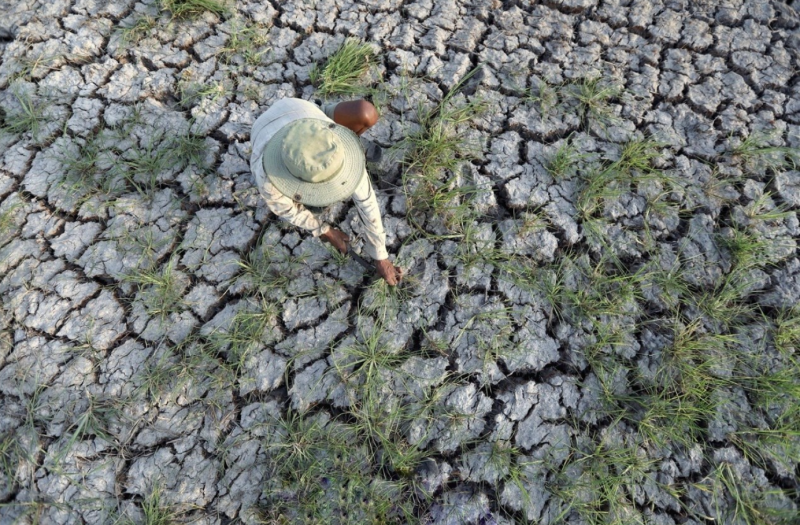
Nadiah said that rising sea levels are an issue that has blighted paddy farmers, especially in Kedah, but there seems to be a lack of plans to address the current predicament.
“The saltwater has reached the paddy fields and this is already happening so we’re not talking about mitigations anymore.
“This has been impacting the farmers’ livelihood and it’s also connected to the food security issue that we’re facing. Mitigation and adaptation plans must go hand-in-hand, especially now as we can see that the impact (of natural disasters) has been increasing.”
She also said the government should educate the public on the severity of climate change, noting that research has shown that the Southeast Asian region is highly susceptible to the issue.
“The awareness is still low among the public as I believe most do not understand the scientific facts (involved). When I talk to local communities, they talk about weather patterns instead of (associating) these with climate change.”
She said that scientists should not be left alone to communicate these issues to the masses, as politicians and the authorities should also play their role in raising public awareness.
Nadiah added that the climate change phenomenon should also be included in the school’s curriculum.

Emphasis on development regulation
Meanwhile, former Senggarang assemblyman, Khairuddin A. Rahim, said that the proposed act should also allow for the regulation of projects to ensure that proposed development projects are sustainable and safeguard the livelihood of the surrounding communities.
He said that while climate change is unavoidable, it is important to ensure such developments do not compound the problem.
“Most of our current natural disasters can be traced back to unsustainable developments that will destroy the ecosystem and ultimately cost us.
“What good can developments bring if the community is displaced due to the effect on their location?” Khairuddin asked.
The Johor PKR information chief said Malaysians should look at the state of the nation’s beaches to understand that climate change is real.
“The beach erosions are worsening and we should address this matter urgently. We can’t let our cities go underwater while we prioritise other developments.”
Malaysia is currently experiencing one of its most severe monsoon seasons to date, with 121,864 people displaced from their homes across the country.
The current northeast monsoon, which hit the country in early November, is expected to last for another three months, said Minister in the Prime Minister’s Department Datuk Armizan Ali. – The Vibes, December 28, 2022













.jpeg)