
GEORGE TOWN – The two sides of the divide over the Penang Transport Master Plan (PTMP) added new fuel to the debate on social media over the eve of the new year with one citing the state’s low population projection as an alarming revelation, while another insisted that the public infrastructure must be improved as per what has been laid out in the government’s plan.
Penang Forum executive committee member Khoo Salma Nasution referred to a report by the Statistics Department that the state’s population is shrinking, noting that the base of the population pyramid graph shows a 0.1% decrease.
Khoo questioned how Penang can reach its target of having a population base of 2.3 million by 2030 to justify the master plan, which is estimated to cost RM46 billion.
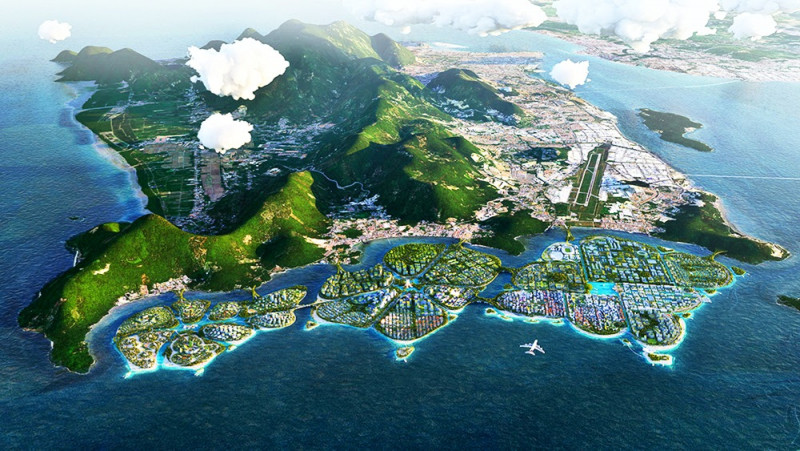
The master plan calls for a light rail transit system, new highways, water taxis, and even a grand “third link” (reported to be an undersea tunnel) to alleviate the worsening congestion here, but the concept has faced opposition from civil society throughout the planning process, especially when it also involves mega land reclamation initiatives.
Khoo went on to post a series of videos, highlighting Penang’s poor birth rate, stressing that it is the lowest in the country.
The population base of 1.4 million as of 2020 has been leveraged by planners of the proposed Penang Local Plan and the PTMP to justify the projects.

“But the population is shrinking. ‘Cham lah’ (We are in trouble),” said Khoo.
She said that Penang mothers are only giving birth to 60,000 infants yearly, below the national average.
“We have about 1.3 infants per mother when we should be having two infants per mother. Seriously, can we grow half a million (in) population by 2030?”
Khoo said that perhaps the authorities expect more Malaysians to relocate to Penang, so logically the population base would expand.
“But housing is unaffordable while access to public transport is limited. If you drive, there is stress due to the notorious jams. It is not looking to be a preferred liveable situation,
“Perhaps the population will increase with more foreigners coming over,” she said.
“But there is still (a predicted) major recession this year to contend with too.”
Rebuking her was Pulau Tikus assemblyman Chris Lee Chun Kit, who supports the master plan, saying: “We do not want Penang to be a museum of the past. The state with a wonderful past but no future.”
He acknowledged that people have been complaining about traffic, so the master plan brings easier connectivity from point A to point B.
He said that Penang has to compete for investors and revenue globally.
“The only way is to keep our talents here. The master plan provides spillover effects in terms of jobs. Do not get distracted by those who say it is a waste of money and it affects the environment. We are carrying out a lot of environment tests. But the bottom line is, we do not want a bleak future for Penang.”
Lee said that many towns in the country have indeed become relics because their leaders and authorities do not have a vision to move them forward. – The Vibes, January 1, 2023