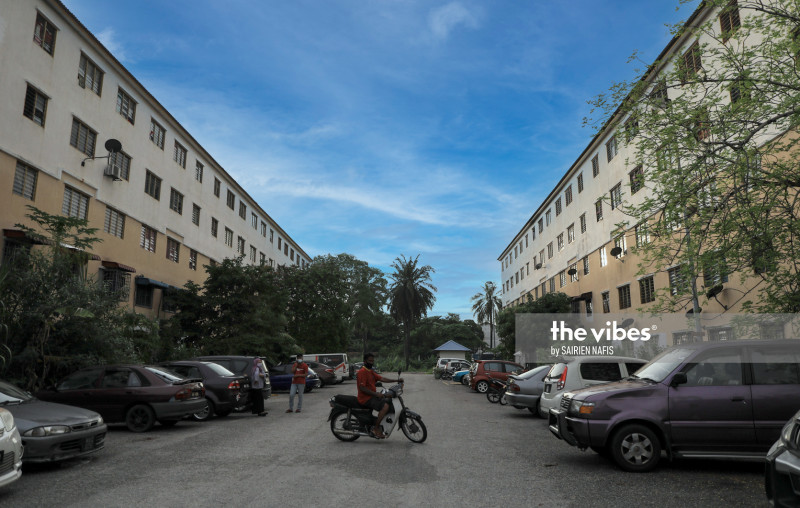

KLANG – Promises made some 20 years ago remain unmet for impoverished Indian families here, as they find themselves temporarily living in housing projects that are in deplorable condition.
The 115 families were smallholders persuaded to sell their settlements after being promised new homes.
The Vibes recently visited Pangsapuri Seri Rebana in Bandar Bukit Raja, which is home to some 650 households, including the 115 families.
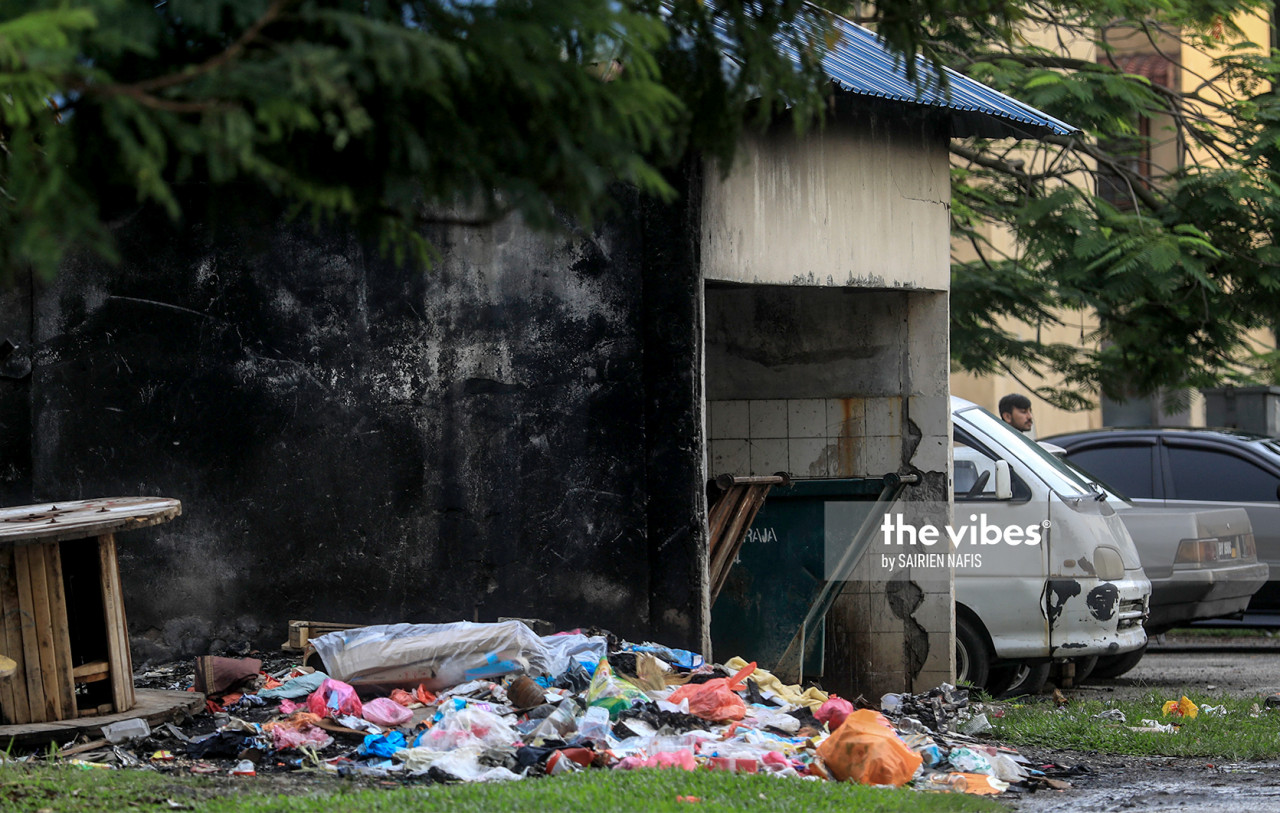
The apartment blocks are poorly maintained, with clogged drains, rubbish heaps and unkempt surroundings that host mosquito breeding grounds, pests and even snakes, said residents.
They said the area is also awash with social ills, including gangsterism, alcoholism and drug abuse.
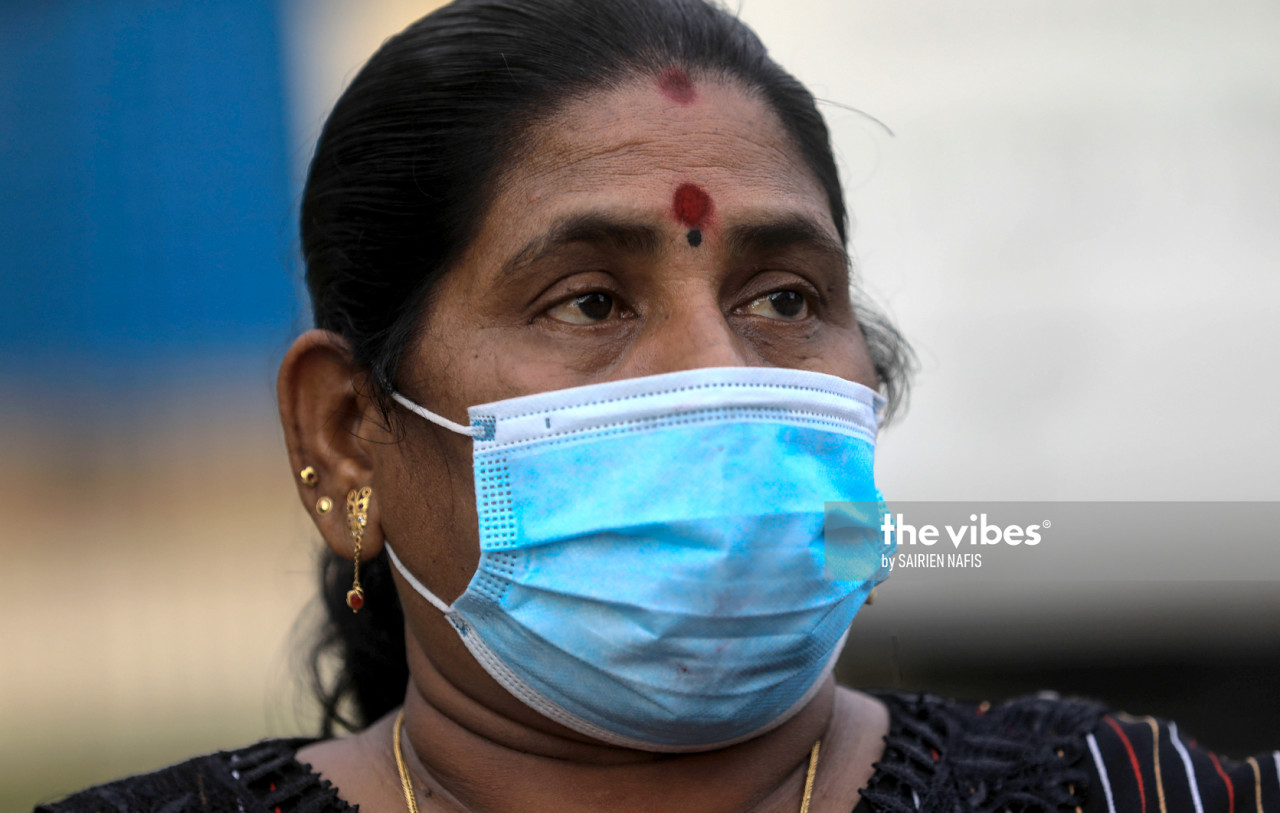
Gunasundri Muniandy, 51, said the families had been promised landed properties in return for moving out of the nearby plantations, but found themselves forced to live in the low-cost units until they have permanent homes.
The mother of six said their settlements have been mostly turned into upscale properties.
She added that the National Union of Plantation Workers told them that the land they once lived on has been sold off.
“We were promised some compensation for us to move out, but we do not know the details. Until now, we are living in what are supposed to be temporary homes.”
She said the families later had “no choice” but to buy the low-cost units at a discounted price of RM35,000 instead of RM42,000.
Gunasundri, who worked as a cleaner at the flats for years, said her income has been affected by the pandemic.
“The maintenance company used to hire five or more people to clean the area, but now, with Covid, it is down to two for months on end,” she said, adding that her wages are a few hundred ringgit a month.
“How are we to keep the area clean if there are not enough people to work on its upkeep?”
Sivakumar Saminathan, who works as a machine operator at a paint factory, said the roads in the housing area are in poor condition.
“There are many potholes, and speed bumps should be installed to slow down speeding vehicles.
“They (motorists) don’t care about children and the elderly crossing the road.”
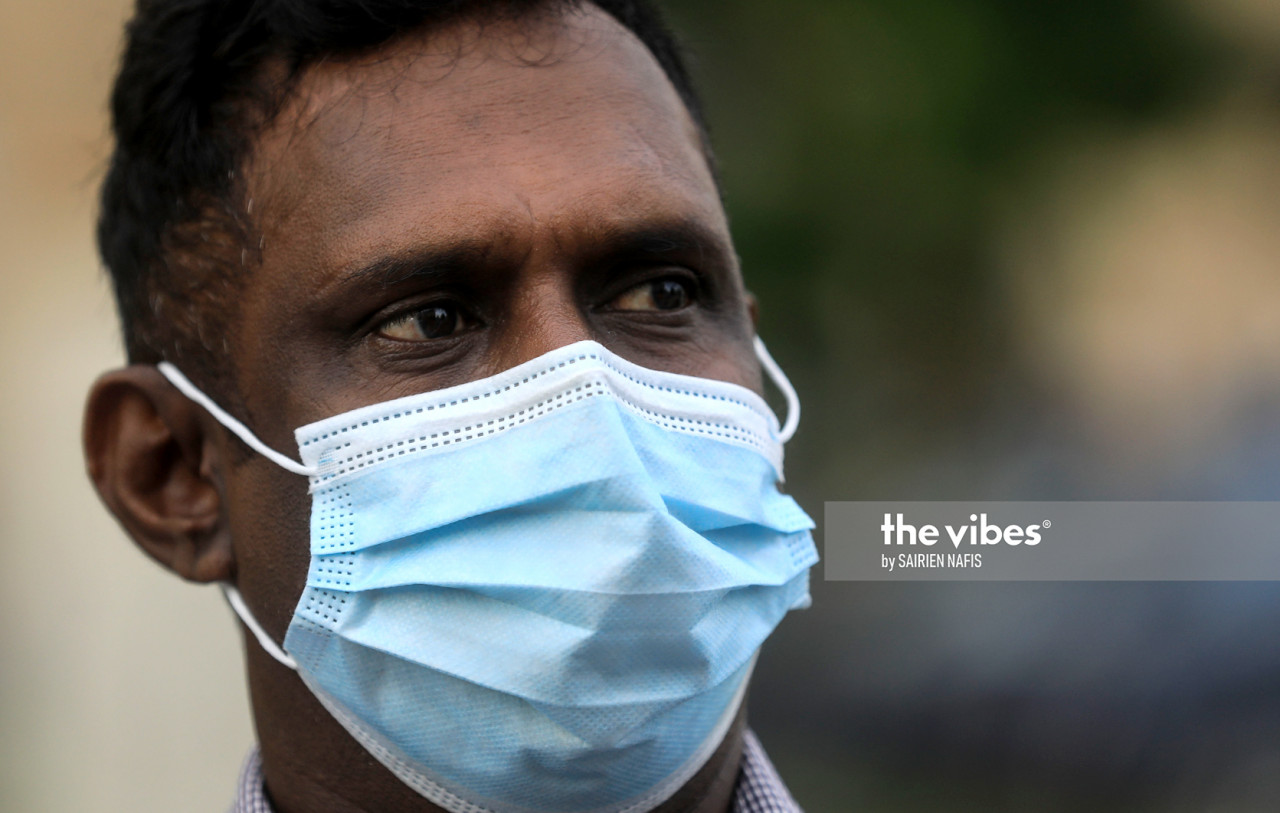
The 50-year-old said fights often break out between groups in the surrounding areas.
To make matters worse, he said, the soil on which the residential blocks sit is eroding.
Rough estimates of data extrapolated from the Statistics Department and Institute of Strategic and International Studies Malaysia showed 17,351 people living in poverty in the constituency here, according to researchers Bridget Welsh and Calvin Cheng in an opinion piece published by Malaysiakini in May.
The government’s revised 2019 poverty line income was RM2,208, but some quarters, including Klang MP Charles Santiago, have argued that it is not reflective of current socio-economic conditions after factoring in joblessness and the economic downturn caused by Covid-19. – The Vibes, December 3, 2020