KUALA LUMPUR – The issue of development, especially regarding basic facilities in Sabah and Sarawak needs to take into account the size of the states and not only the population density of a certain area or state.
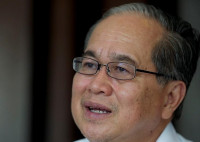
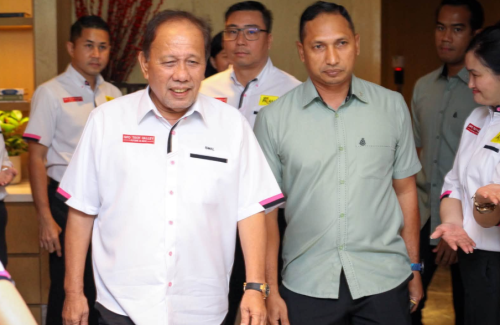
Deputy Prime Minister Datuk Seri Fadillah Yusof said Sabah and Sarawak’s large size, compounded with their low population density compared to the peninsula are factors behind why development is lagging behind other states as the government prioritised allocations based on the population density rate in a state.
“The government approach is different, usually development focuses on population masses, that’s why Sabah and Sarawak have been left out because their populations are small,” he said in an exclusive interview with Bernama recently.
Citing Kuala Lumpur, Fadillah said the capital is way more developed compared to other areas and states, including those in the peninsula as it has a larger population.
“Kuala Lumpur has everything… go to other states (where there are fewer people) – Kelantan, Perlis – they’re also way behind (compared to Kuala Lumpur),” he said.
The Plantations and Commodities Minister said the situation does not mean that other states and areas are neglected, just that different approaches and methods in economic planning are used in the development of states.
“That’s why in Sabah and Sarawak we champion the idea that development must not be viewed from only the context of density, we have to look at the size and needs as basic facilities must be prioritised.
“We need to see where the gaps are, those that are lagging must be sped up,” Fadillah said.
Sarawak, for instance, with most of its land being peat soil, had to deal with high costs for road construction, about an additional 20% more compared to the peninsula as the materials needed to be brought in from there, he added.
As such, he said that the decision taken by the government led by Datuk Seri Anwar Ibrahim to allow projects costing less than RM50 million in Sabah and Sarawak to be fully decided by the state government would speed up the implementation process.
“With this decision, we hope to close the infrastructure development gap so that we can deal with the feeling of neglect felt by the people of Sabah and Sarawak… then they will feel they are part of Malaysia,” he said.
Fadillah also felt that recently, attention on Sabah and Sarawak has grown through various significant allocations for projects such as the Pan Borneo Highway.
That emphasis has continued under the existing leadership of Anwar, who is now also championing a settlement to the Malaysia Agreement 1963 (MA63).
On Sarawak and Sabah’s status as regions in Malaysia, Fadillah felt it was more about terminology and it was already adequate with MA63 being acknowledged and as part of the constitution.
“It means that people will know that the formation of Malaysia is by three regions, the Peninsular (Malaya at the time), Sabah and Sarawak. That’s good enough. If we are acknowledged as a region, but in terms of authority there is none, with MA63 unfulfilled, it won’t matter. To me, it’s better to focus on the acknowledgement of MA63,” he said.
The other deputy prime minister, Datuk Seri Ahmad Zahid Hamidi, recently said that Sabah and Sarawak are no longer states but regions in Malaysia, but he did not mention when the status took effect. – Bernama, February 26, 2023