


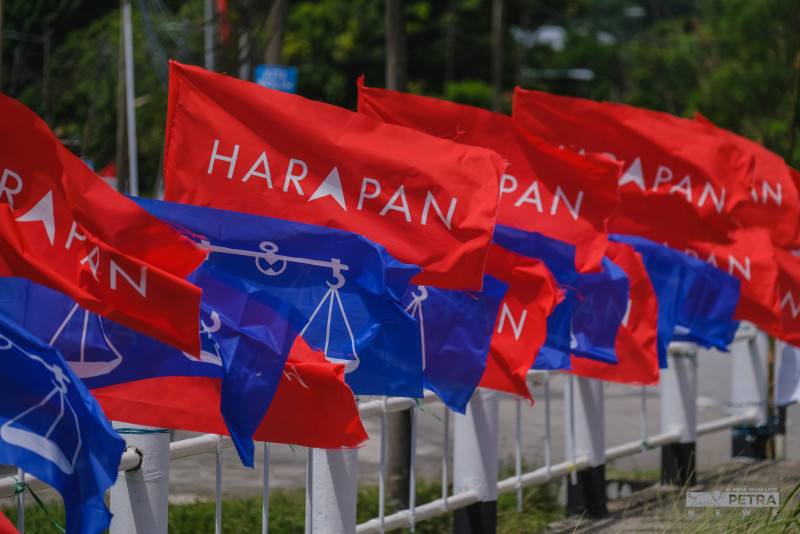

BALIK PULAU – Race and religion were not the only factors that led to the defeat of the Pakatan Harapan (PH)-Barisan Nasional (BN) alliance in the Malay belt states of Kedah, Kelantan, and Terengganu in the recent six state elections.
It is not race and religion per se, nor the sluggish economy, but more in a parochial sense, the growing sophistication of the Malay electorate and the poor choices of PH-BN candidates, said former Balik Pulau MP Yusmadi Yusoff, who is now a political analyst.
Yusmadi noted that Kedah PAS, under its controversial and polarising leader Datuk Seri Muhammed Sanusi Md Nor, was preaching a “Greater Kedah” agenda – a very inward, state-centric approach, which the voters bought despite it being riddled with unsustainable models.
Despite the alleged tendency to use slander in his political messaging, Sanusi was also successful because PH-BN did not find candidates who could challenge him effectively in Kedah.
Instead, PH-BN’s main general in its effort to seize Kedah was Home Minister Datuk Seri Saifuddin Nasution Ismail, who was not even contesting a seat.
“The Malay voters were also driven by a parochial sense. They grew protective of their home states of Kedah, Terengganu and Kelantan, where despite earning a living in other states or overseas, they wanted to protect their state identities at all costs.”
Yusmadi said that PH-BN should not be obsessed with the issue of race and religion although its opponent, Perikatan Nasional (PN), may have relied on them heavily to create a divide among the electorate.
“Let us look at the parochial nature which drove the voters to defend their states at all costs and on the same token, they saw PH-BN as outsiders instead of home-grown leaders.”
Even Penang voters displayed their parochial leanings when they gave total support to the 19 DAP candidates, whom they knew were local and had served them, Yusmadi pointed out.
He added that the Malay electorate, including the Undi 18 (first-time) voters, have become sophisticated in their political outlook – they no longer just vote along party lines but they scrutinise the backgrounds of candidates, as well as their familiarity with each constituency.
In Kedah, although the candidates were localised in their constituencies such as former menteri besar Datuk Seri Mahdzir Khalid, who contested in his Pedu constituency, there were no “wow” factors among the candidates – they, on contrast, came across as weary politicians.
In Penang, it was worse – there was a mismatch of candidates, with outsiders being fielded in seats such as Seberang Jaya, Permatang Pasir, Sg Bakap, Sg Dua and Penanti.
PAS instead fielded the local ulama or religious figures, said Yusmadi in an interview.
Another example was in Penaga, which was successfully defended by PN’s Yusni Mat Piah.
Even though he is an outsider from Baling, Kedah, Yusni has been active in the constituency for the past two decades, so he has been accepted by the voters as a “local,” said Yusmadi.
The same applied to the Sg Dua state seat where Umno Supreme Council member Shaik Hussein Mydin fell to Penang PAS commissioner Muhammad Fauzi Yusoff in a straight fight.
“Fauzi is actually from Jelutong on the island, but he has been active in Sg Dua for the past few years whereas Shaik Hussein was parachuted in.”
In the past, voters saw the party logo as the incentive to vote but now with growing sophistication, Malay voters, even those residing in rural localities, preferred candidates whom their friends, family and associates knew, said Yusmadi.
He added that PH-BN should no longer be too leader/personality-centric.
“It relied too much on Prime Minister Datuk Seri Anwar Ibrahim to carry the main assault into PN strongholds when there should be a plethora of fellow PH-BN leaders.”
The coalition needs to have a balance of forces while also discarding the culture of using elections as a platform to consolidate their own political empire or support, Yusmadi said.
“The most winnable candidates must be given preference over internal squabbling.”
PH-BN also needs to move as one force of reforms; one entity to ensure that what was promised is delivered, as in the minds of voters now, all politicians are the same as each coalition had led the country in the last six years, said Yusmadi.
“Voters presume that they are voting (for) the lesser of all evils as their choice representation.”
He also dismissed the effect of Tik Tok short videos on voters, saying that all sides had used the platform to great effect including the third alternative parties and independents.
Political messaging must also be balanced with a personal touch from candidates, suggesting that candidates should take the initiative to gauge if they are suitable for the seats before the actual nomination and campaigning begins, said Yusmadi.
As for the immediate future, Yusmadi said that now is about delivering what was promised while also educating the voters that they too have a role in nation-building.
“We cannot build a nation with just a few hands. We need buy-in from all,” he said – The Vibes, August 14, 2023




.jpeg)







.jpeg)
