
KOTA KINABALU – Retail prices of imported white rice and fragrant white rice in Sabah have seen varying increases, ranging from RM8.50 to RM1.75, influenced by escalating import costs.
The surge followed the recent decision of the national rice agency, Padiberas Nasional Bhd, to adjust the retail price of rice from RM2,350 per metric tonne to RM3,200 per metric tonne on September 1, in response to international market price fluctuations.
Sazarice, a prominent rice company in Sabah, has raised the prices of its Super 5% Anggur Biru 10kg pack to RM36 from RM27.50, marking an RM8.50 increase.
Additionally, their premium fragrant rice brand, Wangi Special, experienced a price hike of RM2.50 for the 10kg pack and RM1.50 for the 5kg pack, now priced at RM43 (10kg) and RM22.25 (5kg).
These price adjustments took effect on September 4.
A spokesperson from Sazarice has confirmed that these changes align with the new rates set by the national rice agency.
In the peninsula, prices have risen to approximately RM38 for the 10kg pack and RM20 for the 5kg pack earlier this month.
Actions taken by rice-exporting countries
The surge in rice prices is attributed to actions taken by certain rice-exporting countries, such as India, which halted the export of white rice.
In Sabah, prices are notably higher than in the peninsula due to additional shipping and transportation charges.
Acting Domestic Trade and Consumer Affairs Minister Datuk Armizan Ali said careful considerations are usually made before implementing such price hikes.
He highlighted that these actions are regularly taken to ensure appropriate measures are in place to maintain food price stability in the country.
When we depend on imported food supply sources, we are exposed to issues arising in exporting countries, their government policies, and geopolitical factors such as the Russia-Ukraine conflict,” Armizan said in an effort to address concerns about the price hike.
Meanwhile, social media platforms in Sabah were abuzz with discussions about these price increases.
Warisan information chief Datuk Azis Jamman criticised government leaders who had dismissed Warisan’s predictions of impending price hikes in goods.
“Gabungan Rakyat Sabah leaders and Deputy Agriculture and Food Security Minister Chan Foong Hin have stated that (there is) adequate supply and no rice price increase.
“Only opposition parties claim that rice prices will rise.
“Now that it is official, what will be their response? I predict they will say…the entire Malaysia is affected, not just Sabah,” Azis said.
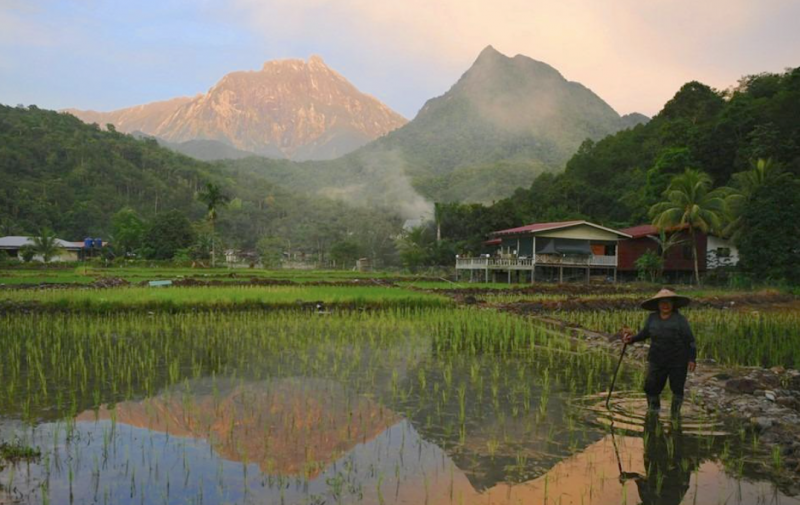
Some had also suggested that people start their own padi planting at the back of their homes to cope with the price increases.
‘End federal monopoly’
A Facebook user, Zulfikar Zulkifli, said the Sabah government should take steps to end the monopoly held by the central government in the rice market.
“The other day, the prices of eggs shot up. Now it’s rice. What kind of federal government do we have now?
“The Sabah government should take steps to end the monopoly (in rice) from the central government.
“The state should establish its own rice collection centre,” Zulfikar said.
Sabah is expected to revive the Sabah Padi Board next year and has allocated 2,000 acres of land for padi cultivation in Trusan Sapi, Beluran, in an attempt to mitigate the impact of rising rice prices.
Sabah Chief Minister Datuk Seri Hajiji Noor predicted the revival of the Sabah Padi Board would boost the state's self-sufficiency level for rice to 60% by 2030.
The Sabah Padi Board was established in 1965 but closed down in 1981.
However, prior to its dissolution, self-production accounted for 70% of the rice sold in the local market.
Padi production gradually slipped, with many believing that this occurred following the entry of the national rice agency PadiBeras Nasional Bhd.
“At present, Sabah’s self-sufficiency level for rice is at 22%, while 78% of the rice demand in the state is met through imports from countries such as China, Vietnam, Thailand and Pakistan,” Hajiji said.
Sabah Agriculture and Fisheries Minister Datuk Seri Jeffrey Kitingan the state requires RM10 billion to carry out initiatives in order to attain the 60% self-sufficiency goal. – The Vibes, September 5, 2023