_Abdul_Halim_Ali_(centre).png)
KUALA LUMPUR – The layman will find it nearly impossible to spot the difference between authentic Malaysian batik and printed batik as both, at first glance, look identical.
This was evident at a recent briefing session for the media by the Malaysian Handicraft Development Corporation (Kraftangan Malaysia) as none of the journalists present were able to tell them apart.
Malaysian consumers’ inability to distinguish Malaysian batik from the printed version is understandable as printed batik products dominate the local market with even well-known shops and boutiques selling them, giving the impression they are authentic.
Their ignorance has also been exploited by some traders that pass printed batik off as Malaysian batik.
Malaysia has a thriving batik industry. Between January and August this year, sales of Malaysian batik products touched RM67.4 million. The highest-ever sales figure recorded was in 2019 at RM176.4 million.
However, the deluge of printed batik products from other countries is posing a threat to Malaysian and even Indonesian batik, hitting both the countries’ heritage craft industries badly.
Exploitation
In Malaysia, traders dealing in printed batik became more “active” after the government issued a circular requiring federal public service officers to wear batik attire every Thursday beginning Aug 21, 2023.
According to Kraftangan Malaysia, people have complained on social media that they were deceived into buying printed batik attire at rather high prices.
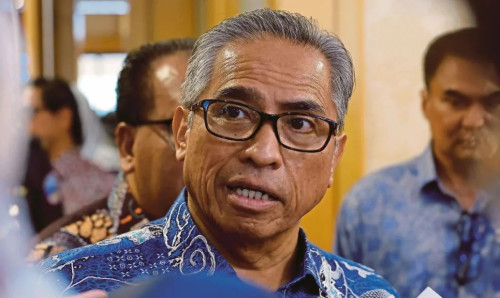
Kraftangan Malaysia deputy director-general (development) Abdul Halim Ali, when interviewed by Bernama, described the actions of the traders concerned as outright cheating, adding that action will be taken against any batik trader registered with the agency caught cheating.
“We found that some traders registered with Kraftangan Malaysia were selling printed batik (and passing it off as authentic batik). They will be given a warning first but if they continue doing so, they will be suspended and no longer be allowed to participate in our promotions,” he said.
Abdul Halim said there are some notable differences between Malaysian batik and printed batik and one of the easiest ways to tell if it is real or not is by checking the reverse side of a batik fabric or clothing. In the case of authentic batik, the patterns are visible on both sides whereas the fake version only has prints on one side.
Another telltale sign of printed batik is the neat and flawless appearance of the motifs as they are machine-printed. Real batik, on the other hand, is handmade – as such, the patterns usually do not come out perfectly.
“Batik has its own definition. To make a batik piece, the colour resist technique, utilising wax, clay or sago gum or linut, is used to give a unique effect to the patterns. It also has to go through various other processes before it becomes a piece of batik cloth,” Abdul Halim said.
Compared to Malaysian batik, printed batik is far cheaper to produce as it does not have to go through the rigorous batik-making process which includes colour blocking/penetration, wax application, dyeing, boiling, rinsing and drying.
More expensive
While it is clear why Malaysian batik is expensive, affordably priced authentic batik materials and readymade attire can be found at batik retail centres such as Pasar Payang in Terengganu and Pasar Besar Siti Khadijah, Kelantan. They are even available at prices below RM100 at online stores. Meanwhile, branded printed batik clothes sold at shopping centres cost over RM200 a piece.
Prices of Malaysian batik usually depend on the quality of fabric used with the higher-end products made of pure silk costing up to a few thousand ringgit each and the cotton ones, below RM100 each.
Kraftangan Malaysia director-general ‘Ainu Sham Ramli defended the prices of Malaysian batik products, saying they are reasonable considering the complicated nature of batik making, particularly the canting technique which itself is a lengthy process. (Canting is a pencil-like implement that is used to apply molten wax on a cloth during the batik-making process.)
Meanwhile, batik traders including some well-known ones are taking advantage of the influx of cheaper printed batik products to stock up their stores as currently there is no law to protect Malaysian batik.
Shahrul Azam Kamaruddin, operator of Qaseh Batik in Kota Bharu, Kelantan, feels there is a need to introduce legislation to protect Malaysia’s batik industry.
“Irresponsible parties are misusing the definition of batik,” he said. “The word ‘batik’ itself has a very prominent place among our traditional heritage arts and because of that, printed batik cannot be considered as batik… those selling it must classify it simply as a textile.”
He said the matter must be taken seriously as some printed batik producers are going to the extent of imitating Malaysian batik and hoodwinking consumers by printing designs on both sides of the fabric.
“I found a major supermarket in this country retailing printed batik products that look almost like Malaysian batik. It’s difficult to tell them apart. What consumers should do is check the type of material used because for Malaysian batik we only use silk or cotton fabrics while synthetic materials are used for printed batik.”
On its part, Kraftangan Malaysia is conducting various programmes including roadshows to disseminate information on Malaysian batik.
‘Ainu Sham also said the requirement for federal public service officers to wear batik attire every Thursday will help to uplift the status of the nation’s batik industry.
The move is expected to boost the sales of Malaysian batik entrepreneurs. A total of 815 batik entrepreneurs nationwide are currently registered with Kraftangan Malaysia. – Bernama, September 14, 2023