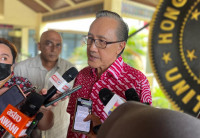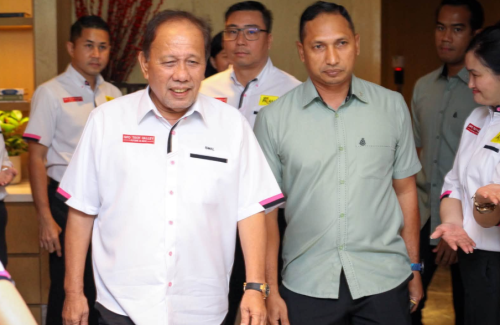

KOTA KINABALU – Datuk Armizan Mohd Ali is confident Sabah’s special grant would be increased in line with the 40% revenue entitlement once the appointment of Sabah and Sarawak representatives as Inland Revenue Board (IRB) members is validated through legal enforcement.
The Sabah and Sarawak affairs minister said the current special grant, currently set at RM300 million, is part of an interim agreement between Sabah and the federal government.
He emphasised that the upcoming parliamentary session, scheduled between October 9 and November 30, would witness the tabling of amendments to the Inland Revenue Board Bill, legitimising the inclusion of representatives from the two Borneo states on the revenue board.
“We aim to increase the allocation based on the collected revenue, as per Section 112C and the actual amount will depend on the federal government's financial position and other factors.
“What’s crucial is the federal government’s commitment to the 40% formula.
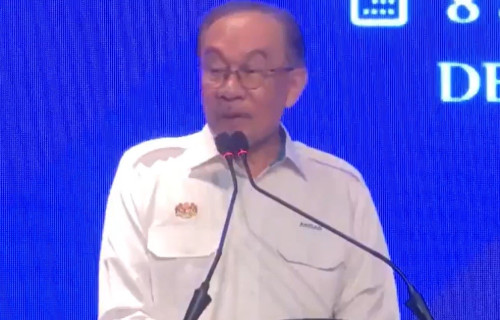
“Whether they can achieve the 40% is secondary,” he said after addressing a forum on the Malaysia Agreement 1963 here today.
The inclusion of Sabah and Sarawak representatives on the IRB would grant the Borneo states access to detailed information regarding revenue collected by the federal government from both states.
This information will enable both states to calculate the approximate 40% quantum, as specified in Article 112C, Section 112C, and Section 2 of Part IV of the Tenth Schedule of the federal constitution.
Armizan noted that Sabah and Sarawak representatives have been part of the country’s tax regulatory body since 1964.
However, they were removed in 1967 when the Malaysian Board of Income Tax and related laws were abolished.
“The implementation was based on provisions in the law through the 1964 Order, which relied on the Income Tax Ordinance 1947 of the States of Malaya, the Income Tax Ordinance 1956 of Sabah, as well as the Inland Revenue Ordinance 1960 of Sarawak,” he explained.
“However, the inclusion of representatives from Sabah and Sarawak as members was discontinued when the Malaysian Board of Income Tax and all related legislation were abolished in 1967, with income tax matters being centralised under the Inland Revenue Department.”
“Subsequently, this responsibility was taken over by IRB, established in 1996 under Act 533,” he said.
The amendment to Act 533, which now mandates the permanent inclusion of representatives from the state governments of Sabah and Sarawak, underscores the commitment of the federal government, under the leadership of Anwar, to address longstanding issues related to the Malaysia Agreement 1963, he said.
Armizan acknowledged that Sabah and Sarawak representation on the revenue board had already begun administratively, but the formalisation through the passing of the law demonstrates a sincere effort to respect and acknowledge the rights and interests of Sabah and Sarawak within the Federation of Malaysia.
During the forum, Armizan also emphasised that the federal government needs to fulfil the 40% revenue entitlement, both in monetary terms and through potential substitutions and alterations, referring to Article 112D(1) of the federal constitution. – The Vibes, October 2, 2023