IN OCTOBER’S announcement of Budget 2025, the government pledged a substantial RM64.1 billion to the Ministry of Education, making it the highest allocation of any ministry.
This budget reflects Malaysia's commitment to enhancing access to quality education for all.
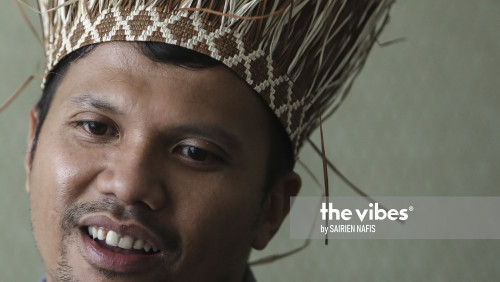
As the first Orang Asli Member of Parliament, Dato Dr Ramli Mohd Noor presided over the budget session wearing traditional Semai headgear, highlighting the significance of Orang Asli representation.
This moment offers hope that the needs of Orang Asli will receive increased focus, including in education.
Despite some budget allocations, there is insufficient cohesive planning to truly honour the spirit of representation and equity in education for Orang Asli children.
Overlooked investments in Orang Asli primary and secondary education
Budget 2025 misses a critical opportunity to adequately invest in primary and secondary education for Orang Asli children.
While the budget prioritised Technical and Vocational Education and Training (TVET) for Orang Asli communities and included a 3.64% increase for Orang Asli parent-focused classes (Kedap), younger age groups are left underserved.
A 2017 Uneso research highlights that more direct, earlier intervention is crucial because of its outsize impact on secondary school completion and poverty reduction.
With that, the budget notably overlooks specific mentions of the inclusion of new K9 or K11 schools, although its expansion has been mentioned verbally in other engagements.
These schools, which provide nine to eleven years of continuous education from Standard 1 to Form 3 or Form 5, have been highlighted in the 12th Malaysia Plan 2021-2025 as a crucial model for improving school accessibility for Orang Asli students.
A key area that requires more attention is the ongoing monitoring and evaluation of existing government programmes aimed at improving Orang Asli education.
These include initiatives under the Inisiatif #57 projects designed to bridge the educational gap for Orang Asli students and the recently launched Program Anak Kita which was allocated an additional RM30 million to address school student dropouts.
A 2022 report by Bernama noted that the lack of evaluation of education programmes for the Orang Asli is counterproductive to addressing the community’s challenges.
Proper monitoring and evaluation are crucial to assess these programmes’ efficacy and open room for adaptation should there be a need for them to evolve according to the educational needs of Orang Asli students.
Lessons from Global Indigenous Education Strategies
Globally, the need for targeted funding for Indigenous education is clear. In the 2024 federal budget for Australia, A$110 million was dedicated over a span of four years to develop Indigenous education, including formulating a comprehensive education policy and increasing the number of First Nations teachers.
Even when looking at the bigger picture, the Lowitja Institute of Australia reported the government’s expenditure per capita for Indigenous people was estimated at twice the rate for non-Indigenous people to mitigate the systemic disadvantages faced by the former.
Meanwhile in Canada, more than $6.1 billion has been allocated since 2015 for First Nations children’s provision of high-quality elementary and secondary education. These countries' emphasis on dedicated funding and systemic reforms addresses the unique challenges Indigenous communities face.
In comparison, Malaysia’s incremental increase in funding for the Department of Orang Asli Development (JAKOA) under Budget 2025 is a step forward, but ensuring meaningful outcomes requires vigilant implementation and transparent evaluation.
Without a clear framework, these funds risk being diluted in administrative processes rather than delivering measurable benefits to Orang Asli students.
Prioritising Culturally Responsive Education Policies
Budget 2025 presents an opportunity to champion culturally responsive education for Orang Asli students, but it lacks the targeted measures necessary to achieve this.
A 2020 policy paper by the Institute for Democracy and Economic Affairs (Ideas), developed in collaboration with Orang Asli communities, stressed the importance of integrating Indigenous cultures and history into mainstream curricula.
This, paired with training for educators to deliver culturally relevant lessons, could create a more inclusive learning environment.
Additionally, Orang Asli communities must be actively involved in formulating these policies to ensure they reflect the community’s aspirations. Unlike Australia’s approach, where A$2.4 million was allocated by the government for Indigenous organisations to co-develop nationwide education policies,
Malaysian policies impacting Orang Asli communities often exclude their voices during planning and decision-making processes, as highlighted by the Center for Orang Asli Concerns.
Incorporating Orang Asli's perspectives in educational planning is crucial for crafting policies that resonate with their lived experiences.

Tackling Root Causes Beyond Classrooms
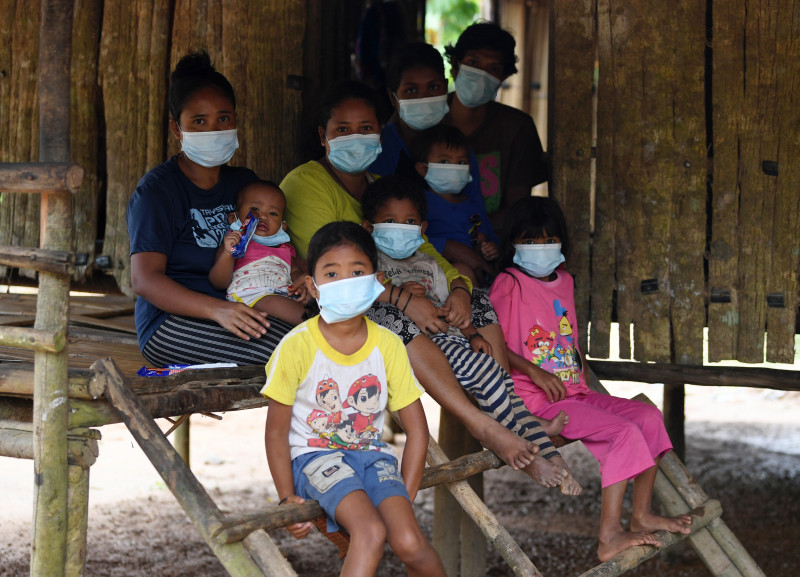
To create lasting change, the government must address the underlying social and environmental issues that prevent Orang Asli children from accessing education.
Access to basic infrastructure, such as safe roads, electricity, clean water, and the Internet, remains a challenge in many Orang Asli villages.
When Orang Asli communities are occupied with managing basic survival needs like water, landslides, and housing, there is little time left to focus on educational advancement.
Budget 2025 allocates RM10 million for house-building in partnership with NGOs under the EPIC Homes programme, a welcome initiative that will improve living conditions for Orang Asli communities.
The government’s commitment to spend RM18 million on developing profiles and mapping high-risk slope areas in Orang Asli villages to prevent landslides is also crucial.
These measures are long overdue and represent positive steps towards improving living conditions.
However, the government must continue to address these issues in a more integrated way, ensuring that the socio-environmental factors which disrupt education and community stability are not merely treated with temporary solutions.
Path Forward
In conclusion, while Budget 2025 offers some positive steps for Orang Asli communities, it misses the mark on delivering transformative change for Orang Asli education.
Early intervention programmes, culturally responsive teaching, and greater involvement of Orang Asli communities in policy-making are essential to bridging the gap.
Beyond financial allocations, a commitment to systemic reform that addresses both educational and infrastructural barriers is crucial.
As Malaysia crafts the Malaysia Education Blueprint 2026-2036, Orang Asli's voices must be central to the conversation. Only then can Malaysia ensure that Orang Asli children have the tools to thrive academically while preserving their rich cultural heritage.
Durrah Sharifah Ahmad Azlan is a Research Executive at the Institute for Democracy and Economic Affairs (Ideas). The views here are from the perspective of a non-Orang Asli, and should not take precedence over Orang Asli voices. The views expressed do not necessarily represent the views or positions of Ideas Malaysia. All opinions are the author’s own.