
I HAVE written very clearly about the extraordinary events surrounding the attempt to replace Tuanku Muhriz ibni Almarhum Tuanku Munawir as Yang di-Pertuan Besar of Negeri Sembilan.
My position has not changed.
I found what happened contemptible. I remain deeply disturbed by the actions of those who participated in, encouraged or politically enabled an episode that should never have happened.
The attempt culminated on 5 June 2026 when Tunku Nadzaruddin Tuanku Ja’afar was purportedly proclaimed Yang di-Pertuan Besar at a hotel in Melaka.
The Negeri Sembilan Palace subsequently declared that ceremony invalid and unrecognised under the state’s constitution, laws and customs.
The Federal Government continued to recognise Tuanku Muhriz as the lawful Yang di-Pertuan Besar.
I have said what I think about that episode, and I stand by it.
But there is another principle I believe in just as strongly.
Justice cannot be selective. And neither can truth.
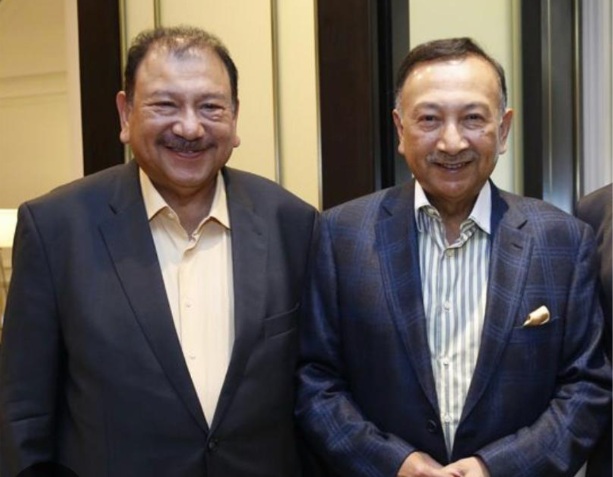
In the understandable anger surrounding this controversy, I have increasingly seen the name of the wider family being dragged into the discussion — particularly Tunku Nadzaruddin’s brothers, Tunku Naquiyuddin and Tunku Imran. Both of whom I have known for most of my adult life.
Some statements are neither fair nor supported by any facts or public records.
Neither Tunku Imran nor Tunku Naquiyuddin participated in the attempt to remove Tuanku Muhriz.
And we should be very careful about allowing guilt by association to replace evidence.
A man is responsible for his own actions.
A brother is not responsible for the actions of his brother.
In fact, Malaysians — particularly younger Malaysians — should know something about these two men before casually talking about an entire family.
Tunku Imran — A Lifetime Given to Malaysian Sport and Malaysian Business
For decades, Tunku Imran was one of Malaysia’s most respected international sporting administrators and an exceptional entrepreneur.
This wasn’t ceremonial involvement. He was a sportsman himself.
He became Malaysia’s first national squash champion in 1973 and helped establish the Squash Racquets Association of Malaysia.
He later served as its president and then as President of the World Squash Federation from 1989 to 1996. The first Malaysian to do so.
He led the Olympic Council of Malaysia from 1998 until 2018. He modernised it and created real governance around its administration.
He served as a member of the International Olympic Committee from 2006 to 2018 and was subsequently made an Honorary IOC Member.
He led the Malaysian Cricket Association for two decades.
He became President of the Commonwealth Games Federation and also served as President of the Southeast Asian Games Federation.
And then there was Kuala Lumpur 1998.
People forget what those Commonwealth Games meant.
Malaysia became the first Asian country to host the Commonwealth Games. It was an enormous statement about what this relatively young nation could organise and deliver on the world stage.
Tunku Imran played the critical role in that achievement and also ensured squash was brought into the Commonwealth Games programme.
Seeing a need for more direct involvement of corporate Malaysia, he created Sports Excel to support and develop those that showed special potential in their sport; decades on, it continues to play a crucial role with many successes.
That is service to Malaysia.
Not for a year. Not for an election cycle. For decades.
He founded ANTAH Holdings alongside his older brother. ANTAH would become the first listed bumiputra company on the Kuala Lumpur Stock Exchange.
Tunku Naquiyuddin — Diplomat, Businessman and Institution Builder
His elder brother Tunku Naquiyuddin followed a very different path. Before joining Imran in business, he served his country.
He joined Malaysia’s Foreign Ministry and served at our Embassy in Paris during the early 1970s.
He subsequently became one of the central figures behind Antah.
People today may not appreciate what companies such as Antah represented during that period of Malaysian economic development.
This was a generation trying to demonstrate that Bumiputera businesses could participate meaningfully in the modern corporate economy.
Antah Holdings became a major listed Malaysian conglomerate and developed partnerships and businesses across numerous sectors.
Its international partnerships helped bring major global names and concepts into Malaysia. The Antah relationship with Schindler, for example, dates to the 1980s
Antah was also part of the original venture that introduced 7-Eleven to Malaysia in 1984.
But Tunku Naquiyuddin’s contribution went beyond corporate Malaysia.
He founded and became the first chairman of the Federation of Public Listed Companies Malaysia.
He has been involved with environmental organisations and sustainable-development initiatives and has played a substantial role in education. He founded the Yayasan Tunku Naquiyuddin, which focused on the needs of the poorest students in Negeri Sembilan.
He chaired every meeting and personally went through every support request. I was proud to be part of the early board and saw for myself how personally involved he was.
It was inspiring to see.
When his father became Yang di-Pertuan Agong, Tunku Naquiyuddin served as Regent of Negeri Sembilan from 1994 to 1999.
And together with Tunku Imran, he established Kolej Tuanku Ja’afar — an educational institution that has now existed for more than three decades. And one that is amongst the most respected in South East Asia.
Again, these things matter.
The Legacy of Their Father
And then there was their father.
Almarhum Tuanku Ja’afar was a gracious man and a much-loved Ruler. Who a Malaysian Ambassador and High Commisioner is Malaysia's formative years.
He belonged to a generation that understood something profound about royalty: respect cannot simply be demanded by a title. It is earned through conduct, dignity, humility and service.
That same quiet dignity is one of the reasons the current Ruler, Tuanku Muhriz, commands such affection today.
There is something deeply Malaysian about the relationship between a good Ruler and his people.
It isn’t about fear. It is about affection.
It is about knowing that someone occupying an exalted position still understands that the institution ultimately exists in service of the people and the state.
That is why the recent events in Negeri Sembilan disturbed so many Malaysians, including me.
Condemn What Is Wrong. Defend What Is Right.
None of these changes my opinion of what happened.
It shouldn’t. If I believe someone’s actions were wrong, I will say so.
If politicians helped orchestrate or manipulate what occurred, their conduct deserves scrutiny. It deserves condemnation. If institutions were threatened, they must be defended.
Tunku Nadzaruddin chose to participate in an attempt to assume the position of Yang di-Pertuan Besar; he must take responsibility for his own decisions.
But his brothers must not be made responsible for them. This is precisely where principles are tested.
It is easy to demand fairness for people we like. The real test is whether we insist upon fairness when emotions are running high.
Tunku Imran and Tunku Naquiyuddin have spent large parts of their lives contributing to Malaysia — through sport, diplomacy, business, education, philanthropy and institution building. They continue to.
Their records belong to them. Just as their brother’s actions belong to him.
We live in an age where social media compresses complicated human beings into heroes and villains within minutes.
Families become tribes. Association becomes evidence. Rumour becomes fact.
And before long, we are no longer judging people for what they did. We are judging them for who their friends are, who their father was, which political camp someone thinks they belong to, or which photograph they once appeared in.
That is dangerous. Malaysia must be better than that.
I can condemn what happened in Negeri Sembilan and simultaneously defend two men whom I believe are true Malaysian nation builders.
There is no contradiction. That is what principle means.
We should remember Tunku Imran for what Tunku Imran has done.
We should judge Tunku Naquiyuddin by what Tunku Naquiyuddin has done.
And we should judge Tunku Nadzaruddin by what Tunku Nadzaruddin has done.
No more. No less.
Because defending our institutions matters.
Defending our Rulers matters.
But defending the principle that every Malaysian deserves to be judged on his own actions matters too.
You do not strengthen justice by widening the circle of blame.
You strengthen justice by making sure the blame falls exactly where it belongs.
Datuk Dr Vinod Sekhar is the publisher of The Vibes and Chairman of the Petra Group





.jpg)