
HERE we go again.
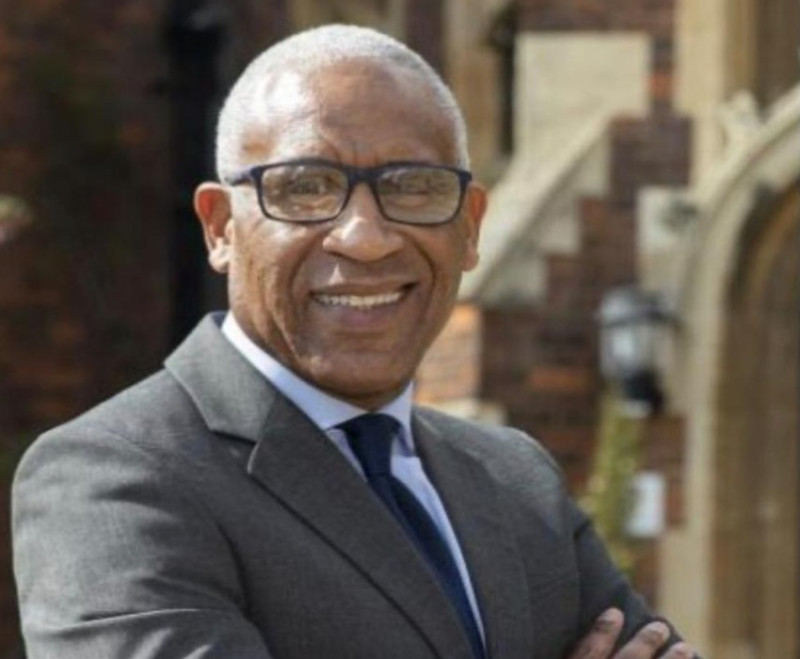
Only recently I wrote about the treatment of Professor Jason Arday. Now my friend, Lord Simon Woolley, finds himself in the firing line.
What troubles me is something much bigger: our increasingly narrow definition of what makes someone qualified to lead.
An article in The Spectator declares that Simon is “not fit to lead a Cambridge college.”
I have read it.
And I, like a great many people, strongly disagree.
Not because Simon is my friend. Friendship should never exempt anyone from scrutiny. Simon can be challenged. I can be challenged. Anyone occupying a position of responsibility should be challenged.
But challenge the ideas. Challenge the decisions. Challenge the results.
Apparently, if you are going to lead one of Britain’s great academic institutions, the preferred route is still a beautifully ordered procession of degrees, publications, fellowships and academic appointments.
All valuable.
But is that really the only definition of intellectual or leadership qualification?
Simon Woolley’s university has also been Britain itself
He grew up adopted, on a council estate in Leicester. He left school without A-levels. He returned to education as an adult through an access course, eventually earning a bachelor’s degree and then a master’s.
And then he spent decades doing something rather important.
He went out into the real world.
He co-founded Operation Black Vote and helped persuade communities that had often felt invisible to British politics that democracy belonged to them too.
He worked across political parties rather than simply shouting from one ideological corner.
He became an Equality and Human Rights Commissioner. He worked with government on racial disparity. He helped develop programmes to bring people from underrepresented communities into leadership.
Eventually, the boy from the council estate entered the House of Lords.
And then Cambridge asked him to lead Homerton College.
To some people, apparently, this demonstrates that standards have fallen.
To me it demonstrates something rather different.
It demonstrates that our understanding of leadership may finally be growing up.
There is a distinction that seems increasingly lost in modern public life.
Scholarship and leadership are not the same thing.
A brilliant scholar may make an extraordinary university leader.
But leadership is itself a discipline.
It requires judgement, empathy, courage, communication, the ability to build coalitions, to inspire young people and, critically, to understand the society outside the gates of the institution you lead.
And this is where I believe academia has a much bigger question to confront.
What exactly is a university for?
If our greatest universities become intellectual islands where extremely clever people conduct increasingly sophisticated conversations primarily with other extremely clever people, we have a problem.
Because outside those beautiful buildings there is another university.
It is called life.
People are struggling with inequality, artificial intelligence, collapsing trust in institutions, racism, economic insecurity, migration, climate change, social fragmentation and political extremism.
Young people don’t merely need to know how to analyse that world.
They need to know how to operate in it.
That is why what Simon has championed at Homerton interests me. The College’s Changemakers programme deliberately connects academic excellence with leadership, entrepreneurship, society and purpose. It brings students into contact with people from business, politics, civil society and the arts. It asks them not simply, what do you know? but something much more important:
What are you going to do with what you know?
That is education.
And earlier this year Homerton took that philosophy outside Cambridge itself, reaching into disadvantaged communities in Hackney and working to persuade young people who might regard Cambridge as another planet that these institutions belong to them too.
That matters.
Because Britain’s great universities should not merely produce brilliant minds.
They should produce useful ones.
I say this as someone who has spent most of his life working with scientists, engineers, academics, entrepreneurs and governments.
Some of the cleverest people I have ever met could explain incredibly complicated things to me.
Some of the wisest could explain complicated things to anybody.
There is a difference.
Knowledge becomes powerful when it connects with humanity.
Simon understands that because he has lived on both sides of the gates.
He knows the council estate and Cambridge.
He knows protest and Parliament.
He knows what exclusion feels like and what establishment power looks like.
That combination isn’t an embarrassment on a CV. It is precisely the kind of experience our institutions desperately need.
Now, did Simon use extraordinarily strong language after Jason Arday’s death?
Yes.
People can legitimately question it.
I know Simon. I know the passion behind those words. I also understand that when somebody believes a friend has been relentlessly dehumanised, grief does not always speak in the language of an academic seminar.
But disagreeing with someone’s language is very different from declaring him unfit for leadership.
And I refuse to accept another increasingly common habit in public debate: taking a human being’s entire lifetime of work, reducing it to one controversial moment and then demanding that everything else be erased.
We are becoming a society remarkably proficient at destruction.
We should relearn how to judge people in the round.
Lord Woolley has spent decades trying to bring people who felt outside Britain’s institutions inside them.
He has helped people participate in democracy.
He has opened doors.
He has mentored future leaders.
And now, from within one of the world’s greatest universities, he is trying to make sure that extraordinary education connects with the extraordinary challenges beyond its walls.
That is not lowering standards.
That is expanding the meaning of excellence.
And perhaps that is what makes some people uncomfortable.
Because institutions throughout history have developed their own definitions of merit. Eventually those definitions become so familiar that we mistake them for objective truth.
They aren’t.
A Cambridge professor with hundreds of citations possesses one kind of excellence.
A man who can walk into a deprived community where young people have stopped believing institutions belong to them, earn their trust and persuade them that Cambridge might one day belong to them too possesses another.
We need both.
This is not an argument against academic excellence.
Quite the opposite.
I want Cambridge, Oxford and every great university to remain ferociously committed to intellectual rigour. I want the universities in my country to do the same.
But intellectual rigour without connection to society risks becoming intellectual vanity.
The world doesn’t need universities that merely study society.
It needs universities prepared to participate in improving it.
Leadership in academia therefore has to evolve.
Universities need extraordinary scholars.
But they also need bridge-builders.
Entrepreneurs.
Public servants.
Scientists.
Artists.
Activists.
People who have failed and rebuilt themselves.
People who understand poverty not because they wrote a paper about it, but because they have seen it.
People capable of taking the extraordinary knowledge created inside our universities and connecting it with the messy, complicated, uncomfortable world outside.
Simon Woolley is one of those people.
Is he perfect?
Of course not.
Neither am I. None of us is.
Neither, I suspect, are the people writing about him.
But perfection was never the qualification for leadership.
Courage is. Purpose is. Empathy is. Results are.
And sometimes the most important person inside an ancient institution is precisely the person who remembers what the world looks like from outside its gates.
Simon, my friend, keep those gates open.
There are millions still waiting to walk through them. – September 4, 2026
Datuk Dr Vinod Sekhar is the publisher of The Vibes and Chairman of the Petra Group



.jpg)