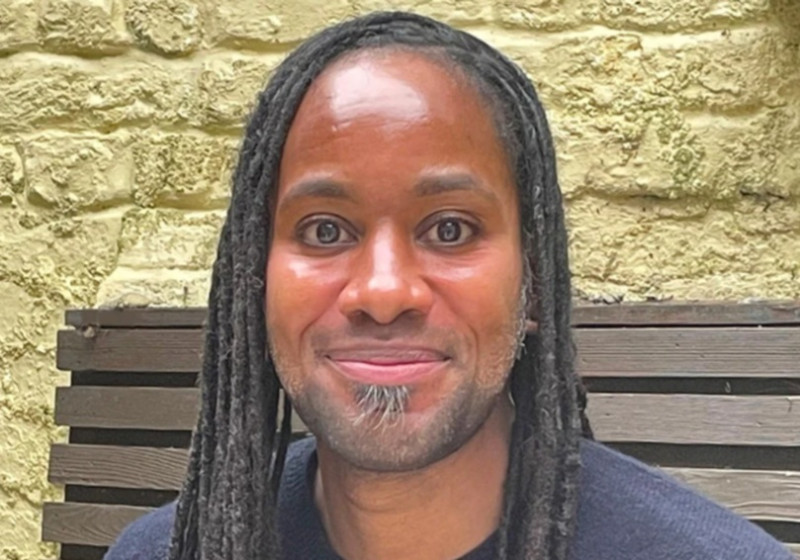

I DID not know Professor Jason Arday personally.
But two people I know and respect deeply — my friends Lord Simon Woolley and Dawn Butler — have spoken with enormous emotion about what happened to him.
In fact, it was just a week before his death that Simon spoke to me about his worry for Jason.
And having spent time reading about Jason, reading the allegations, reading his responses, reading the journalism and then reading the commentary about the journalism, I find myself deeply disturbed.
Not because questions were asked. Questions must be asked.
Universities must maintain academic standards. Professors must be accountable for their work.
Public figures cannot demand immunity from scrutiny because scrutiny is uncomfortable.
And journalists must be free to investigate institutions and individuals.
I believe all of that.
But there is an enormous difference between scrutiny and spectacle. And somewhere along the way, we seem to have forgotten it.
Professor Jason Arday became Cambridge University’s youngest Black professor. His journey was extraordinary and inspirational to many people, including me.
Then serious questions were raised about aspects of his academic work and biography.
Those questions deserved examination.
What they did not require was the transformation of a human being into a form of public entertainment.
Hundreds of articles appeared within weeks.
Think about that for a moment. Not about a war. Not about corruption involving billions.
Not about the collapse of a government or the destruction of thousands of lives.
About one academic. At what point does legitimate public interest become something else?
At what point does investigation become obsession? At what point does scrutiny become humiliation?
And perhaps most importantly: At what point do we remember a human is standing underneath the avalanche?
My friend Simon Woolley knew Jason.
Lord Woolley has described what happened in the strongest possible language.
Shortly before Jason died, Simon says Jason told him he felt he was being hounded and could no longer see a way out.
Dawn Butler has been equally forthright. She has asked Britain’s press regulator to investigate the coverage and, speaking after Jason’s death, said something painfully simple:
We let him down. I think those four words should make all of us uncomfortable.
Because this is bigger than Jason Arday.
It is bigger than race, although it would be foolish to pretend race has nothing to do with the discussion.

It is bigger than Cambridge. And it is certainly bigger than politics.
It is about something happening across the world. We are slowly dehumanising public discourse.
And the most worrying part is that it is no longer confined to the darker corners of social media.
Major newspapers do it. Television does it.
Respected journalists sometimes do it. Politicians certainly do it.
Because everyone is now competing in the same attention economy. Clicks. Views. Shares. Engagement. Outrage.
The headline increasingly has to be more dramatic than the story because another headline is waiting half a centimetre below it on your telephone.
Journalism used to compete primarily for credibility. Increasingly, journalism competes for attention.
And attention has become a commodity. That creates a very dangerous incentive.
Nuance doesn’t travel as quickly as outrage.
“Questions remain about an academic’s work” is journalism.
“Fraud! Scandal! Disgrace!” gets clicks.
And once somebody becomes the villain of the week, something very ugly happens.
We stop discussing what they may have done. We begin discussing who they are.
Then their appearance becomes relevant. Their family becomes relevant.
Their childhood becomes relevant. Old photographs become relevant.
Every sentence they have ever uttered becomes another piece of content.
And suddenly a human being has become a product. I have lived long enough in public life to understand criticism.
I have been praised extravagantly and attacked viciously. Sometimes the criticism has been justified. Sometimes it has been complete nonsense.
That comes with public life. But I have also learnt something else.
There is always a person on the other side of the headline.
A husband. A wife. A father. A mother. A son. A daughter. A friend.
A frightened human being sitting alone somewhere reading thousands of strangers discussing whether he deserves to be destroyed.
Accountability requires evidence, justice requires proportionality and civilisation requires humanity.
We seem increasingly willing to sacrifice the last two in pursuit of the first.
And there is another uncomfortable dimension to Jason Arday’s story.
Race.
We should be capable of holding two thoughts in our heads simultaneously.
A Black academic must be subject to the same standards of academic integrity as anybody else.
And a Black academic must not be subjected to a different standard of public scrutiny because of who he is or what his success represents.
Those statements do not contradict each other.
They reinforce each other. Equality cannot mean immunity from scrutiny.
But equality also cannot mean allowing somebody to become the symbolic battlefield for every argument society wants to have about diversity, race, meritocracy and “wokeness”.
Jason Arday stopped being just Professor Jason Arday. He became a proxy war.
That is profoundly dangerous. And this brings me to something I have worried about for years.
Where is the silent majority?
Most people I meet are decent. They are not extremists. They do not wake up wanting to hate another race, religion, nationality or political tribe.
They want their children educated. They want their families safe. They want opportunity. They want dignity.
They want to laugh, work, love and live.
Yet public conversation increasingly sounds as though societies are populated entirely by people screaming at each other.
Why? Because reasonable people are quiet while unreasonable people are extraordinarily loud.
Algorithms reward anger. Politics exploits division.
And media monetises conflict. So the extremes dominate the conversation while the enormous middle watches silently.
That silence is becoming dangerous.
We have seen it with race. We see it with religion. We see it with immigration. We see it with Gaza and Israel. We see it in America. We see it across Europe.
We see it throughout Asia, and even here in Malaysia.
Every complicated human question is being reduced to two angry camps demanding that everyone choose a side. But leaving out the most critical side:
The human side. The side that says we can demand accountability without cruelty.
We can disagree without hatred. We can investigate without humiliating.
We can criticise without destroying. We can pursue truth without forgetting compassion.
And we can defend freedom of the press while demanding responsibility from those powerful enough to shape public opinion.
Freedom without responsibility eventually becomes licence. Power without humanity eventually becomes abuse.
That applies to governments. It applies to corporations. It applies to billionaires.
And yes, it applies to journalists too.
The press rightly demands accountability from everybody else.
It cannot exempt itself from the same principle.
Jason Arday’s death should therefore not become another weapon in the culture wars.
That would simply repeat the mistake. It should become a mirror.
A mirror for universities. A mirror for journalism.
A mirror for social media. And a mirror for every one of us who has ever forwarded something cruel because it was entertaining.
There are no longer legitimate questions to be answered about Jason Arday - because we as a society allowed his death. We have lost any right to ask any questions of him now. What we can do is ask ourselves questions about who and what we are.
And respect and mourn the loss of a very bright, young and inspiring man.
But there is another question that deserves answering too:
What kind of society are we becoming when the destruction of another human being becomes content?
Lord Simon Woolley is right to demand that we confront what happened.
Dawn Butler is right to demand accountability.
And the rest of us cannot simply shake our heads, express sadness and move on to tomorrow’s outrage.
The silent majority has been silent for too long. Being moderate does not mean being weak.
Being compassionate does not mean abandoning standards.
And demanding decency does not mean opposing free speech. Quite the opposite.
It means defending the kind of society in which truth can survive without humanity having to die alongside it.
Perhaps Jason Arday’s legacy can be something larger than the controversy that consumed his final weeks.
Perhaps it can remind us that behind every headline is a human being.
Behind every argument there is a family.
Behind every click are consequences.
And perhaps it can remind millions of decent people around the world that silence is itself becoming a choice.
It is time for the reasonable majority to become unreasonable about one thing: our refusal to accept the dehumanisation of each other.
We can do better. We must do better.
And perhaps the first step is simply finding the courage to say:
Enough. - August 22, 2026
Datuk Dr Vinod Sekhar is the publisher of The Vibes and Chairman of the Petra Group



.jpg)