By Murray Hunter
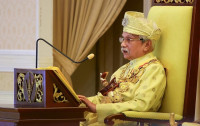
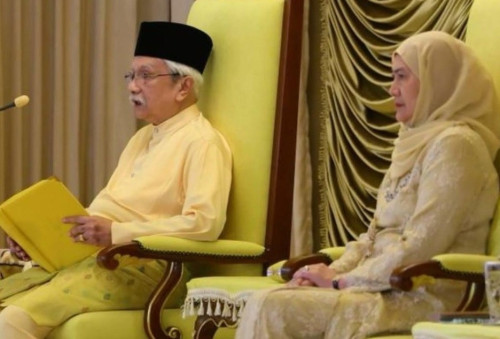
THE constitutional crisis unfolding in Negeri Sembilan has escalated beyond a dispute over customary succession into a confrontation with the state’s Yang di-Pertuan Besar.
On 15 September 2026, the state Executive Council (EXCO) endorsed a proclamation by certain Undang purporting to remove Tuanku Muhriz Tuanku Munawir and install Tunku Nadzaruddin Tuanku Ja’afar in his place.
Days later, the palace revoked the appointments of the ten EXCO members (sparing Menteri Besar Datuk Ismail Lasim) for breaching the oath of allegiance they had sworn before Tuanku Muhriz on 7 August.
The MB has rejected the dismissals as unconstitutional without his advice, insisted the EXCO remains valid, and, in a further move, suspended the state secretary and state legal adviser who had declined to gazette the contested proclamation.
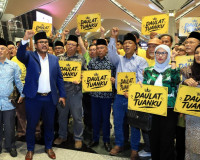
The Dewan Keadilan dan Undang (DKU) has described the EXCO’s actions as treason and a coup attempt. Former Menteri Besar Datuk Seri Aminuddin Harun called the endorsement an act of derhaka and urged police action.
A police report has been lodged citing Section 121 of the Penal Code. Yet no investigation into the core acts appears to have commenced, even as reports emerge of police restricting EXCO access to state facilities.
This combination of events raises serious questions about the enforcement of laws protecting the Rulers and the selective application of authority.
Under Malaysia’s Penal Code, offences against the Yang di-Pertuan Agong, a Ruler or Yang di-Pertua Negeri fall under Chapter VI. Section 121 criminalises waging war, attempting to wage war, or abetting such war against a Ruler, punishable by death or imprisonment of 30 to 40 years.
Section 121A covers conspiring, inventing or intending the death, hurt, imprisonment or restraint of a Ruler. Section 121B addresses conspiring or intending the deposition or deprivation of a Ruler from the rule of a State, or the overthrow of the government by criminal force, carrying 30 to 40 years’ imprisonment. Abetment and concealment attract related penalties.
The Abolition of Mandatory Death Penalty Act 2023 converted former mandatory death sentences into discretionary ones within these ranges.
The EXCO’s collective recognition of a proclamation seeking to strip Tuanku Muhriz of his position, after swearing loyalty to him, engages the language of deposition under Section 121B more directly than a personal assault under 121A.
Whether the acts meet the threshold of “waging war” under Section 121 remains a matter for investigation and the courts. The palace’s use of Article 38(5) of the Negeri Sembilan Constitution, under which EXCO members other than the MB hold office at the Ruler’s pleasure, followed the oath breach.
The MB’s counter-claim rests on reading that article together with provisions requiring the Ruler to act on advice in administrative matters. Parallel claims by the Attorney-General’s Chambers that the original proclamation was invalid for non-compliance with Article 10 of the state constitution add further layers of complexity.
These are constitutional questions, yet the criminal dimensions alleged by the DKU and others have not been tested through formal investigation.
The absence of visible police action is striking. Two scenarios present themselves.
The first is political calculation at the federal level. The current unity government depends on UMNO support. Charging an UMNO-linked Menteri Besar and EXCO members with serious offences against a Ruler could fracture that arrangement and risk the government’s survival.
In a system where party survival often outweighs institutional consistency, reluctance to prosecute becomes understandable, if not defensible.
A more troubling possibility is institutional capture. UMNO has long exercised influence across the bureaucracy and security services. If elements within the Royal Malaysia Police (PDRM) are constrained by political affiliations rather than the rule of law, then the enforcement of statutes designed to protect the monarchy itself becomes selective.
The result is the appearance that certain political actors operate above the ordinary application of the Penal Code when the target is a Ruler whose position they seek to alter.
Either explanation carries consequences. The monarchy’s role as a stabilising institution rests on the perception that its position is protected by law, not merely by custom or political convenience.
When an EXCO can endorse a move to replace a Ruler, reject the Ruler’s constitutional response, suspend officials who decline to implement the contested change, and face no criminal inquiry, the practical authority of the institution is diminished.
Silence from federal leaders and the absence of clear statements from the police compound the erosion. Precedents of this nature do not remain confined to one state; they signal to others that challenges to established authority may be managed politically rather than through the courts.
The crisis also exposes the limits of Malaysia’s hybrid constitutional monarchy. Customary processes involving the Undang coexist uneasily with written constitutional provisions and the criminal law.
When political parties align with one faction of customary chiefs against the incumbent Ruler, the dispute ceases to be internal to the state and becomes a test of whether federal institutions will uphold the legal framework that underpins the entire system of Rulers.
Patience has its place in constitutional disputes. Indefinite forbearance in the face of alleged offences against the person or authority of a Ruler does not. If the facts disclosed by the EXCO’s own statements, the palace’s revocation of appointments, and the DKU’s formal accusations do not warrant at least a formal investigation under the relevant sections of the Penal Code, then the message is clear: the laws protecting the monarchy apply unevenly.
In a country where the Rulers remain a central pillar of the constitutional order, that selectivity is more dangerous than any single act of defiance. The longer the authorities remain silent, the more the crisis in Negeri Sembilan becomes a national question about whether established authority still commands consistent enforcement. – September 25, 2026