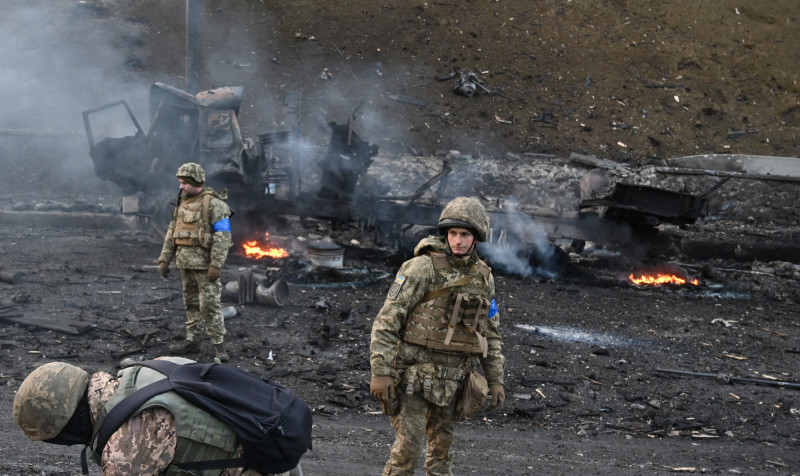
WHEN Ukraine gave up its stockpile of nuclear weapons, it expected protection from the great powers. Russia’s invasion could start a global re-think.
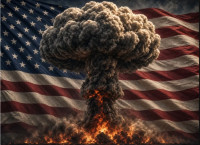
On March 4, Ukrainian President Volodymyr Zelenskyy tweeted a chilling entreaty to the world: “Please do not let Europe die in a nuclear war.” It was an ominous, desperate plea as Ukraine – a non-nuclear-weapon state – defended its territory from Russia, who put its nuclear forces on high alert on the fourth day of fighting.
Zelenskyy called upon United States President Joe Biden, among others, because of a treaty known as the Budapest Memorandum. This 1994 deal followed the 1991 dissolution of the Soviet Union, which saw the newly independent Ukraine inherit one-third of the Soviet nuclear stockpile. At the time, Ukraine owned the third biggest nuclear weapons arsenal in the world with 1,900 warheads, more than six times what China currently possesses, with explosive yields of 400-550 kilotons each, or 27 to 37 times the Hiroshima atomic bomb.
Through persistent negotiation and persuasion by the United States, Ukraine agreed to let go of its nuclear arsenal and join the Non-Proliferation of Nuclear Weapons Treaty (NPT). In exchange, the US, the United Kingdom and Russia said they would provide protection if Ukraine’s sovereignty was endangered. The memorandum noted that the major powers would “seek immediate United Nations (UN) Security Council action to provide assistance to Ukraine” should any threat come.
Two decades after the agreement, the world witnessed Russia violating the Budapest Memorandum through its annexation of Crimea in 2014. The 2022 invasion of Ukraine shows that even great powers can be rendered helpless bystanders when a nuclear weapons state like Russia goes on the offensive.
If agreements such as the NPT or the Budapest Memorandum can be violated by the major powers who sign them and leave non-nuclear countries unable to deter an attack because of the threat of nuclear retaliation, it may convince countries like North Korea, India and Pakistan to hold onto their nuclear warheads. Countries with uranium-based energy production may consider ramping up to building nuclear arms.
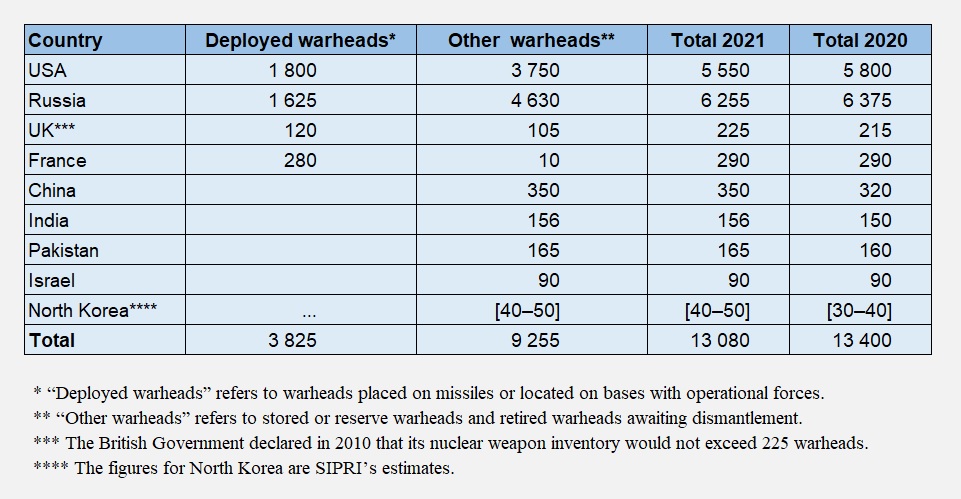
The threat may reverse a global trend of nuclear disarmament. From 2020 to 2021, the Stockholm International Peace Research Institute recorded a minor decline in the total number of nuclear weapons in the world (from 13,400 to 13,080). Nine countries maintain possession of nuclear weapons – the US, Russia, the UK, France, China, India, Pakistan, Israel and North Korea.
Within the same period, the number of nuclear weapons deployed to standby within operational forces increased from 3,720 to 3,825. This increase was led by the US and Russia who primed around 50 additional nuclear warheads since the start of 2021.
But if this conflict proves the catalyst for another nuclear arms race, it will be nothing like the decades-long Cold War.
In the 21st century, instead of a Cold War, a cyber war is more likely. The cyber-technological race to secure and/or attack facilities controlling nuclear capabilities would shape any conflict. Since the Stuxnet computer worm infiltrated and damaged Iran’s nuclear facilities in 2010, governments have realised that cyber-weapons capability is just as important as nuclear arms ownership – if not more important.
The threat of increasingly sophisticated digital attacks on nuclear facilities requires global stakeholders to address cyber-nuclear security and develop response capabilities. Other actors, such as criminal organisations and terrorist groups, could also enhance their cyber infiltration capability.
Ukraine experienced an attack on its power grid in 2015, attributed to Russian group ‘Sandworm’. In the current invasion, distributed denial-of-service attacks were directed towards the Ukraine government.
With current treaties unable to prevent Russia’s nuclear threat from re-emerging, the threat of further attacks looms large. But as we enter a new era of defence, along with finding new ways to protect non-nuclear nations, nuclear weapon states will likely need to bolster protections to prepare for the next wave of cyber-attacks. – The Vibes, March 23, 2022
Fitriani Bintang Timur is a senior researcher at the International Relations Department in the Centre for Strategic and International Studies in Jakarta and a lecturer at University of Indonesia. Her works are focused on traditional security and defence issues, including military reforms and peacekeeping, as well as the growing non-traditional security concerns, including cybersecurity, and the women, peace and security agenda.
Published under Creative Commons and in partnership with 360info.org