POLLING for the 15th general election is fixed on November 19, 2022.
Although there will be no Selangor election, the Pakatan Harapan state government needs to resolve certain issues that will impact the parliamentary election.
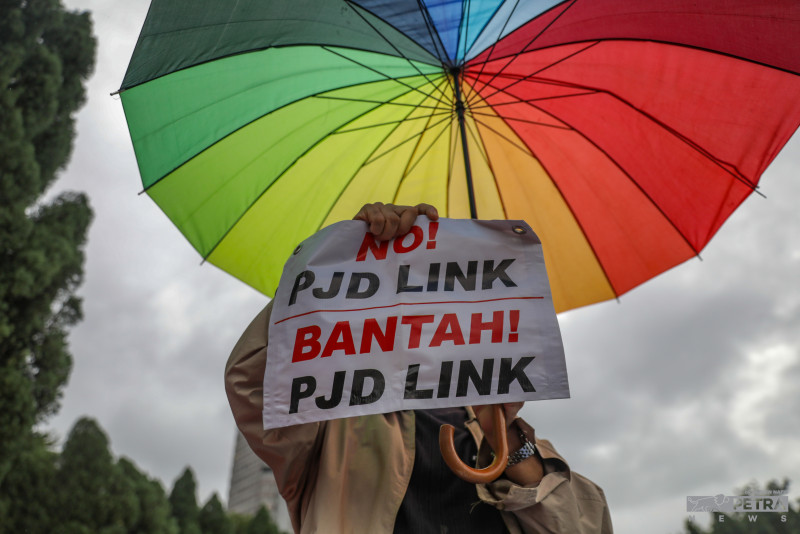
One such issue is the proposed PJD Link toll highway.
The Selangor government needs to make an unequivocal statement to reject the proposed privatised toll highway before polling day.
Harmful effects of Privatisation
The state government needs not wait for the completion of the environmental, social and traffic impact assessment studies before making a public announcement as there is a more fundamental objection to the privatisation project.
Privatisation, including public-private-partnership (3Ps), causes more socioeconomic harm than good. Privatisation increases inequality, creates poverty with multiple deprivations and reduces economic growth.
PJD Link seeks Public Listing
The concessionaire’s recent announcement confirms privatisation’s tendency to negatively impact households.
On October 3, 2022, the concessionaire announced it is seeking a listing on Bursa Malaysia via a reverse take-over of Practice Note 17 company Scomi Energy Services Bhd.
The shareholders of the concessionaire, through this corporate exercise, will receive RM922 million without having completed a single kilometre of the highway.
On the other hand, the users will ultimately be paying for the project’s acquisition costs and investment returns.
Privatisation: Prioritising Profits Over People
Privatisation and the 3Ps prioritise private profit over people.
This profit maximisation is at the expense of social welfare, equity and public interest. It adversely affects the public, especially the poorer consumers.
It is the government’s responsibility to provide public access to essential services and create a people-centric economy.
A government must use its resources to meet social and collective needs as it can do these more effectively and efficiently than the private sector.
The argument that governments are inefficient is flawed. South Korea, Singapore and Japan are examples what highly efficient and effective governments can achieve.
Further infrastructure projects require long-term financing which the government is able to secure while a private entity pays for more expensive short-term loans. It is a mismatch to use private financing for long-term infrastructure projects.
More importantly, the private sector serves the interest of its shareholders and executives in the singular pursuit of maximising profit, not delivering necessary services.
The history of privatised projects has proven it is impossible to ensure private providers’ incentive for profit match public interest needs.
When the government, through privatisation and the 3Ps, hand over to the private sector the construction and control of public assets such as roads, highways and other infrastructure facilities – allowing the private entity to decide on the imposition of fees and charges to derive profits – it is the people who ultimately bear the costs.
The long history of privatisations and 3Ps reveals the harms that result from subjecting people to the desires of profit-driven executives.
Studies have shown that privatisation gives rise to inequality and disadvantages the poorest in society.
Payments from the poorest households for access to transport and infrastructure services will pay for the high executive salaries, hefty shareholder dividends, acquisition costs recovery, restructured PN 17 company’s debts repayment and the financiers and investors’ extensive returns.
Those least economically capable will disproportionately bear the highest costs.
Privatisation: The Government and People Always Lose
Another undeniable fact of privatised infrastructure development is that the government tends to absorb the project’s risks without getting any returns.
When the project faces difficulties the companies’ shareholders can just walk away leaving the government to bail out the concessionaire or to use public funds to complete the project. When the project is successful the private company enjoys the gains.
The history of government bail-outs of privatised projects in Malaysia are all too well known to be repeated.
Poverty and Forced Car Ownership
In addition, it must be noted that the inefficient and poor local public transport system has led to a form of transport poverty in the Klang Valley.
Low-income households are forced to own and operate cars, despite their substantial costs, because of the lack of practical alternatives to work and to school.
These households have high debts and have to suffer the increase in petrol prices, car parking fees, monthly hire-purchase instalments and toll charges despite being in material deprivation.
This has resulted in severe economic stress for these households.
Therefore, the solution to these problems is not to have more privatised toll highways but a more affordable and efficient public transport system.
Conclusion
Although the federal government may not have realised the social-economic implications of the privatised PJD Link concession when they gave the approvals in principle, Selangor’s Pakatan Harapan government cannot be excused from doing so.
It is imperative that the state government does not turn a blind eye to the reality of inequality and relative poverty in allowing private capital to profit from the provision of essential services.
It is urged that an appropriate announcement be made forthwith. – The Vibes, October 25, 2022
William Leong Jee Keen is the incumbent MP for Selayang