UNCERTAINTY about US support for Ukraine is heightened by the US presidential elections later this year and the intentions of the future occupant of the White House.
The potential Republican candidate for president, Donald Trump, is against any further assistance to Ukraine, saying that any more aid should be extended as a loan.
He also once declared his readiness to end the war in 24 hours and emphasised the need to quickly achieve peace, even if Ukraine is forced to cede territory to Moscow.
Trump's opponent for the Republican nomination, former governor of South Carolina and US ambassador to the UN, Nikki Haley, supports the continuation of no-strings-attached aid.
A Vladimir Putin victory would lead to the spread of the war to other countries in Europe, primarily the Baltic states and Poland, she said.
According to the results of ongoing voting in three US states for the Republican nominee – Iowa, New Hampshire and Nevada – the advantage is with Trump, but the intrigue remains. In particular, because Trump is involved in four criminal indictments – two state and two federal – and thecourt hearings could influence the election campaign.
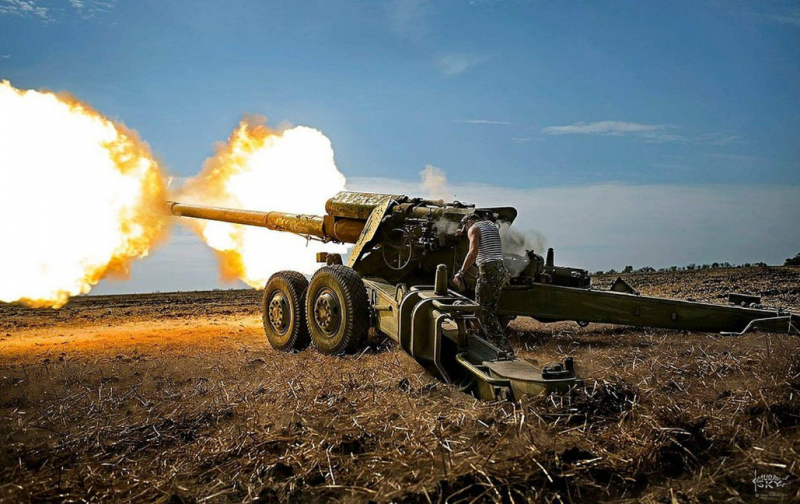
The question of aid for Ukraine remains crucial for the country's continued resistance against Russian forces. As Ukraine's President Volodymyr Zelenskyy said, the absence of American aid could lead to a “redistribution of power” in the world, as Europe alone will not be able to provide the necessary level of assistance.
On February 13, after lengthy deliberations, the US Senate approved a USD$95 billion aid package for Ukraine, Israel and Taiwan, USD$60 billion of which is intended to support Kyiv.
Its support by the Democrat-majority Senate is only half of the story, as the bill needs to be passed by the House of Representatives, which is under Republican control. The House is in recess until February 28.
From the beginning of the conflict until December 2023, US financial and humanitarian support for Ukraine amounted to USD$71.4 billion in aid and ranked second in size after the European Union (USD$84.9 billion). Next to the US, the most significant aid pledges were from Germany, the UK and Norway.
At the same time, data over the past six months shows a sharp reduction in the volume of American aid to Ukraine: the cost of aid packages in the second half of 2023 decreased to USD$2.25 billion – the lowest amount since January 2022.
The prospects for overcoming this negative trend and returning to the previous levels of aid are rather vague, as reflected in the rhetoric of the White House.
If at the beginning it was about the support of Ukraine by the US for as long as necessary, now there has been clarification that the support will continue only as long as the US can provide it.
Zelenskyy expressed hope that if Trump were to be elected in November, the general line of assistance to Ukraine from the US would continue, as otherwise it might lead to “catastrophic” consequences.
Several factors will influence the dynamics of American aid to Ukraine and its volume in the future. Primary is the attitude towards the war in the US itself. The strategic priorities of the US and its willingness to provide financial aid will depend on whether this war is defined by its policymakers and the American public as just a local or regional matter or part of a global conflict.
The former would see less support, as it would not be seen as an immediate threat to America. The latter, however, may cause a significant increase in investments geared towards ending such a conflict.
The presidential candidates themselves will set the tone. It is already becoming clear that the Ukrainian issue has acquired an internal political tone in the US and become the subject of inter-party discussions. Against the background of debates provoked by Republicans in Congress, Trump's previous statements about his ability to quickly end it and return to domestic issues are understandable to the average voter.
This will strengthen his position and make it difficult for his opponents to form a positive image. This approach will remain relevant as long as the war is considered – or at least presented in such a way to voters – as local or regional.
If American attitude changes and the significance of the war in Ukraine acquires a global dimension, there is high probability the conflict will escape the boundaries of inter-party struggle to become one of consensus. In this case, we can be sure that both the volume and the structure of aid to Ukraine will expand.
This is also possible in case of positive changes nearer the front lines. European countries, in particular the so-called Weimar Triangle of Germany, France and Poland, are determined to continue supporting Ukraine and have agreed to the creation of the Ukrainian fund. In the past six months, the EU countries surpassed the US in terms of aid to Ukraine.
This assistance used by the Ukrainian side to achieve military success at the front can also positively influence American support. Such aid being seen as an investment rather than a lost cause will make it easier for the Democrats to find compelling arguments to sway Republican leaders and voters to their side.
But the continuation of positional war and the lack of wins by Ukraine’s armed forces will encourage more funding for the US’s own defence capabilities and the strengthening of NATO military power rather than aid for Ukraine.
Not the last in determining the fate of American aid to Ukraine will be the general state of affairs on the world stage. The aggravation of the Gaza conflict has led to a decrease in attention to Ukraine and taken away some of the resources.
If new hot spots appear, it is possible to predict a reduction in the amount of aid and the complication of its passage in both houses of the US Congress.
This concerns Taiwan, which remains under a potential military threat from China. If the US is forced to divert its attention to the Far East, the issue of Ukraine aid will lose its priority.
The prospect of US aid to Ukraine remains an equation with many unknowns. The configuration of a solution will largely determine the fate of not only Ukraine and the US but also the world. – 360info, February 25, 2024
Tetiana Hranchak is a visiting assistant teaching professor at the Moynihan Institute of Global Affairs in the Maxwell School of Citizenship and Public Affairs at Syracuse University, New York.
Published under Creative Commons and in partnership with 360info.org