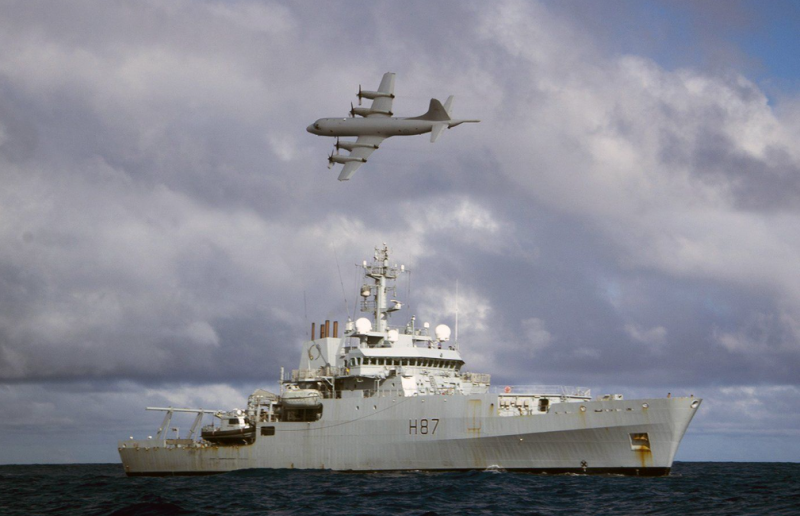
WHEN Malaysia Airlines Flight 370 vanished over the Indian Ocean 10 years ago this week, search and rescue ships from Australia, India, Japan, the US, UK, South Korea and China all swung into action.
Vessels scoured the vast expanse of the Indian Ocean for weeks in a vain search for signs of the wreckage.
It was just one example of the type of cooperation that's required in the region.
While MH370 was a rare event, piracy, gun-running, human trafficking, drug smuggling and natural disasters are all common threats in the Indo-Pacific region.
As the leading naval powers in the Indian Ocean, Australia and India play a key role in dealing with these security challenges.
Australia, through its special relationship with the 10-member Asean (Association of Southeast Asian Nations) bloc, also has a key role in providing maritime security, which is already bearing fruit. The inaugural India-Indonesia-Australia trilateral naval exercise was held in September 2023.
As a member of various Asean-led maritime-focused institutions, Australia has contributed to ensuring a rules-based regional order which is stable and away from any strategic vulnerabilities.
Taking stock of progress
As Asean's first dialogue partner, Australia has established itself as one of the 10-member bloc's most trusted and long-standing partners.
It has successfully showcased its role as one of the key regional stakeholders on economics and security.
Australia's defence ties with Malaysia and Singapore, strengthened through bilateral routes and agreements such as the Five Powers Defence Arrangement have been of special significance.
As Australia and Asean celebrate 50 years of their dialogue partnership it is pertinent to take stock of their relationship.
The 2024 Special Summit in Melbourne aims to not only take stock of the progress made so far and target the low-hanging fruit in the relationship, but also aims to address the big-ticket and challenging issues such as climate change, digital transformations, big tech issues and maritime security.
Australia's robust economic ties with Asean are well-anchored by a multitude of bilateral and multilateral arrangements including the Regional Comprehensive Economic Partnership (RCEP), Asia Pacific Economic Cooperation (Apec), and the Comprehensive and Progressive Agreement for Trans-Pacific Partnership (CPTPP) which also includes Brunei, Malaysia, Singapore, and Vietnam. Asean is Australia's second largest trading partner which shows how deep its trade and commerce linkages with the region are.
Australia launched its Southeast Asia Economic Strategy to 2040 in 2022, which aims to serve Canberra in widening and deepening its trade and investment linkages with ASEAN member states.
Australia has devised a two-decade trade and investment strategy with the region, showcasing its strong commitment to the region. However, meeting these targets is easier said than done. For instance, the region needs USD$3 trillion infrastructure investment by 2040 and requires an annual investment of more than USD$200 billion.
Through its Partnerships for Infrastructure Initiative, a four-year initiative launched in 2023, Australia has shown its commitment to the region, but it remains to be seen what the initiative will look like beyond 2028.
China’s assertive posturing
Australia's initiative offers a sustainable, inclusive growth alternative to China's Belt and Road, leveraging its experience as an infrastructure leader.
Its role as a net security provider in Asean and wider Indo-Pacific is also significant.
China's rise and growing territorial ambitions coupled with its assertive postures, in the form of its nine-dash line and repeated issuance of new maps claiming more islands and features in the South China Sea, deployment of warships, island reclamation, and island militarisation pose a challenge to the rules-based regional order.
Australia's participation in the freedom of navigation exercises in the South China Sea is geared to stabilise the region and protect these waters from any hegemonic movements. Its airborne surveillance operations in the South China Sea and the Indian Ocean, called Operation Gateway, have been in operation since 1980.
Justified as they are, some of Australia's strategic moves such as the Australia, the United Kingdom and the United States (Aukus) trilateral security partnership are not directly supported by the Asean countries even though they understand Canberra's strategic concerns.
The Quad, which includes Japan, the US, India and Australia, is also seen by some as an initiative that might polarise the region. Although considering its role as a security stabiliser, Quad does enjoy the tacit support of some of the Asean member states. Vietnam, a leading Asean member, has even participated in the ‘Quad plus' deliberations.
Australia's role in building capacities of Asean member states especially on the maritime and cyber security fronts has been commendable.
Moving forward, Canberra could replicate minilateral maritime initiatives such as the India-Australia-Indonesia maritime exercise to enhance maritime domain awareness, humanitarian assistance and disaster relief preparedness, and maritime confidence building exercises with its Asean and Indo-Pacific partners.
Together, Australia and the Asean members could contribute to regional stability and prosperity in the Indo-Pacific region. Most of the heavy lifting has to be done by Australia. In what ways Australia takes up its role and responsibilities in times to come on both economic and security fronts remain to be seen. – 360info, March 5, 2024
Dr Rahul Mishra is a senior research fellow at the German-Southeast Asian Centre of Excellence for Public Policy and Good Governance, Thammasat University, Thailand and an associate professor at the Centre for Indo-Pacific Studies, Jawaharlal Nehru University, New Delhi.
Published under Creative Commons and in partnership with 360info.org.