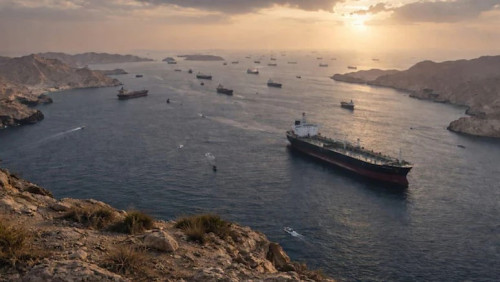
TENSIONS in the Middle East have escalated sharply after US President Donald Trump announced that American forces have commenced a blockade of Iranian ports, a move intended to pressure Tehran into reopening the Strait of Hormuz and agreeing to terms to end a six-week war.
Iran responded with sweeping threats against regional ports, warning that no harbour in the Persian Gulf or Gulf of Oman would remain safe if the standoff intensifies.
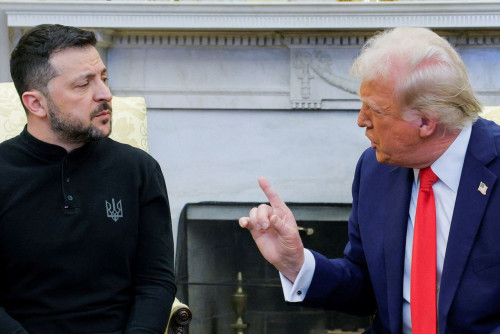
“We can’t let a country blackmail or extort the world because that’s what they’re doing,” AP reported Trump saying at the White House, confirming the operation was under way.
He signalled that Washington remains open to dialogue, adding: “I can tell you that we’ve been called by the other side,” and that “they want to work a deal,” though he did not elaborate.
A notice issued by the United Kingdom Maritime Trade Operations agency indicated the blockade covers “the entirety of the Iranian coastline, including ports and energy infrastructure”.
However, it added that transit through the Strait of Hormuz “to or from non-Iranian destinations is not reported to be impeded,” although vessels “may encounter military presence”.
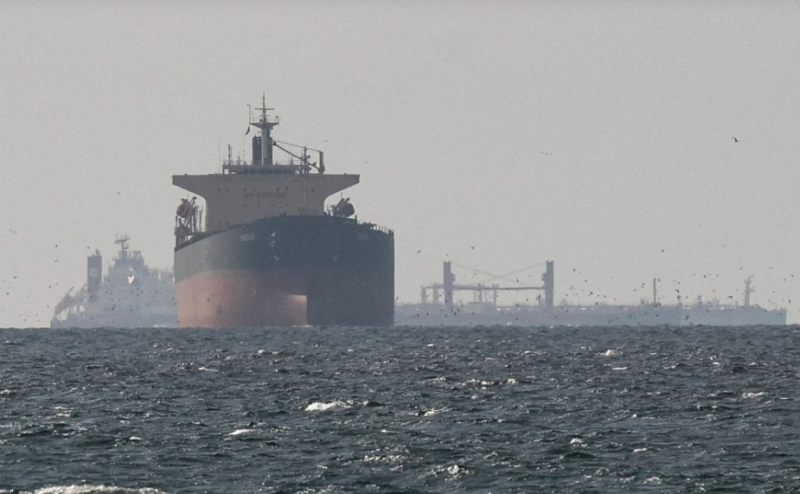
Despite that assurance, early disruption was evident. At least two oil tankers approaching the strait reversed course shortly after the blockade began.
Shipping activity has already dropped sharply from pre-war levels, and the renewed uncertainty has sent global oil prices surging. Brent crude hovered just under 100 dollars per barrel, up from around 70 dollars before the conflict began.
The strategic waterway, through which roughly a fifth of the world’s traded oil passes in peacetime, has become the focal point of the crisis.
Prior to the blockade, Iran had allowed limited passage to ships deemed friendly while imposing heavy fees, prompting accusations that it was effectively holding global trade hostage.
The United States Central Command said the blockade would apply to “vessels of all nations entering or departing Iranian ports and coastal areas” across both the Persian Gulf and the Gulf of Oman.
The decision to allow passage between non-Iranian ports represents a partial retreat from earlier threats to shut the entire strait.
In a social media post, Trump claimed Iran’s navy had been “completely obliterated” but warned remaining “fast attack ships” would be targeted, stating that “if any of these ships come anywhere close to our BLOCKADE, they will be immediately ELIMINATED.”
Tehran responded in stark terms.
“Security in the Persian Gulf and the Sea of Oman is either for everyone or for NO ONE,” state media reported, citing a military statement that declared: “NO PORT in the region will be safe.”
Iranian officials dismissed the blockade as bluster while warning of consequences. Ebrahim Rezaei, spokesman for parliament’s National Security Commission, said it was “more bluffing than reality” and would worsen market instability.
Parliamentary speaker Mohammad Bagher Qalibaf addressed Washington directly: “If you fight, we will fight.”
Diplomatic efforts to resolve the conflict remain stalled. Talks held in Pakistan over the weekend failed to produce an agreement, with key disputes centring on Iran’s nuclear programme, sanctions relief and war reparations. The ceasefire, due to expire on 22 April, remains fragile.
Meanwhile, Iran has demanded compensation from Bahrain, Saudi Arabia, Qatar, Jordan and the United Arab Emirates, alleging they supported military operations against it in violation of international law.
Military and legal experts are closely watching how the blockade is enforced. Under international law, such actions must be applied impartially and allow for humanitarian access.
Questions also remain about operational risks to United States forces and whether a blockade alone can compel Iran to concede.
The broader stakes are considerable. The confrontation has already reduced shipping traffic, driven up energy prices and heightened fears of a wider regional conflict. European leaders, including Britain’s prime minister and France’s president, are planning urgent talks aimed at de-escalation and restoring safe passage through the strait.
At the heart of the crisis lies a stark calculation: whether economic pressure will force Iran to yield, or whether the global fallout—particularly surging oil prices—will compel Washington to reconsider its strategy. - April 14, 2026