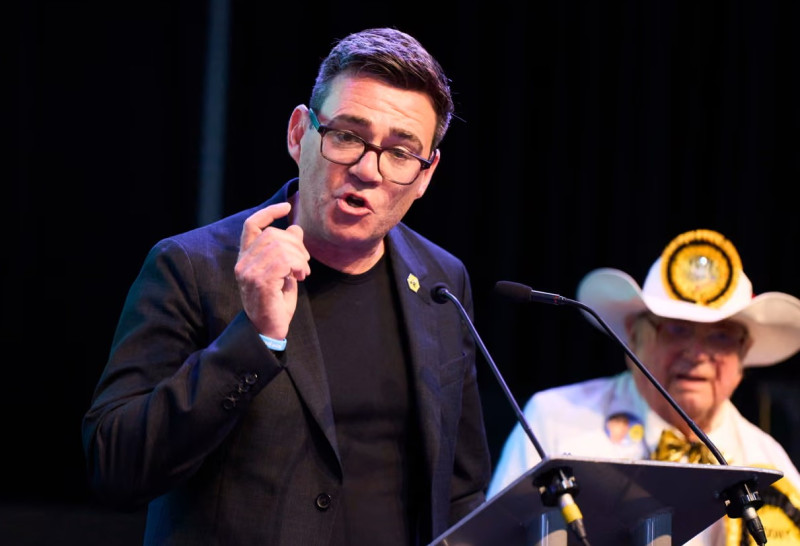
ANDY Burnham is set to become leader of Britain's governing Labour Party on Friday, clearing the final hurdle before taking office as the country's seventh prime minister in a decade.
Burnham, 56, will be formally elected at a special Labour Party conference after securing overwhelming backing from Labour Members of Parliament. He is scheduled to replace Sir Keir Starmer as prime minister on Monday.
Reuters reported on Friday that the former Greater Manchester mayor, widely known as the "King of the North" for his staunch defence of the region's interests, assumes office at a critical time for Labour as the party seeks to stem the rapid rise of Nigel Farage's populist Reform UK, which has led national opinion polls for several months.
The leadership transition follows growing dissatisfaction within Labour ranks over Starmer's declining popularity, prompting MPs to back Burnham as the party's new leader ahead of the next general election, which must be held by 2029.
Attention will now turn to Burnham's first cabinet appointments and the policy agenda he intends to pursue after entering Downing Street.
In his only parliamentary speech since returning to the House of Commons after winning the Makerfield constituency last month, Burnham outlined plans for what he described as the "biggest rebalancing of power" away from London to Britain's regions.
He argued that devolving greater powers and investment to regional authorities would help reduce inequality and address frustrations among communities that have increasingly shifted their support towards Reform UK.
That message resonated strongly with Labour MPs, many of whom fear losing their seats to Farage's party at the next election.
Although Reform UK remains the principal electoral challenge facing Labour, recent controversy surrounding Farage's acceptance of donations from wealthy benefactors has created what some analysts believe could be an opportunity for Burnham to regain political momentum.
Nevertheless, Burnham faces significant pressure to deliver tangible results quickly, with less than three years before the next national election.
Many of his proposed reforms, particularly those aimed at rebalancing regional economic development, are expected to take years to produce measurable outcomes.
Nigel Wilcock, executive director of the Institute of Economic Development, said Burnham had spent years advocating a different model for economic growth but now faced the challenge of translating that vision into practical government policy.
"The challenge is turning that vision into a reality," Wilcock said. - July 17, 2026