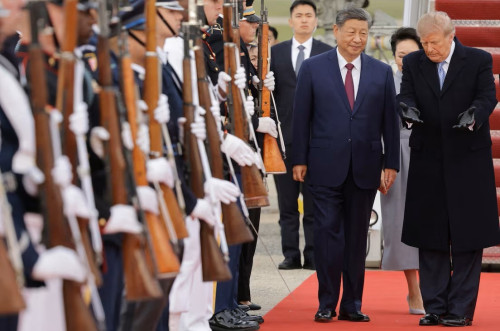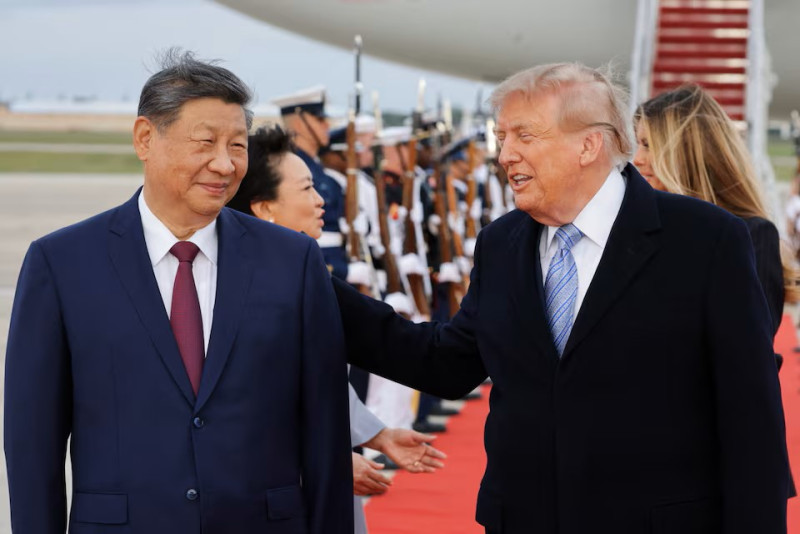
US President Donald Trump rolled out the red carpet for Chinese President Xi Jinping on Thursday as the two leaders sought to keep relations between the world’s two biggest economies stable, despite deep differences over trade, Taiwan, technology and the war with Iran.
Reuters reported on Friday that the high-profile summit, Xi’s first visit to Washington in more than a decade, was heavy on ceremony but offered little immediate indication of major breakthroughs on the most contentious issues.
The two leaders and their wives attended a state dinner at the White House on Thursday night, following a bilateral meeting that covered security, technology and artificial intelligence.
Xi urged the United States to oppose “Taiwan independence”, according to a readout from China’s official Xinhua news agency issued after the meeting.
The White House did not immediately issue its own summary of the talks.
Xi was also expected to press Trump over US arms sales to Taiwan. After his visit to China in May, Trump said he was holding in abeyance a US$14 billion arms package for Taiwan, describing it as a “very good negotiating chip”.
China claims democratically governed Taiwan as its own territory and has not ruled out using force to take control of the island.
Trump, meanwhile, emphasised his relationship with Xi after the Chinese leader’s arrival, describing their ties as a “truly great friendship” and saying the two countries had made progress on trade since his May visit to China.
“During this visit, we will also discuss pressing issues concerning security, technology, and 'super intelligence,'” Trump said, using his alternative term for artificial intelligence.
Xi said the interests of the two countries were deeply intertwined and that competition should be a “healthy one”.
US companies were welcome in China, he said, while adding that he hoped “Chinese companies are treated fairly here in the United States”.
Xi also called for regular military-to-military dialogue between the two countries to improve crisis prevention.
Edgard Kagan, a former senior White House official for East Asia, said the contrasting rhetoric reflected different approaches by the two leaders.
“The president is casting it very much as about his personal relationship with Xi,” said Kagan, now with the Center for Strategic and International Studies. “What I found interesting was Xi is being much more cautious and suggesting that it's less about the personal relationship than the national relationship.”
The summit followed talks between US Treasury Secretary Scott Bessent and Chinese Vice Premier He Lifeng, in which the two sides agreed to extend an agreement pausing their trade war until January 10, Bessent said on Wednesday.
The extension could provide the two economies with additional room to manage their trade relationship, although analysts said a comprehensive settlement of their broader disputes remained unlikely.
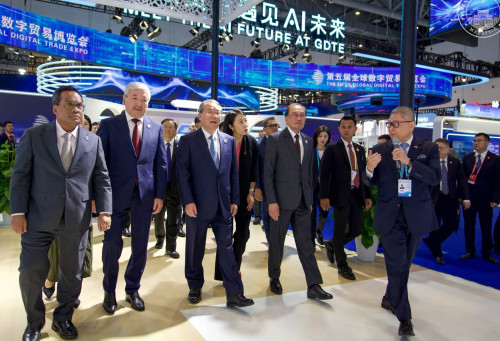
Trump has also signalled limited interest in imposing new regulations on artificial intelligence, despite concerns among some industry leaders over the technology’s longer-term risks.
“Super Intelligence (SI) will be a big topic of discussion, but I want to leave it exactly where it is,” Trump wrote on Truth Social. “That is China's position also.”
Xi took a different emphasis, saying both countries must “ensure that the development of AI is always under human control”.
Competition between Washington and Beijing in AI and advanced technology remains a major obstacle to deeper cooperation, with the Trump administration expected to maintain restrictions on exports of some US technologies to China.
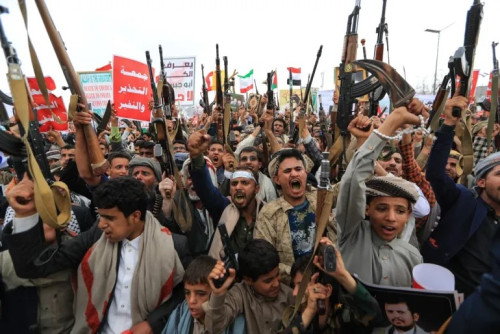
The summit also came as the two countries remain divided over the war with Iran.
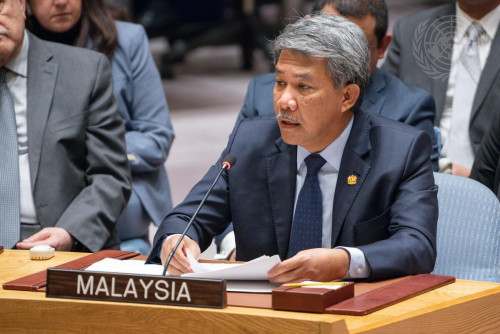
Trump had forcefully defended his use of military power in a speech at the United Nations earlier this week, while Xi expressed support for the United States and Iran to return to a ceasefire and eventually negotiate a peace agreement, Xinhua reported.
There has been little indication that Beijing is prepared to exert pressure on Tehran to meet Washington’s demands.
Xi entered the summit with China’s trade performance strengthening his position, while Beijing’s control over rare-earth supplies provides significant leverage in its economic relationship with Washington.
Despite the differences, both governments have an interest in keeping relations stable, with Trump facing pressure over the Iran war and Xi dealing with domestic economic challenges.
The two sides still face disputes over Taiwan, export controls, AI, rare earths and Iran that could reignite tensions.
The state dinner was attended by senior figures from the US technology sector, including Apple CEO Tim Cook, Amazon founder Jeff Bezos, Alphabet CEO Sundar Pichai, OpenAI CEO Sam Altman, Tesla CEO Elon Musk and Nvidia CEO Jensen Huang.
The leaders’ meeting was accompanied by extensive ceremony, including a military display and flyover at the White House, underscoring the diplomatic importance Washington attached to Xi’s visit.
Trump later described the closed-door meeting as a “great meeting” without providing details.
Outside the White House, protesters demonstrated against China as the leaders attended the state dinner. - September 25, 2026