ROME – The first Western country to be struck by the devastating coronavirus pandemic, Italy is today an outlier in Europe with limited new cases compared with neighbours.
The question is why, and will it last.
While France reported a record 16,096 new Covid-19 infections on Thursday and Spain over 10,000, Italy's number has for weeks remained below 2,000.
It has carried out fewer tests – some 120,000 per day, versus France's 180,000 – but not enough to explain the sharp difference in new infections.
Experts largely point to the success of a severe and lengthy lockdown, combined with a collective trauma.
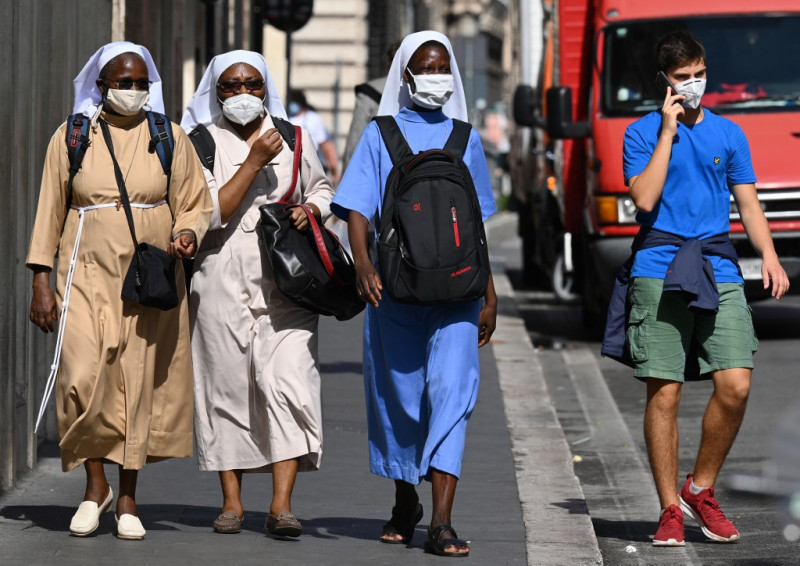
Horrific memories of coffins stacked up as cemeteries in the north overflowed and intensive-care beds ran out appear to have ensured Italians stick diligently to the rules, many even wearing masks in situations where it is not obligatory.
"The epidemic hit Italy earlier... and it immediately put in place a very tough containment plan," Professor Massimo Andreoni, an infectious disease expert at Rome's Tor Vergata hospital, said.
'Radical intervention'
The lockdown enforced in early March was not lifted until May, and that much more gradually than elsewhere, he said.
Massimo Galli, infectious diseases chief at Milan's Sacco hospital, agreed, telling Saturday's Corriere della Sera daily "that radical intervention, a longer and stricter lockdown, produced a sort of protection effect".
The World Health Organization held Italy up as an example this week, praising its "clear government advice, strong public support to reduce transmission" and information-sharing.
In a virus-induced diplomatic spat this week, Britain's Boris Johnson suggested that infections were higher in his country than in Italy or Germany because the British were "freedom-loving".
Italian President Sergio Matarella shot back that Italians also loved freedom but "we also behave responsibly".
Masks are mandatory in all crowded public spaces between 6pm-6am local time – a precaution welcomed by tourists such as Swedish Louis Tietjens, who said he felt "very safe here in Italy" as he visited Rome's Trevi Fountain.
Rome's Fiumicino International Airport was the first in the world to receive five stars from the Skytrax rating agency for its management of Covid-19, which praised its temperature controls, masks, abundant hand gel and physical distancing.
The country is also running "Covid-free" flights between Rome and Milan for those who test negative.
Businesses say they are trying to go the extra mile to prevent contagion in their stores or restaurants.
'Fear of the other'
At the Green Tea restaurant in central Rome, just steps away from the Pantheon, owner Giacomo Rech explained how clients have their temperatures taken at the door, are given hand gel, and provide their details so they can be traced if necessary.
Many schools reopened in the middle of this month, and since then some 400 have reported at least one case of coronavirus, the Sole 24 Ore daily said. Pupils with any suspect symptoms are obliged to take a Covid-19 test before re-admittance.
Hospitals and research institutes have noted a rise in depression and mental health disturbances, which may also play a part in limiting contagion.
Psychologist Gloria Volpato, who works in Bergamo, Italy's worst-hit area, told AGI news agency yesterday she had seen a rise in particular of a "fear of the other", with all contacts seen as potential contagion risks.
The smallest uptick in the infection numbers was being watched closely.
The biggest concern now is the reopening of schools this week in five southern regions that had delayed their start dates, as well as the recent admission of fans to football stadiums across Italy – though only 1,000 are allowed in per match.
"We'll be able to see the impact (over the next month), and whether Italy succeeds in maintaining these low levels or if she'll join the levels of France and Spain," Andreoni said. – AFP, September 27, 2020