World

School closures lead to 2.4% dip in students’ expected annual wages: ADB

It adds up to estimated U$1.25 tril, or 5.4% of developing Asia’s 2020 GDP

Updated 5 years ago · Published on 28 Apr 2021 2:00PM

School closures lead to 2.4% dip in students’ expected annual wages: ADB
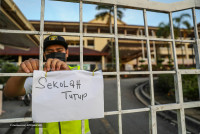
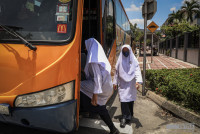
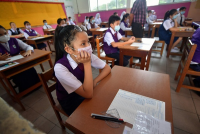
Learning and earning losses will rise the longer schools stay shut due to Covid-19, says the Asian Development Bank. – The Vibes file pic, April 28, 2021

KUALA LUMPUR – Students affected by school closures in developing Asia stand to lose an average of US$180 (RM738), representing a 2.4% decline, in expected annual earnings, said the Asian Development Bank (ADB).

The present value of these future earning losses adds up to an estimated U$1.25 trillion, equivalent to 5.4% of the region’s gross domestic product in 2020, said the bank in its flagship economic publication Asian Development Outlook for this year.

“In a more optimistic scenario, for the effectiveness of remote learning during the Covid-19 pandemic, total losses are equivalent to U$0.8 trillion (3.6% of 2020 GDP).

“But, a pessimistic scenario puts the losses at U$1.8 trillion (7.6% of GDP).”

Learning and earning losses will rise the longer schools stay shut, it said.

Given that learning losses will substantially reduce future productivity and earnings, ADB suggested that governments adopt policies to mitigate the potential damage and ensure education systems emerge from the pandemic better than they were before.

It said schools have been closed in varying degrees across developing Asia, with a quarter of the region’s economies seeing closures for 200 to 300 days, and a year or more in a fifth.

Only a handful of economies managed to keep schools open continuously, said ADB, adding that remote learning strategies were deployed in most economies.

“But, many students are constrained by (a lack of) access to resources like computers and the internet. This has limited their ability to learn from home.”

Overall, students in developing Asia have lost 29% of a year of learning on average.

In South Asia, where closures have been longest, students lost more than half a year of education, while those in East Asia lost 39%, Southeast Asia (35%) and Central Asia (24%).

Schools have mostly stayed open in the Pacific, where learning losses are relatively low (8.0%). – Bernama, April 28, 2021
Related News

Education / 1d

Haze: Schools under four Selangor, KL district education offices to close on Monday

Education / 1d

Haze: State education directors to decide on school operations based on API readings

Education / 3d

Schools to close starting tomorrow if API exceeds 180

Education / 5d

Haze forces school outdoor activities to stop in areas with API above 100

Malaysia / 5d

Parents worry over children’s exposure as haze worsens

Malaysia / 1w

Do not hide school safety issues to protect reputation - IGP

Spotlight

Malaysia

JPJ temporarily suspends VTA and registration for Chery Omoda 5

Malaysia

Eligibility for PTPTN repayment deferment to be verified with LHDN

Malaysia

Budget allocates two rounds of cash aid to millions of Malaysians in 70th Merdeka year

Malaysia

No Malaysians killed or injured in Riyadh airport attack, says Wisma Putra

Malaysia

JAIS probes viral religious ritual footage, says AI manipulation not ruled out

Malaysia

10-tonne truck ploughs into 11 vehicles: Police probe possible brake failure

World

Trump weighs joining Saudi strikes after deadly Houthi attack on Riyadh airport

You may be interested

World

Man dies after entering tiger enclosure at UK wildlife park

World

Bangladesh to deploy army at two new posts near Rohingya camps amid rising crime

World

Trump weighs joining Saudi strikes after deadly Houthi attack on Riyadh airport

World

Trump calls for Zelenskiy’s removal after deadly Russian strike kills 20 in Ukraine

World

India releases youth protest leaders after detention as voter-list row deepens

World

Iran says US response on Hormuz Strait reopening proposal falls short

World

Houthi attacks hit Riyadh, Dammam airports as Saudi Arabia faces mounting security threat