REYKJAVIK – Iceland believed briefly yesterday it had become the first country in Europe to have a women-majority Parliament after its election a day earlier, but a recount showed it fell short, an election official told AFP.
Of the 63 seats in the Althing Parliament, 30 were won by women, or 47.6%, following the recount in one of Iceland’s constituencies, the head of the electoral commission in the Northwest constituency, Ingi Tryggvason, said.
Earlier yesterday, projections based on final results had credited women with 33 seats, or 52%.
“We decided to hold a recount because the result was so close,” Tryggvason said, adding that no-one had requested the recount.
Further recounts in other parts of Iceland were not ruled out.
No European country has had more than 50% women lawmakers, with Sweden until now coming closest at 47%, according to data compiled by the World Bank.
Iceland has long been a pioneer in gender equality and women’s rights, and has topped the World Economic Forum’s ranking of most egalitarian countries for the past 12 years.
The country, which was the first to elect a woman as president in 1980, had been quick to celebrate the presumed milestone.
“I am 85, I’ve waited all my life for women to be in a majority... I am really happy,” Erdna, a Reykjavik resident, told AFP earlier.
“This is yet another example of how far we have advanced on the road to full gender equality,” Icelandic President Gudni Johannesson had told AFP.
Unlike some other countries, Iceland does not have legal quotas on female representation in Parliament, though some parties do require a minimum number of candidates to be women.
Around the world, five other countries currently have Parliaments where women hold at least half the seats, according to the Inter-Parliamentary Union: Rwanda (61%), Cuba (53%), Nicaragua (51%) and Mexico and the United Arab Emirates (50%).
New coalition?
The recount did not affect the overall election result.
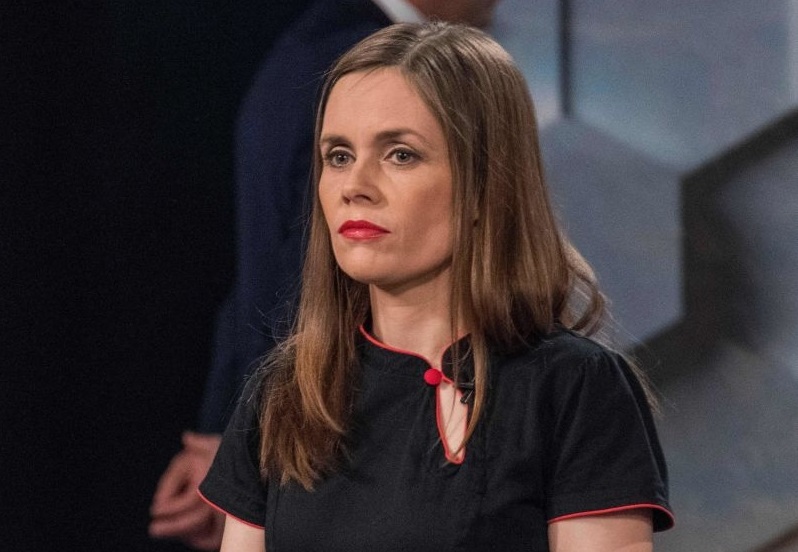
Prime Minister Katrin Jakobsdottir’s left-right coalition won a majority, but the three parties are nonetheless expected to begin negotiations in the coming days to decide whether they will continue to govern together.
The coalition has brought Iceland four years of stability after a decade of political crises, but Jakobsdottir’s Left-Green Movement emerged weakened after losing ground to its right-wing partners, which both posted strong showings.
The Left-Green Movement, the conservative Independence Party and the centre-right Progressive Party together won 37 of 63 seats in Parliament, up from the 33 they held before the vote.
But the Left-Green Movement itself won only eight seats, three fewer than in 2017, raising questions about Jakobsdottir’s future as prime minister.
The largest party remained the Independence Party, whose leader Bjarni Benediktsson – the current finance minister and a former prime minister – has long been eyeing Jakobsdottir’s job.
It won almost a quarter of votes and hung on to its 16 seats.
But the election’s big winner was the centre-right Progressive Party, which gained five seats, to 13.
After four years of concessions on all sides to keep the peace within the coalition, it is conceivable that the two right-wing parties may want to try to form a government without the Left Greens.
Speaking to private broadcaster Stod 2 yesterday, Jakobsdottir refused to be drawn on the coalition’s future discussions, saying only that her government had received “remarkable” support in the election.
Strange bedfellows
Progressive Party leader Sigurdur Ingi Johannsson and Independence Party leader Benediktsson meanwhile both said yesterday they were open to discussing a continuation of the coalition, citing voters’ strong support.
Benediktsson told Stod 2 it was “normal for parties that have worked together for four years and had good personal relations” to try to continue together.
But he told public broadcaster RUV he wasn’t sure they would succeed.
He also said he would “not demand” the post of prime minister.
The unusual coalition mixing left and right came about after the 2017 elections, in a bid to bring stability after years of political upheaval.
Deep public distrust of politicians amid repeated scandals sent Icelanders to the polls five times from 2007 to 2017.
This is the first time since 2003 that a government has retained its majority. – AFP, September 27, 2021