By Murray Hunter
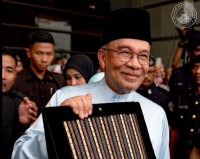
PRIME Minister Datuk Seri Anwar Ibrahim’s Budget 2027 is a measured, continuity-focused document that prioritises targeted support for households, modest fiscal consolidation, and maintenance of existing systems over sweeping structural change.
Total federal government allocation stands at RM459.84 billion (or about RM459.8 billion), up roughly RM40 billion from the original 2026 tabled figure of RM419.2 billion and about 3.6% higher than the revised 2026 spending of around RM444.1 billion.
Operating expenditure dominates at RM376.8 billion (about 82%), while development expenditure rises only slightly to RM83 billion.
Revenue is projected at RM380.8 billion, a 4.7% increase, driven mainly by tax collections (expected around RM297 billion) plus non-tax sources including a higher Petronas dividend of RM32 billion.
This leaves a fiscal deficit of roughly RM77–79 billion, or 3.3% of GDP, down from the revised 3.6% in 2026.
The government aims to continue narrowing it toward 3% in the medium term.
Taxes and non-tax revenue are expected to fund about 82.8% of spending, with the rest from borrowings and asset use.
Compared with 2026, the pattern is clear. Higher overall payments (operating plus development), stronger revenue, and a modestly smaller deficit in both absolute and relative terms.
Emoluments (civil service salaries) remain the largest operating item at around RM111.6 billion, retirement charges about RM44.6 billion, and debt service charges RM61 billion (up 6.5%).
Subsidies and social assistance ease slightly to RM72.7 billion but stay elevated.
Together, salaries, pensions, and debt service absorb a very large share of the budget, well over a third when combined with related fixed costs, leaving limited room for transformative new spending.
Growth outlook: moderating, export-supported
The economy is forecast to expand 4.8–5.3% in 2026 before slowing to 4.2–5.2% in 2027. Domestic demand (private consumption and investment) and electrical and electronics exports are key supports amid global uncertainties.
The government is not the primary growth engine; resilient external demand and private activity play larger roles.
This is not a stimulus-heavy budget designed to force higher growth through public spending.
People-oriented measures continue and expand modestly
Cash assistance rises: STR and SARA allocation increases to RM16 billion from RM15 billion.
All STR recipients receive up to RM150 monthly in SARA (benefiting up to nine million people). Non-STR adults aged 18 and above get two RM100 SARA MADANI payments.
Minimum wage rising to RM2,000 from June 2027 (from RM1,700), covering more than four million workers, with exemptions for MSMEs under RM50 million turnover. A RM2,500 monthly minimum for semi-skilled workers and graduates is introduced as a starting reform.
Personal income tax relief limit raised from RM9,000 to RM12,000 (first increase since 2010). Rates cut by one percentage point in the RM70,000–100,000 and RM100,000–150,000 brackets (to 18% and 24%), while the top rate for income above RM1 million rises to 30%. Expanded reliefs cover more caregiving, education, lifestyle, and other expenses.
Stamp duty waiver for first-home buyers on properties up to RM500,000.
9,000 contract doctors to receive permanent posts.
Support for gig/e-hailing and p-hailing workers (including a RM160 million package involving Grab).
MSME income tax rates cut by 1 percentage point in lower bands.
Service tax on elderly care services reduced to 6%.
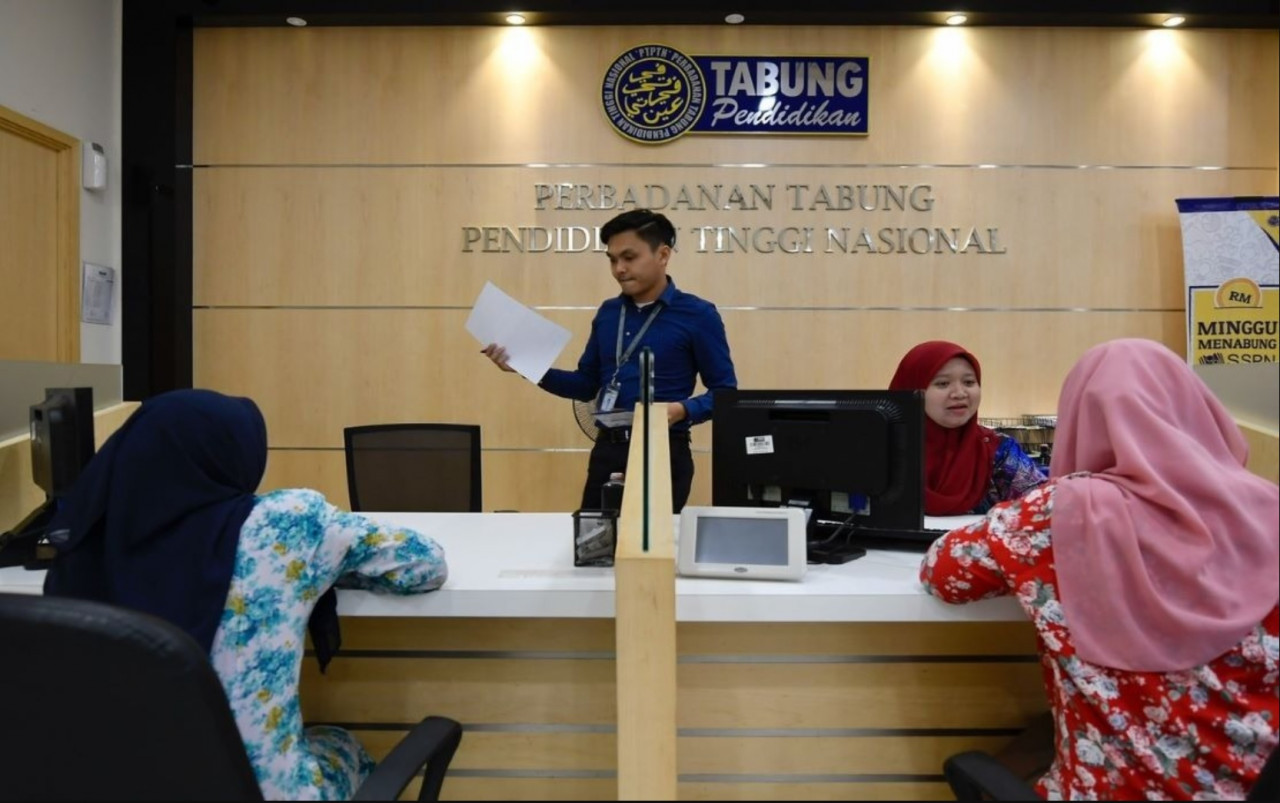
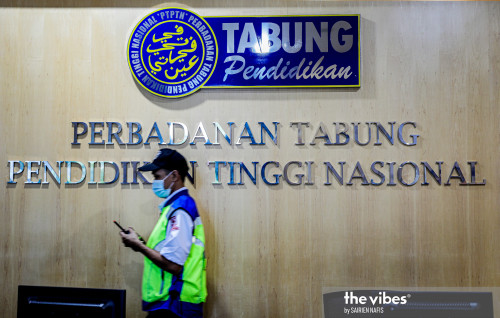
PTPTN relief for borrowers earning RM2,500 and below, plus RM2,500 allowances for Form 6 students.
New Budi Belia programme for youth and MyKomuter50 pass to encourage public transport.
These build on previous years’ people-centric approach rather than introducing radical new frameworks.
Sabah receives RM18.7 billion and Sarawak RM16.2 billion, among the highest federal allocations.
Infrastructure, Bumiputera focus, and limited reforms
Development spending emphasises repair and maintenance over major new builds, with RM2 billion for school repairs (doubled), RM100 million for Klang Valley flash-flood mitigation, and housing/repairs for government agencies. Important connectivity and economic projects continue, but the overall tone is consolidation and upkeep.
Bumiputera interests receive notable support, including 50 acres of KL land worth RM1 billion as an endowment.
Microfinancing rises to RM6.6 billion, and GLICs are tasked with mobilising RM25 billion in domestic investments (part of a broader ~RM510 billion total when including GLIC, statutory body, and private investments).
Halal certification grants (up to RM5,000 for first-timers) and similar schemes remain small in scale.
One clearer governance step is planned legislation to tighten oversight of government-owned companies and statutory bodies, with greater scrutiny of contracts via anti-corruption agencies, aimed at preventing repeats of past scandals.
This extends existing efforts rather than overhauling the GLC/GLIC model, which continues to play a central role in promoting start-ups and investment.
Paddy and farmer aid rises (RM2.63 billion, with incentives doubled), but it largely adds to subsidies rather than reforming the underlying system.
Assessment: steady continuation, not an election budget
Budget 2027 is more people-oriented than its predecessor in the volume and targeting of aid, tax reliefs, and wage measures, while remaining a natural extension of Madani-era priorities.
It addresses many areas, like the cost of living, healthcare staffing, education maintenance, youth, gig workers, regional development, and basic infrastructure, yet most individual allocations are incremental and may be too modest for transformative impact.
The heavy weighting toward operating costs (salaries, pensions, debt service, and still-substantial subsidies) constrains ambition. Growth relies more on exports and private activity than government pump-priming. Reforms are evolutionary: better targeting, higher oversight of GLCs, wage-floor adjustments, and maintenance of infrastructure rather than bold new directions or major tax-system overhauls.
Crucially, this does not look like an election budget loaded with giveaways timed for an early poll.
The measured deficit path, emphasis on fiscal responsibility under the Public Finance and Fiscal Responsibility Act, and focus on continuity signal an intention to complete the full term.
It is a steady, pragmatic budget that seeks to protect households and keep the existing economic model running while growth moderates, neither austerity nor a spending spree. – October 10, 2026