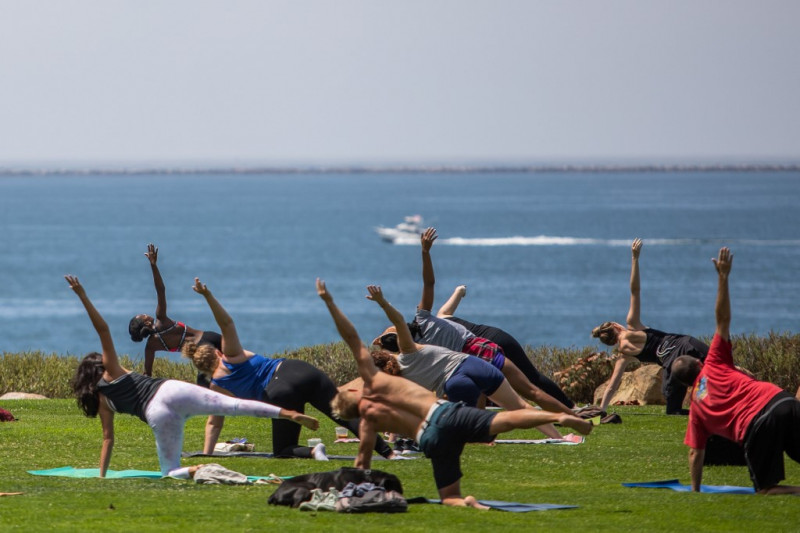
GENEVA – A new World Health Organisation (WHO) report yesterday warned that almost half a billion people could develop heart disease, obesity, diabetes, or other non-communicable diseases attributable to physical inactivity between 2020 and 2030.
According to Anadolu Agency cited the WHO report, inaction could cost the world US$27 billion (RM127.6 billion) a year if governments fail to take urgent action.
The global status report on physical activity measures how much governments are implementing recommendations to increase physical activity across the board, and it says they are falling short.
“We need more countries to scale up implementation of policies to support people to be more active through walking, cycling, sport, and other physical activity,” said WHO director-general Tedros Ghebreyesus.
“The benefits are huge, not only for individuals’ physical and mental health, but also for societies, environments, and economies.”
According to the report, the Covid-19 pandemic revealed the importance of regular physical activity for mental and physical health.
It also points to inequities in access and opportunities for some communities to be physically active.
“The Covid-19 pandemic has shown that physical activity must be a core component of public policy, with all countries ensuring equitable physical activity opportunities for all,” says the report.
Data from 194 countries show that overall, progress is slow and that governments must accelerate policies on increasing physical activity levels to prevent disease and reduce the burden on already overwhelmed healthcare systems.
Less than 50% of countries have a national physical activity policy, of which less than 40% are operational.
Only 30% of countries have national physical activity guidelines for all age groups.
“We are missing globally approved indicators to measure access to parks, cycle lanes, footpaths – even though we know that data exist in some countries,” Anadolu Agency also reported Fiona Bull, head of WHO’s Physical Activity Unit, told a UN press conference.
“Consequently, we cannot report or track the global provision of infrastructure that will facilitate increases in physical activity.”
She said that could be a vicious circle, as no indicator and no data leads to no tracking and no accountability, and then too often, to no policy and no investment.
While nearly all countries report a system for monitoring physical activity in adults, 75% of countries monitor physical activity among adolescents, and less than 30% monitor physical activity in children under five.
In policy areas that could encourage active and sustainable transport, only about 40% of countries have road design standards that make walking and cycling safer.
The economic burden of physical inactivity is significant, and the cost of treating new cases of preventable non-communicable diseases (NCDs) will reach nearly US$300 billion by 2030, around US$27 billion annually, says the report.
While national policies to tackle NCDs and physical inactivity have increased in recent years, 28% are reported as not funded or implemented.
The report calls for countries to prioritise physical activity as key to improving health and tackling NCDs, integrate physical activity into all relevant policies, and develop tools, guidance, and training to improve implementation. – Bernama, October 20, 2022