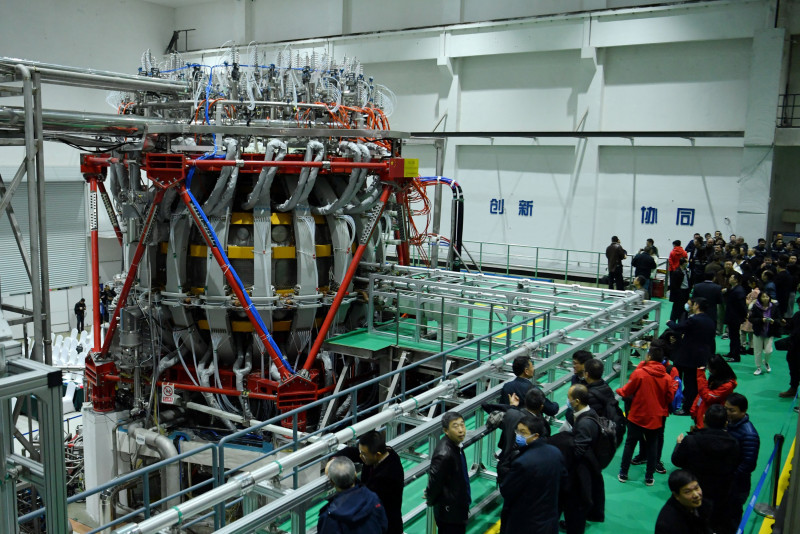
BEIJING – China successfully powered up its “artificial sun” nuclear fusion reactor for the first time, state media reported Friday, marking a great advance in the country’s nuclear power research capabilities.
The HL-2M Tokamak reactor is China's largest and most advanced nuclear fusion experimental research device, and scientists hope that the device can potentially unlock a powerful clean energy source.
It uses a powerful magnetic field to fuse hot plasma and can reach temperatures of over 150 million degrees Celsius, according to the People's Daily –approximately ten times hotter than the core of the sun.
Located in southwestern Sichuan province and completed late last year, the reactor is often called an “artificial sun” on account of the enormous heat and power it produces.
“The development of nuclear fusion energy is not only a way to solve China's strategic energy needs, but also has great significance for the future sustainable development of China’s energy and national economy,” said the People’s Daily.
Chinese scientists have been working on developing smaller versions of the nuclear fusion reactor since 2006.
They plan to use the device in collaboration with scientists working on the International Thermonuclear Experimental Reactor – the world’s largest nuclear fusion research project based in France, which is expected to be completed in 2025.
Fusion is considered the Holy Grail of energy and is what powers our sun.
It merges atomic nuclei to create massive amounts of energy – the opposite of the fission process used in atomic weapons and nuclear power plants, which splits them into fragments.
Unlike fission, fusion emits no greenhouse gases and carries less risk of accidents or the theft of atomic material.
But achieving fusion is both extremely difficult and prohibitively expensive, with the total cost of ITER estimated at US$22.5 billion. – AFP, December 4, 2020