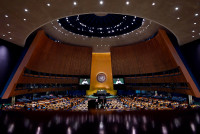
UNITED NATIONS – UN member states today open two weeks of negotiations aimed at finally reaching a treaty meant to protect and preserve vast areas of the world’s oceans.
After more than 15 years of formal and informal talks, this will be the third time in less than a year that negotiators converge on New York in what, yet again, is supposed to be a final and conclusive round.
But on the eve of the talks, set to run through March 3, cautious optimism appears to be taking hold, encouraged by a historic agreement reached in Montreal in December during the UN’s COP15 conference on biodiversity.
Countries then committed themselves to protecting 30% of the world’s lands and seas by 2030 – a nearly impossible challenge if it fails to include the high seas, of which only about 1% is now protected.
“We’re optimistic the COP15 biodiversity agreement will provide the shot in the arm needed for governments to get this important agreement over the line,” Pepe Clarke, Oceans Practice Leader for WWF International, said in a press release.
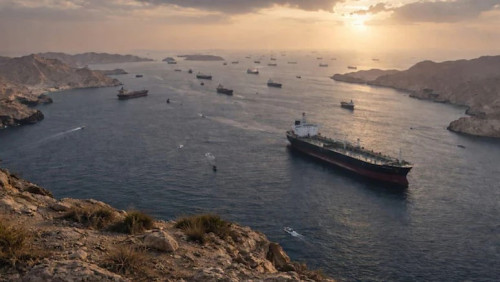
The high seas begin at the border of countries’ Exclusive Economic Zones, which extend up to 200 nautical miles, or 370km, from coastlines. They thus fall under the jurisdiction of no country.
While the high seas comprise more than 60% of the world’s oceans and nearly half the surface of the planet, they have long drawn far less attention than coastal waters and a few iconic species.
But with no borders at sea, there is “just one ocean, and a healthy ocean means a healthy planet,” said Nathalie Rey of the High Seas Alliance. Her group includes about 40 non-governmental organisations.
Ocean ecosystems – threatened by climate change, pollution, and overfishing – create half the oxygen we breathe and limit global warming by absorbing much of the carbon dioxide emitted by human activities.
‘Last chance’
Despite the optimism of some observers and the informal talks that have taken place since the last formal session in August, the oceans’ defenders warn that failure is still possible.
“If they do fail again, I think it really calls into question the process itself,” said Liz Karan of Pew Charitable Trusts.
Laura Meller of Greenpeace Nordic warned that “we’re already in extra time.”
“These talks are one final chance to deliver. Governments must not fail.”
The draft treaty, full of parenthetic clauses and multiple options, reflects the long list of contentious issues still on the table.
While the principle of creating marine protected areas is a core part of the mandate, delegations remain divided on how exactly these sanctuary zones would be established.
There is also no agreement on how to assess the environmental impact of activities such as mining in the high seas.
And debate continues on how to divide eventual profits from the collection – by pharmaceutical, chemical, or cosmetic manufacturers, for example – of newly discovered marine substances.
Developing countries, without the means to afford costly research, say they fear being left aside while others make windfall gains.
And during the August session, observers accused rich countries, notably European Union member states, of making only a last-minute gesture in this direction.
On behalf of ocean defenders around the world, actor and activist Jane Fonda plans today to present the conference’s president, Rena Lee, with a petition signed by five million people calling for a “strong” treaty.
Given the complexity and vast reach of a treaty and the need to work with other agencies with varying authority in parts of the ocean, strong language is vital, they say.
For even with an accord, they add, the devil is in the details. – AFP, February 20, 2023