LONDON – This year’s North Atlantic heatwave may be catastrophic for fish stocks people rely on for food and livelihoods, scientists and the Marine Conservation Society (MCS) have warned, reported German news agency (dpa).
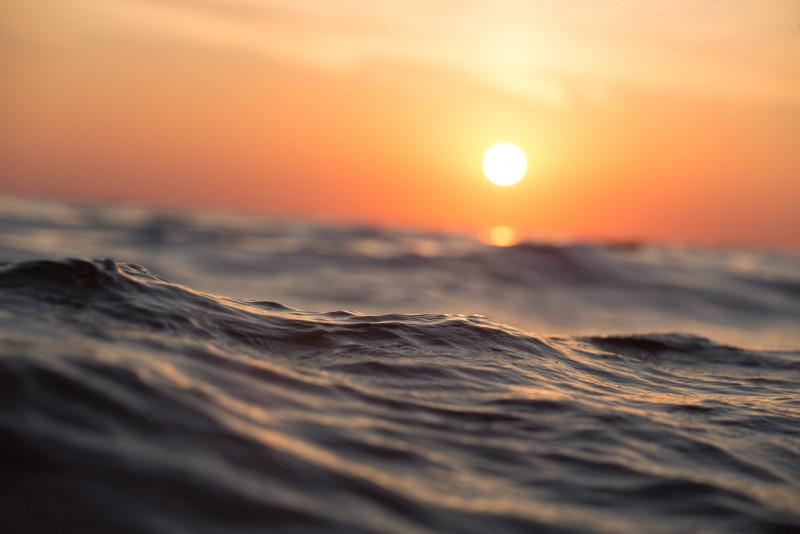
The ocean’s surface temperature has been soaring above the previous record since early March with highs as much as 5°C above the long-term average, classified as “beyond extreme” by the US National Oceanic and Atmospheric Administration – its highest category.
Human-induced climate change has been steadily warming the oceans which have absorbed 90% of the excess heat produced by greenhouse gas emissions.
Meanwhile, natural occurrences such as changes in wind patterns have driven the North Atlantic ocean’s temperature to record highs, scientists said.
El Nino, a naturally occurring warming event in the eastern tropical Pacific, has also had an impact, driving up average ocean and air temperatures around the world, but its effects are not thought to be linked to the heatwave in the North Atlantic.
Experts say climate change is shifting the temperature baseline, making heatwaves more frequent and more extreme and they can be just as devastating for some marine life as that on land.
Christopher Free, of the Marine Institute at University of California, Santa Barbara, said: “In the last decade, marine heatwaves have disrupted fisheries all around the world.
“If conditions in the North Atlantic stay hot, similar catastrophes may be on the horizon.”
Fish in the ocean, which lies between the east coast of North America and the United Kingdom and western Europe, depend on cooler waters for spawning, with one species – the Norwegian spring spawning herring – declining by 40% since 2009, which is thought to be due to the warming oceans.
The MCS is concerned that a combination of warming oceans and poor international management will lead to a crash in fish stocks that would put thousands of people out of work.
Olav Sigurd Kjesbu, of the Institute of Marine Research in Norway, said: “We know these pelagic fish stocks are sensitive to temperature changes.
“We have already seen that climate affects their distribution, their ability to spawn, and mortality rates.
“Rapid warming of the seas could accelerate these changes. They could also have a significant impact on the ability of herring and blue whiting to reproduce based on recent analyses.”
Prof Geraint Tarling, an ocean biologist at the British Antarctic Survey, said many species are moving north towards the Arctic and replacing native species there in a process known as Atlantification.
Craig Donlon, head of Earth surfaces and interior section at the European Space Agency, described this year’s North Atlantic temperature rise as a “scary situation” but added the ecosystem will adapt, with species migrating north replaced by others coming from the south.
He said: “We can expect to see changes of biology structure, the ecosystem will adapt.
“Some species will migrate further north into the water that they feel more comfortable in, in terms of temperature, and of course, other species will migrate north into our waters from the south, bringing a bit more diversity.”
The UK government announced last week its plans to begin a large-scale monitoring programme of pelagic trawlers above 24m, fitting them with cameras and GPS to record the size and species of their catches in English waters in an effort to manage stocks more sustainably.
Erin Priddle, MSC regional director for Europe, said: “Policymakers must find a way to incorporate stock shift changes, such as changing distributions of the North East Atlantic pelagics, into long-term and robust fisheries management plans.
“Without joined-up and effective planning, our fisheries resources could be put at risk of overexploitation, overfishing, and even stock collapse.” – Bernama, July 24, 2023