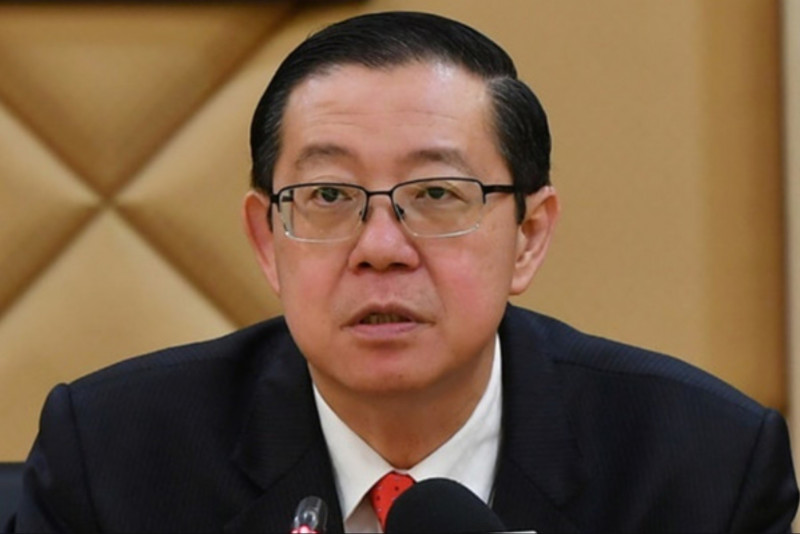

FORMER Finance Minister Lim Guan Eng has proposed several measures to combat the threat by the United States to raise tariffs against its biggest trade partners - Canada, Mexico and China.
Besides advocating support for Canada, Mexico and China against what Lim perceives to be a bullying move by the Americans, the DAP chairman wants the country to adopt new moves to stimulate the economy against the threat of global trade imbalances.
Lim wants tax adjustments to reduce business costs, especially for small and medium enterprises (SMEs), who might have to contend with the biggest impact from the US trade war.
He urged the government to raise the chargeable income threshold for the 15% tax rate from the current RM150,000 to RM300,000.
Lim also wants the subsequent chargeable income threshold for the 17% tax rate from the current RM600,000 to RM700,000 thus allowing SMEs to enjoy annual tax savings of RM10,000.
He also urged for the threshold of e-invoicing to be implemented in July 2025 from a yearly revenue of RM150,000 to RM500,000, and to exempt small businesses.
Lim also said the government should defer the imposition of a luxury tax to encourage tourism; and to defer the withdrawal of RON 95 fuel subsidies and not float RON95 to market price, which will only cause a spike in inflation amid raising transport costs.
Malaysia should also stand together with Canada, Mexico and China against newly inaugurated US President Donald J. Trump’s destructive tariff policies that endanger sustainable economic growth and spike soaring inflation globally.
A global trade war with retaliatory tariffs may have the same adverse impact on escalating inflation and arresting global economic growth.
"For this reason, the global community must unite against Trump’s tariffs. Even though the 25% tariffs on Canada and Mexico as well as an additional 10% on existing tariffs already imposed on China does not directly involve Malaysia yet, Malaysia will still be indirectly impacted.
“China is Malaysia's largest trading partner for the last 15 years and any negative impact on China’s economy, would also adversely affect Malaysia.
China supplies materials and components needed in the most efficient and cost-effective manner for our country’s electronic hub.
“Increasing the cost would definitely disrupt the supply chain and may result in shortages,” added Lim. – February 4, 2025



.JPG)