CANADA is stepping up its efforts to expand trade and investment opportunities, particularly with Malaysia, as it seeks to penetrate new markets and diversify its economic portfolio.
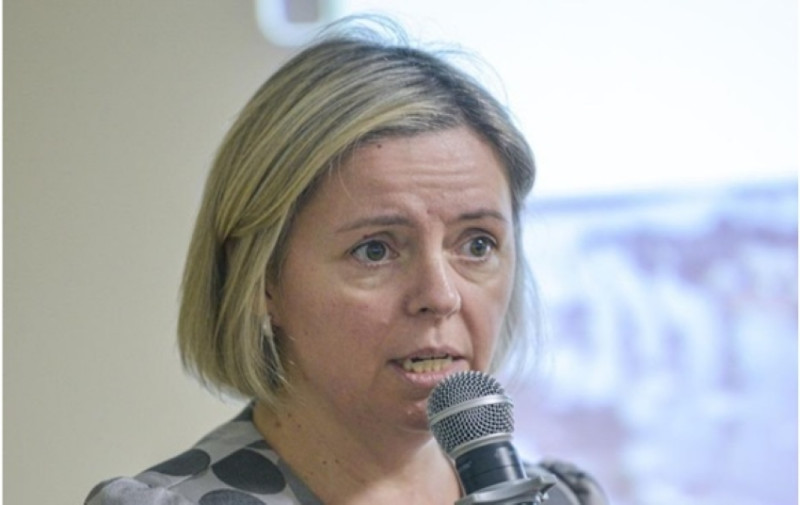
Jodi Robinson, Canada’s High Commissioner to Malaysia, outlined the country’s strategy to increase its trade footprint, underscoring that the move is part of a broader initiative which predates the protectionist policies of the Trump administration.
Speaking during an appearance on BERNAMA TV’s 'The Nation' programme titled ‘Canada’s Leadership Amid Global Challenge’‘, Robinson explained that Canada’s recent focus on expanding its trade links aligns with its Indo-Pacific Strategy launched in 2022.
This strategy highlights trade and investment in emerging markets and positions diversification as a central tenet.
“We are focusing on this region, which is one of the world’s strongest in terms of economic growth, looking at supply chain resilience and identifying where Canadian companies can expand their trade opportunities,” Robinson said.
The push to broaden Canada’s trade and investment reach is a concerted effort, involving the entire Canadian government. Robinson highlighted that head of missions across the globe, alongside their embassy and high commission teams, are actively seeking opportunities for trade and investment.
“For example, Canada and Malaysia have untapped potential when it comes to trade and investment. We are looking at key areas where we can collaborate, identifying synergies, and boosting Canadian exports to Malaysia,” Bernama cited Robinson saying.
“But equally, we are exploring ways to encourage Malaysian investment into Canada, and vice versa. There is definitely room for growth in this area.”
Robinson also highlighted a recent trade and investment mission from the Atlantic Canadian provinces to Malaysia, which explored potential partnerships in sectors such as artificial intelligence (AI), ocean technology, and marine security. The Atlantic provinces—New Brunswick, Newfoundland and Labrador, Nova Scotia, and Prince Edward Island—have expressed keen interest in developing these sectors with Malaysia.
She also emphasised Canada's expertise in clean energy, noting that 15% of the country’s energy is derived from nuclear power, along with other forms of clean energy such as geothermal, biomass, and hydrogen.
"I know Malaysia is also focusing on hydrogen energy, just like Canada. The question is, how do we bring both countries together in this area?” Robinson asked. “Canada is keen to leverage its expertise and innovation, and I believe there is significant potential for collaboration between our nations in these fields.”
Furthermore, Robinson suggested that small and medium-sized enterprises (SMEs) present another promising area for co-operation between Canada and Malaysia. Both countries share a robust SME sector, and Robinson stressed the importance of helping these businesses grow, export, and access new markets.
“You need to support SMEs to expand, explore new markets, and export. While we are supporting Canadian companies to enter Malaysia, we are also committed to helping Malaysian companies find opportunities in Canada,” she said.
Reflecting on her first six months in Malaysia, Robinson expressed optimism about the potential for growth in trade and investment. “I would love to see a trade mission to Canada and collaborate with your High Commissioner in Ottawa to identify areas where we can work together,” she added.
In discussing the rise of protectionism and challenges to the rules-based trading system, Robinson reaffirmed Canada’s commitment to upholding international trade norms. “Canada has always supported a rules-based trading system, and we will continue to do so as a middle power nation. We depend on trade for our economic growth and security,” Bernama quoted her saying.
Robinson highlighted Canada’s ongoing efforts to challenge unfair trade practices, noting that Canada has requested consultations with the World Trade Organization (WTO) regarding US-imposed tariffs on aluminium and steel. She also pointed out that under the Canada-United States-Mexico Agreement (CUSMA), Canada will continue to pursue trade resolutions to ensure fair and open markets.
"Canada will continue to support the international rules-based system, not just in trade but in all areas, because we want to be seen as a trustworthy partner," Robinson said.
Malaysia remains one of Canada’s largest trading partners in Southeast Asia, with bilateral trade between the two countries reaching RM8.05 billion as of August 2024, marking a significant 41% year-on-year increase, according to the Ministry of Investment, Trade and Industry (MITI). The surge in bilateral trade follows Canada’s accession to the Comprehensive and Progressive Agreement for Trans-Pacific Partnership (CPTPP), which provides duty-free access for goods and eliminates tariffs on key Canadian exports. – March 19, 2025