FOREIGN investors continued to retreat from Asian markets, with a total of US$564.9 million in outflows recorded last week, according to the latest Fund Flow Report by MIDF Amanah Investment Bank Bhd, titled "From Growth to Gridlock."
Despite the continued withdrawal of foreign capital across the region, local institutional investors have stepped in to provide support, particularly in Malaysia.
The report highlighted that South Korea experienced a significant reversal, recording a net inflow of US$1.68 billion, ending nine weeks of consecutive outflows.
Meanwhile, the Philippines saw net inflows of US$40.1 million for the third week in a row, buoyed by a regulatory shift allowing a reduction in the minimum public float requirement for initial public offerings (IPOs), which could potentially increase new listings on the Philippine Stock Exchange.
“The only countries that recorded net foreign inflows were South Korea and the Philippines, while other regional markets continued to experience outflows,” MIDF Amanah stated in its report.
Conversely, Indonesia faced its ninth consecutive week of foreign outflows, totalling US$432.1 million.
The country's markets have been struggling with economic uncertainty, including concerns over fiscal health, government policies, and declining demand, which have dampened investor confidence.
The Jakarta Composite Index fell 1.6% on Friday, exacerbating an already challenging week.
The Indonesian rupiah also weakened for the second consecutive week, adding to market concerns about the impact of potential US trade tariffs.
"Indonesian stocks fell 1.6% last Friday, capping a challenging week as concerns over the country's fiscal health, government policies, and declining demand dampened investor confidence," the report said.
"The rupiah also weakened, marking its second consecutive weekly decline. Market uncertainty grew due to the potential impact of US trade tariffs, prompting investors to seek safer assets like gold."
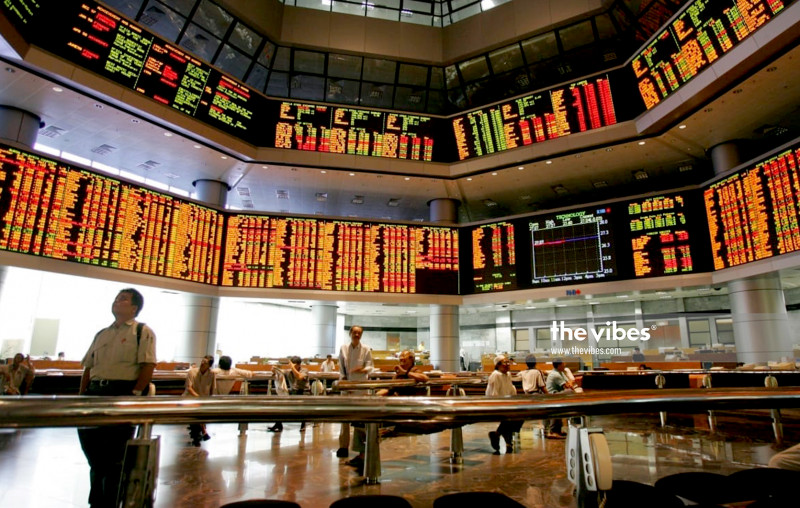
In Malaysia, foreign investors continued their selling streak on Bursa Malaysia for the 22nd consecutive week, with a net outflow of RM1.25 billion. This was a slight decline from the previous week’s net outflow of RM1.34 billion. Foreign investors were net sellers on every trading day, with the heaviest outflow of RM484.23 million recorded on Wednesday. On other days, outflows ranged from RM155.34 million to RM326.40 million.
“The net selling value declined slightly from RM1.34 billion in the previous week. Foreign investors were net sellers on every trading day, with Wednesday witnessing the heaviest outflow at RM484.23 million,” MIDF Amanah noted. “In contrast, local institutions continued to support the market, marking their 22nd consecutive week of net buying, with an inflow of RM1.23 billion.”
The report also pointed out that while foreign investors continued their exit, the plantation sector in Malaysia recorded modest net foreign inflows of RM2.4 million. Local retail investors, on the other hand, maintained a positive streak for a sixth consecutive week, with a net inflow of RM25.5 million.
The financial services sector experienced the highest net foreign outflow, totalling RM609.7 million, followed by industrial products and services (-RM167.9 million) and consumer products and services (-RM148.4 million).
In terms of trading volume, the average daily trading volume declined across most segments, except for foreign investors, who saw a 27.4% increase. Local institutions and retail investors recorded declines of 11.9% and 14.8%, respectively.
This trend indicates that while foreign investors remain cautious amid regional uncertainties, local players have continued to provide stability and support to the Malaysian market. – March 24, 2025