BANK Negara Malaysia (BNM) remains committed to a data-driven approach in evaluating the impact of economic developments on inflation and growth, according to Deputy Governor Datuk Marzunisham Omar.
Despite recent interest rate cuts by several central banks, Marzunisham emphasised that BNM’s monetary policy will continue to be determined by Malaysia's unique economic conditions rather than global trends.
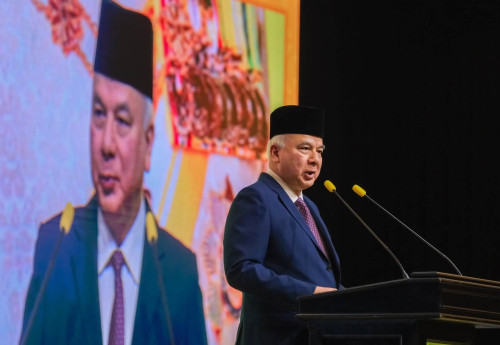
“We are aware of what other central banks are doing, but our primary focus when determining monetary policy is the outlook for growth and inflation in our own economy,” Bernama cited him saying in his speech at the 2025 BNM Governor’s Address on the Malaysian Economy and Panel Discussion, organised by the Malaysian Economic Association today.
Marzunisham pointed out that supply shocks—both external and domestic—can have a deflationary effect on growth. These shocks may arise from disruptions in global supply chains or changes in domestic policies. He cited an example of a potential supply shock, explaining, “If the government decides to lower the price of RON95 petrol or rationalise fuel subsidies, this constitutes a supply shock. In such cases, prices are likely to adjust accordingly.”
He acknowledged that managing such shocks requires a delicate balance in monetary policy, factoring in both price adjustments and their impact on overall economic growth.
“Conventional monetary policy wisdom suggests that central banks should generally look past supply shocks, particularly when they are temporary and do not affect long-term inflation expectations,” he added.
Marzunisham also addressed the ongoing challenge of rising costs of living in Malaysia, noting that since 2019, nominal wage growth has failed to keep pace with inflation.
Over that period, he pointed out that the nominal wage per worker had increased by just seven per cent, while overall prices had risen by 9.3 per cent, with food costs soaring by 17.4 per cent.
Although Malaysia has successfully reduced its inflation rate in recent years, he stressed that high price levels remain a persistent issue.
“While we address that from an inflation perspective, we also need to make sure that we try to increase wages, particularly among the lower-income households that have had to allocate a larger and increasing share of their income to basic necessities like food and housing,” he said.
Looking ahead, Marzunisham outlined the need for Malaysia to explore ways to boost incomes, such as attracting more investments that create high-skilled, high-paying jobs.
“This will help alleviate the burden on households, especially the most vulnerable,” he added. - March 26, 2025