SINGAPORE’s Ministry of Trade and Industry (MTI) has cut Singapore’s growth forecast for 2025 to 0 per cent to 2 per cent on concerns that the US-China tariff war could induce a global economic slowdown.
This is a downgrade from the 1 per cent to 3 per cent range previously.
“MTI’s assessment is that the external demand outlook for Singapore for the rest of the year has weakened significantly. This has led to a deterioration in the outlook of outward-oriented sectors in Singapore. In particular, the manufacturing sector is likely to be negatively affected by weaker global demand,” The Straits Times cited MTI saying on Monday.
This, alongside softening global trade, will also weigh on the growth of the wholesale trade sector.
The pullback in global trade will similarly dampen the growth of the transportation and storage sector through its drag on demand for shipping and air cargo services, it said.
At the same time, the finance and insurance sector could see weaker trading activity due to risk-off sentiments that will adversely affect the net fees and commission incomes of the banking, fund management, forex and security dealing segments.
The uncertain economic backdrop will likely dampen firms’ capital investment spending and constrain credit intermediation activity.
The growth of payments firms could moderate in tandem with tepid business activity and lower consumer spending, MTI said.
MTI said it will continue to closely monitor global and domestic developments, and make further adjustments to its new forecast if necessary.
The ministry also said that Singapore’s economy grew 3.8 per cent year on year in the first quarter of 2025, in advance estimates.
This is slower than the 5 per cent growth in the fourth quarter of 2024 and some market projections.
On a quarter-on-quarter seasonally adjusted basis, the economy contracted 0.8 per cent, a reversal from the 0.5 per cent expansion in the fourth quarter of 2024 due to declines in manufacturing and some outward-oriented services sectors such as finance and insurance as a result of weaker demand.
Analysts polled by Bloomberg expected 4.7 per cent year-on-year growth and a 0.3 per cent quarter- on-quarter contraction.
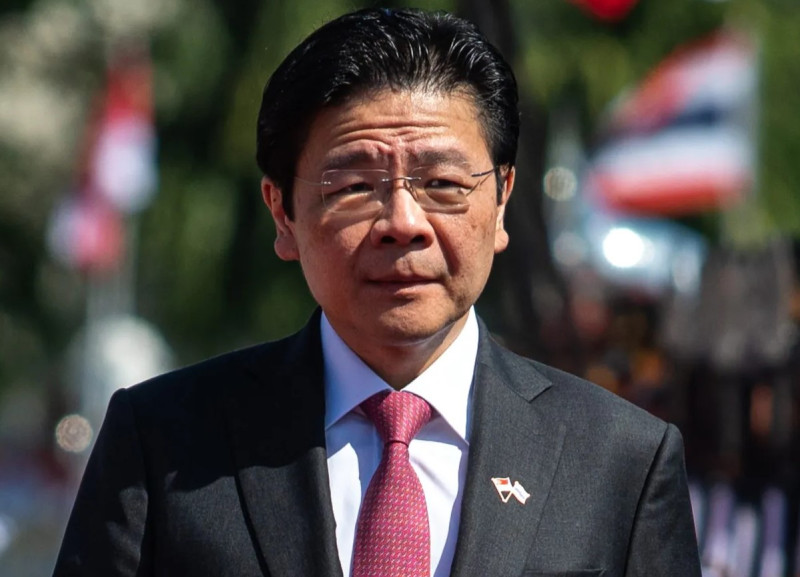
In his ministerial statement on US tariffs on April 8, Prime Minister and Minister for Finance Lawrence Wong said Singapore may or may not go into recession in 2025, but its growth will be significantly impacted.
Maybank economist Brian Lee is maintaining his 2025 gross domestic product growth forecast at 2.1 per cent, which is slightly above MTI’s new range.
“We are pencilling in a growth slowdown, but not a recession at this stage,” he said.
The US tariff suspension on most countries as well as the diversion of trade and financial flows could cushion the blow to Singapore’s economy, he said.
Domestically, falling interest rates, a construction boom and more fiscal support will also help support growth, Lee said.
He also noted that growth in the manufacturing sector was firmer than expected at 5 per cent in the first quarter of 2025, though moderating from the 7.4 per cent expansion in the fourth quarter of 2024.
This points to front-loading of activity in March amid a race to manufacture and ship out orders ahead of the US reciprocal tariff announcement on April 2.
The construction sector expanded by 4.6 per cent, extending the 4.4 per cent growth in the previous quarter.
Among the services sectors, the wholesale and retail trade as well as transportation and storage sectors collectively grew 4.2 per cent, easing from the 5.6 per cent growth in the previous quarter.
All sectors within the group, except for retail trade, expanded during the quarter. Growth in the information and communications, finance and insurance, and professional services sectors moderated to 3 per cent.
Singapore’s finance and insurance sector expanded, underpinned by the strong performance of the banking and activities to mostly payments firms.
Growth of the rest of the services sectors, including accommodation and food services, real estate, administrative and support services, was unchanged from the preceding quarter, at 2.5 per cent.
On April 9, Trump announced a 90-day pause on reciprocal tariffs, with the exemption of levies on China, which are currently a staggering 145 per cent tariff. In retaliation, China raised its tariffs on American goods to 125 per cent – effective April 12.
Singapore is subject to the flat duty of 10 per cent that Mr Trump placed on goods arriving from all foreign countries that took effect on April 5.
The Trump administration later excluded electronics such as smartphones and laptops from the reciprocal tariffs, which means they will not be subject to the 145 per cent rate levied on China.
But hours later, it played down the exemptions, saying they are included in the semiconductor tariffs, which face a separate round of import tax.
MTI warned that the tariff war posed “substantial downside risks” in the global economy. It said the spike in uncertainty may lead to a larger-than-expected pullback in economic activity as businesses and households adopt a “wait-and-see” approach before making spending decisions.
The tit-for-tat tariff moves could lead to a full-blown global trade war, which will upend global supply chains, raise costs and lead to a far sharper global economic slowdown.
There could also be disruptions to the global disinflation process and rising recession risks in both advanced and emerging markets, leading to destabilised capital flows that could trigger latent vulnerabilities in banking and financial systems. – April 14, 2025