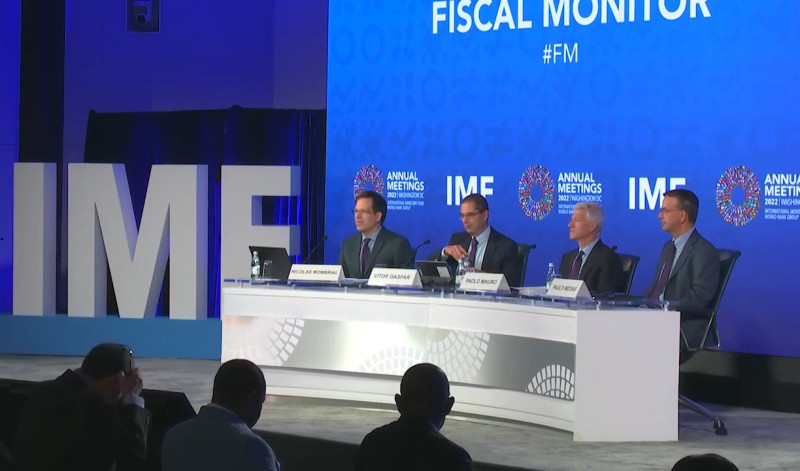
THE International Monetary Fund (IMF) has cautioned that rising tariffs and deteriorating economic conditions could push global public debt beyond current projections, warning of heightened fiscal risks and increased pressure on already strained national budgets.
In a blog post released alongside its latest Fiscal Monitor, the IMF stated that “risks to the fiscal outlook have further intensified”, particularly amid a wave of new tariff measures introduced by the United States and retaliatory actions from other countries.
These policy shifts have contributed to growing financial market volatility and weakened global growth prospects.
“They come in the context of rising debt levels in many countries and already strained public finances, which in many cases will also need to accommodate new and permanent increases in spending, such as defence,” Bernama - Xinhua cited IMF officials.
The Fund estimates global public debt will rise by 2.8 percentage points this year alone, bringing the total to over 95 per cent of global GDP.
This upward trajectory is expected to continue, with debt levels nearing 100 per cent of GDP by the end of the decade—surpassing the heights seen during the COVID-19 pandemic.
“Amid substantial policy uncertainty and a shifting economic landscape, debt levels could rise even further,” the IMF warned.
In a severely adverse scenario, the IMF’s Fiscal Monitor projects global public debt could surge to 117 per cent of GDP by 2027—the highest level since World War II and nearly 20 percentage points above current baseline forecasts.
“If revenues and economic output decline more significantly than current forecasts due to increased tariffs and weakened growth prospects, debt levels may rise even further than the debt-at-risk estimates,” the Fund warned.
The report also flagged escalating geo-economic tensions as another key factor, noting that rising defence expenditures and fiscal support to counter trade disruptions could drive up public spending.
According to the IMF, a sharp increase in global uncertainty could raise public debt by around 4.5 per cent of GDP over the medium term.
It also warned that tighter and more unpredictable financial conditions in the United States could have knock-on effects on developing economies and emerging markets, resulting in higher financing costs, commodity price volatility, and constrained public investment.
“This significantly impacts commodity prices, resulting in lower prices and heightened price volatility,” IMF officials noted.
“Limited fiscal improvements may further heighten risks from rising interest rates, especially as many countries have substantial financing needs. High interest rates could limit essential spending on social programmes and public investments.”
Additionally, the Fund pointed out that shifting budget priorities in advanced economies have led to reductions in foreign aid, complicating fiscal planning for low-income nations.
In response, the IMF has called on governments to “put their own fiscal house in order” by adopting prudent policies within robust fiscal frameworks, which it says are essential for restoring public confidence and reducing uncertainty in a rapidly evolving global economy. - April 24, 2025