Business

Carmakers sue US govt over tariffs on Chinese imports

Tesla, Volvo, Ford and Mercedes Benz demanding customs duties paid on imports be returned with interest

Updated 5 years ago · Published on 24 Sep 2020 8:31AM

Carmakers sue US govt over tariffs on Chinese imports
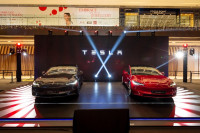
Tesla is among the major carmakers to sue the US government over tariffs on Chinese goods. – AFP pic, September 24, 2020

NEW YORK – Major automakers Tesla, Volvo, Ford and Mercedes Benz have sued to the US government over tariffs on Chinese goods, demanding customs duties paid on imports be returned, with interest.

The suits were filed over the past days in the New York-based Court of International Trade and concern tariffs imposed by the US Trade Representative on imports from China, which Tesla in its filing called “arbitrary, capricious, and an abuse of discretion.”

The duties came amid a wider trade dispute between Washington and Beijing, and the automakers are asking for the tariffs to be revoked and any money paid to import parts returned.

Mercedes in its filing accused Washington of “prosecution of an unprecedented, unbounded, and unlimited trade war impacting over US$500 billion (RM2.08 billion) in imports from the People’s Republic of China,” and argued US law “did not confer authority on defendants to litigate a vast trade war for however long, and by whatever means, they choose”.

US President Donald Trump’s administration engaged in months of trade conflicts with China, and imposed the levies as part of an effort to wean American manufacturers off Chinese technology.

China and the US signed their “phase one” trade deal earlier this year that partially ended the dispute, under which China promised to buy US$200 billion in US goods and Washington backed down on tariffs on US$160 billion in Chinese goods, particularly consumer electronics.

The US also slashed by half 15% tariffs on US$120 billion in goods, but kept in place 25% duties on US$250 billion in imports, which some of the automakers cited in their suits.

Beijing has retaliated for these levies, while Washington is aiming both to reduce its trade deficit and reform Chinese business practices it considers “unfair”.

The Commerce Department reported the US trade deficit in July surged nearly 11% to US$63.6 billion, with the deficit with China climbing to US$28.3 billion. – AFP, September 24, 2020


Related News

Malaysia / 11mth

CRV gets clamped for parking in Tesla charging bay at KL mall

Malaysia / 2y

Malaysian youth’s stint with Tesla opens doors

Malaysia / 2y

Netizens abuzz about Tesla that crashed through brick wall in Selangor

Malaysia / 2y

PAS should stop using Mercedes cars, says MP

Lifestyle / 2y

Tesla Model 3 now open for order in Malaysia

Malaysia / 2y

Tesla up in flames in Puchong

Spotlight

Malaysia

Bersatu-PH tie-up a possibility as coalition seeks Malay support, analyst says

By Alfian Z.M. Tahir

Malaysia

Woman molested on her way home from work (video)

Malaysia

Court allows Daim's daughter to permanently keep passport

Malaysia

Santiago pokes holes in data centre hype, asks: Who really benefits?

By Alfian Z.M. Tahir

Malaysia

Jeweller vows to pursue Rosmah until ‘every penny’ is recovered as RM67.5m battle enters enforcement phase

Malaysia

Ambulance carrying two injured men crashes en route to hospital after MPV collision in Besut

Malaysia

Man blames 'lack of love' for sexual assault on teens

Business

BNM's OPR to stay at 2.75 pcent in 2026 amid strong domestic demand - Kenanga IB

Malaysia

Missing jewellery: Rosmah ordered to pay RM67.5 million

You may be interested

Business

BNM's OPR to stay at 2.75 pcent in 2026 amid strong domestic demand - Kenanga IB

Business

Ringgit holds firm against major currencies as markets await key US inflation data

Business

Unemployment rate rises to 3.0 per cent in April 2026 - DOSM

Business

Open fibre sues Bank Pembangunan, six others in RM2b claim over Aries telecoms liquidation

Business

AI should support human thinking, not replace it - MDEC CEO

Business

Ringgit holds firm despite US inflation shock as markets brace for Federal Reserve decision